Connect with us

Search by keyword

Space

Can AI Replace Human Scientists?

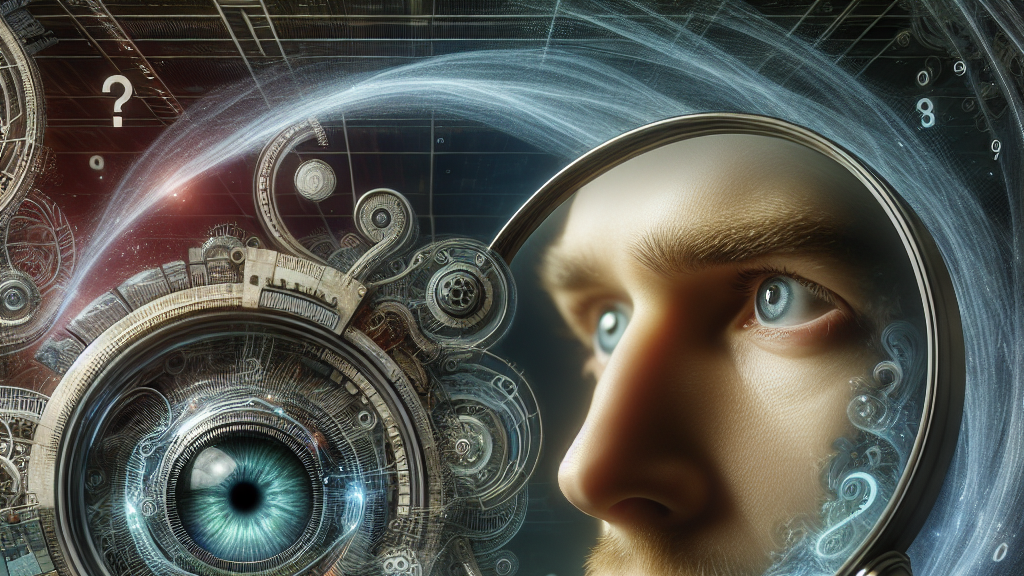
This study introduces an AI system that could revolutionize the way scientific research is conducted by automating key tasks, potentially speeding up groundbreaking discoveries. Imagine a future where AI assists in finding solutions to cosmic mysteries and advances scientific understanding, benefiting everyone!

Can AI Replace Human Scientists
✨Researched by humans. Explained by robots. Learn more.

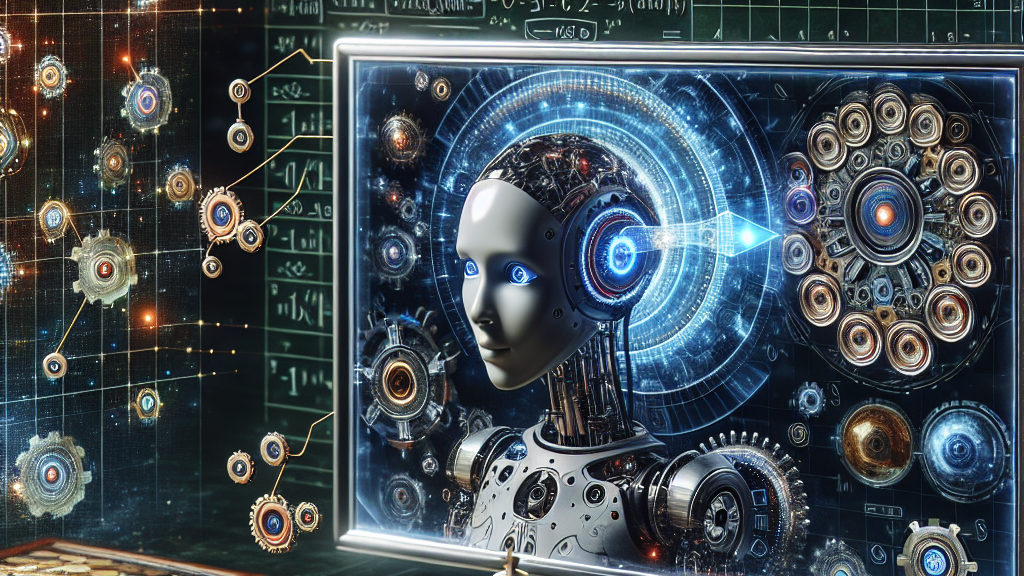
What if I told you that a computer system could do the work of a team of scientists? That’s exactly what the AI Cosmologist is designed to do! Unlike other systems, it’s not just running pre-set tasks; it actively participates in the scientific process, from brainstorming to publishing results. It’s like having a super-smart robot scientist dedicated to unraveling the mysteries of space.

The AI Cosmologist works by handling every step of the research process. It plans experiments, writes and corrects its code, analyzes data, and even refines its strategies based on what it learns. Think of it as an automated research lab that’s always working on the next big discovery. It’s a game-changer, not just for cosmology but potentially for every scientific discipline.

Imagine a world where scientific breakthroughs happen faster, thanks to AI helping human researchers. This could lead to faster development in healthcare, environmental technology, and even space exploration. Whether it’s finding new planets or creating life-saving technologies, the AI Cosmologist could be part of a future where science moves at lightning speed.

Did you know that AI can now brainstorm solutions and conduct research just like a human scientist?

FAQs

How does the AI Cosmologist automate scientific research?

The AI Cosmologist automates scientific research by handling the entire process from planning experiments to analyzing results and publishing findings. It can generate diverse strategies, write code, fix errors, and synthesize new approaches, like having a virtual scientist on your team.

What makes the AI Cosmologist different from other AI systems?

Unlike traditional AI systems that focus on specific tasks, the AI Cosmologist participates in the complete scientific process. It doesn’t just automate tasks; it actively brainstorms, experiments, and refines strategies based on results, making it more dynamic and innovative.

How might the AI Cosmologist impact future scientific discoveries?

The AI Cosmologist could accelerate the pace of scientific discoveries by automating key aspects of research. This might lead to faster advancements in various fields, from healthcare to environmental science, and even space exploration, potentially transforming how we solve global challenges.

Background

The AI Cosmologist is a type of agentic system, meaning it’s designed to independently perform tasks that require decision-making and problem-solving. It integrates advanced machine learning and data analysis to mimic the traditional scientific method, thereby automating parts of the research process that would typically require human intervention.

History

In recent years, there has been significant interest in automating scientific research to save time and resources. Previous systems focused primarily on task-specific automation, like running simple data analyses. The AI Cosmologist advances this field by encompassing the entire scientific workflow, drawing from developments in artificial intelligence and machine learning, and building on the idea that AI can enhance scientific inquiry.

Based on “The AI Cosmologist I: An Agentic System for Automated Data Analysis” by Adam Moss, available on arXiv (arxiv.org/abs/2504.03424), used under CC BY 4.0 (creativecommons.org/licenses/by/4.0/).

Trending

Latest

Can AI Save Water Discover How

Computers

AI is transforming the tech world, but it uses lots of water! A new tool, SCARF, helps us measure and reduce AI's water footprint,...

Whats a Forbush Decrease and Why Should We Care Whats a Forbush Decrease and Why Should We Care

Space

Scientists just observed the biggest solar storm event in years, revealing unexpected cosmic ray patterns. Understanding these changes could help us protect our technology...

Can Cars Spot Danger Faster Than Humans Can Cars Spot Danger Faster Than Humans

Computers

Think about how quickly you react when something unexpected happens on the road. This research brings us closer to creating self-driving cars that can...

Can Fear of the Other Stop Social Harmony Can Fear of the Other Stop Social Harmony

Physics

Fear of the unknown might make it harder for people to agree and get along. This study shows that when people have strong xenophobic...

Can AI Revolutionize Breast Cancer Diagnosis Can AI Revolutionize Breast Cancer Diagnosis

Electricity

This research introduces a groundbreaking AI model that can accurately assess HER2-positive breast cancer using widely accessible staining methods, potentially revolutionizing how we diagnose...

Can AI Transform Your Singing into a Choir Can AI Transform Your Singing into a Choir

Computers

Imagine singing solo and having AI turn you into a choir. This research unveils a groundbreaking AI tool that transforms your voice into rich...

You May Also Like

Computers

AI is transforming the tech world, but it uses lots of water! A new tool, SCARF, helps us measure and reduce AI's water footprint,...

Computers

Think about how quickly you react when something unexpected happens on the road. This research brings us closer to creating self-driving cars that can...

Electricity

This research introduces a groundbreaking AI model that can accurately assess HER2-positive breast cancer using widely accessible staining methods, potentially revolutionizing how we diagnose...

Computers

Imagine a machine capable of reading ancient books, deciphering complex pages with precision! This research is paving the way for AI to unlock the...

Economics

Discover how AI models can unknowingly favor certain races in mortgage decisions and how new methods could dramatically reduce these biases, fostering a fairer...

Computers

This research explores how AI models designed to understand both images and words might improve their performance simply by teaching themselves to think better....

Computers

Imagine if playing games could make a computer program better at understanding and creating text! This research suggests that by using creative tasks like...

Computers

Dive into the world of AI mistrust, where computers don't always know when they're wrong! Discover how teaching AI to see like us might...

Computers

What if talking to a robot could feel as comforting as a therapy session? This research uncovers the striking similarities between human therapists and...

Copyright © 2024 8ig8rain.

Disclaimer: The content on 8ig8rain.com consists of AI-generated summaries of scientific abstracts from arXiv. Please note that most arXiv abstracts are preprints and may not have undergone formal peer review. While these summaries aim to convey key ideas and potential applications, they are provided for informational purposes only and should not be interpreted as validated scientific findings or professional advice. The summaries are intended to educate, spark curiosity, and inspire further exploration of science.