Connect with us

Search by keyword

Space

Can We Finally Solve the Dark Energy Mystery?

Scientists may have discovered how dark energy behaves. Their findings could unlock secrets about the universe’s expansion, helping us understand everything from galaxies to gravity!

Can We Finally Solve the Dark Energy Mystery
✨Researched by humans. Explained by robots. Learn more.

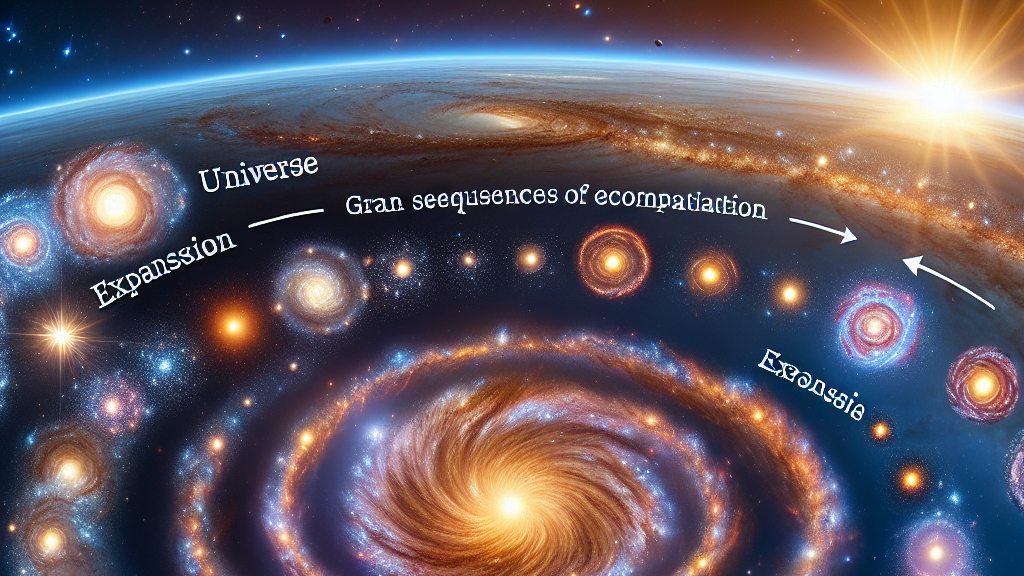
Dark energy could be one of the universe’s greatest mysteries. It’s believed to make up about 70% of the universe, pushing galaxies apart and influencing cosmic expansion. Yet, despite its impact, we know very little about its true nature. Recent findings offer a glimpse into this enigmatic force, suggesting that it acts differently than previously thought.

Researchers explored a scenario where dark energy, closely linked with dark matter, shifts its behavior over time. Imagine it as a cosmic balancing act; while its properties remain stable, its overall influence transitions, crossing the elusive ‘phantom barrier.’ This shift has profound implications for how we perceive the universe and our place within it. Observations from the latest DESI project matched these predictions, hinting that we’re on the right track.

So why should this matter to you? Understanding dark energy might one day lead to breakthroughs in technology and physics. Picture harnessing a force that controls galaxies or figuring out new ways to explore space. As we decode dark energy’s role, we can start to imagine applications that stretch beyond space, touching everything from our understanding of gravity to developing new energy sources on Earth.

Did you know? Dark energy is thought to be responsible for 70% of the universe’s total energy, yet we can’t even see it!

FAQs

What is dark energy and how does it relate to this research?

Dark energy is a mysterious force that makes up most of the universe’s energy, driving its accelerated expansion. This research offers a new perspective on how dark energy might interact with dark matter to influence cosmic growth.

How does this study explain the crossing of the phantom barrier?

The study suggests that dark energy’s observable characteristics can shift over time, crossing the ‘phantom barrier’ from a certain negative value to another. This crossing could answer why the universe expands like it does, particularly around certain redshifts.

Why is crossing the phantom barrier important?

Crossing the phantom barrier indicates a shift in dark energy’s behavior, which could redefine current models of the universe’s expansion and provide a better fit to observations from projects like DESI.

What are the DESI observations mentioned in the research?

DESI refers to the Dark Energy Spectroscopic Instrument, a project collecting data on galaxies to understand cosmic expansion. This research aligns with DESI’s findings, supporting its conclusions about dark energy.

How could this research affect our understanding of the universe?

By explaining dark energy’s behavior, scientists can refine cosmic models and potentially unlock new physics, impacting everything from our understanding of galaxies to the laws of gravity.

Background

Dark energy is a term for the unknown force causing the universe’s accelerated expansion. Quintessential fields are theoretical constructs, used here to model dark energy’s behavior. By coupling them with dark matter and examining their interactions, scientists can better understand cosmic evolution.

History

The study of dark energy dates back to observations in the late 1990s, when astronomers noticed the universe was expanding faster than expected. Over the years, various models have sought to explain this, including quintessence, which posits dark energy as a dynamic field. This research builds on those models, integrating recent DESI data to enhance our understanding.

Based on “DESI results: Hint towards coupled dark matter and dark energy” by Amlan Chakraborty, Prolay K. Chanda, Subinoy Das, Koushik Dutta, available on arXiv (arxiv.org/abs/2503.10806), used under CC BY 4.0 (creativecommons.org/licenses/by/4.0/).

Trending

Latest

Can AI Save Water Discover How

Computers

AI is transforming the tech world, but it uses lots of water! A new tool, SCARF, helps us measure and reduce AI's water footprint,...

Whats a Forbush Decrease and Why Should We Care Whats a Forbush Decrease and Why Should We Care

Space

Scientists just observed the biggest solar storm event in years, revealing unexpected cosmic ray patterns. Understanding these changes could help us protect our technology...

Can Cars Spot Danger Faster Than Humans Can Cars Spot Danger Faster Than Humans

Computers

Think about how quickly you react when something unexpected happens on the road. This research brings us closer to creating self-driving cars that can...

Can Fear of the Other Stop Social Harmony Can Fear of the Other Stop Social Harmony

Physics

Fear of the unknown might make it harder for people to agree and get along. This study shows that when people have strong xenophobic...

Can AI Revolutionize Breast Cancer Diagnosis Can AI Revolutionize Breast Cancer Diagnosis

Electricity

This research introduces a groundbreaking AI model that can accurately assess HER2-positive breast cancer using widely accessible staining methods, potentially revolutionizing how we diagnose...

Can AI Transform Your Singing into a Choir Can AI Transform Your Singing into a Choir

Computers

Imagine singing solo and having AI turn you into a choir. This research unveils a groundbreaking AI tool that transforms your voice into rich...

You May Also Like

Space

Scientists are puzzled by the universe's changing speed, as it seems to be accelerating quickly at some points and slowing down at others. This...

Physics

Imagine if space itself could create energy to speed up the universe's expansion! This research suggests a mind-blowing idea: a hidden energy source might...

Physics

Time crystals, a weird new form of physics, might help explain mysterious 'phantom' dark energy that's puzzling scientists everywhere. This discovery could reshape our...

Physics

New research suggests our universe might be older than previously thought, reshaping how we understand its formation and early galaxies.

Space

By harnessing the power of advanced AI, scientists can now identify and study powerful cosmic phenomena known as gravitational lenses, offering us a clearer...

Space

New findings suggest that the mysterious force driving the universe's expansion, dark energy, might be changing over time, challenging our understanding of the cosmos.

Space

This study explores how our universe might 'bounce' back instead of ending in a big crunch or a big freeze. By understanding the interaction...

General Relativity and Quantum Cosmology

This research explores how a sneaky cosmic rule might limit negative energy in the universe, potentially reshaping our understanding of dark energy and cosmic...

Space

Researchers suggest dark energy, the mysterious force speeding up our universe, might not be constant after all. This finding could change how we understand...

Copyright © 2024 8ig8rain.

Disclaimer: The content on 8ig8rain.com consists of AI-generated summaries of scientific abstracts from arXiv. Please note that most arXiv abstracts are preprints and may not have undergone formal peer review. While these summaries aim to convey key ideas and potential applications, they are provided for informational purposes only and should not be interpreted as validated scientific findings or professional advice. The summaries are intended to educate, spark curiosity, and inspire further exploration of science.