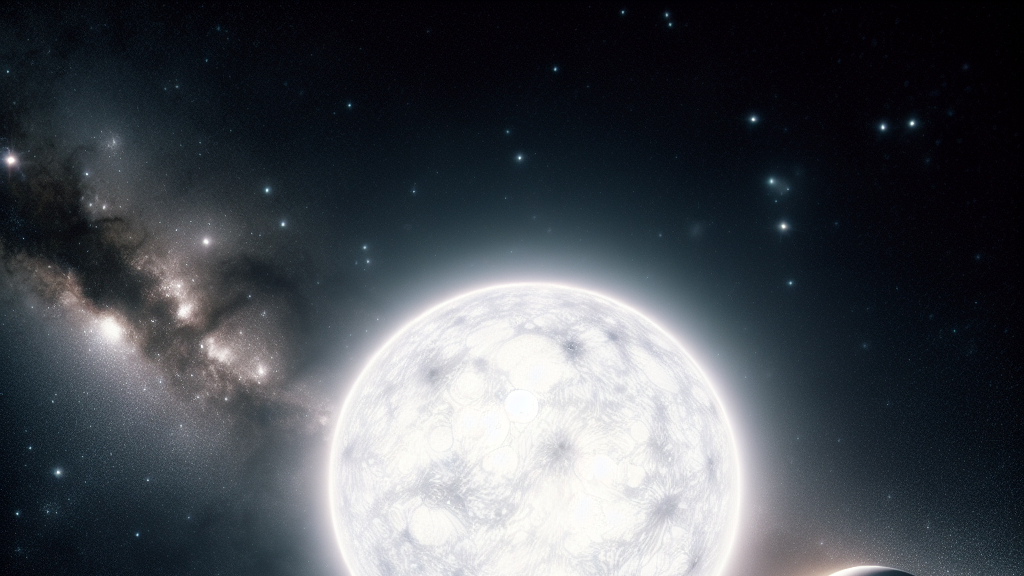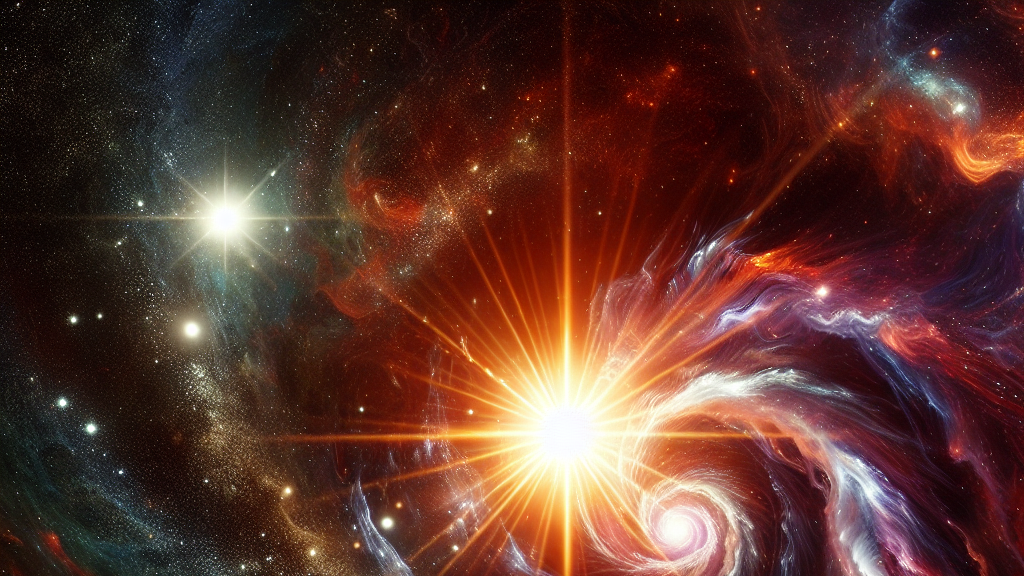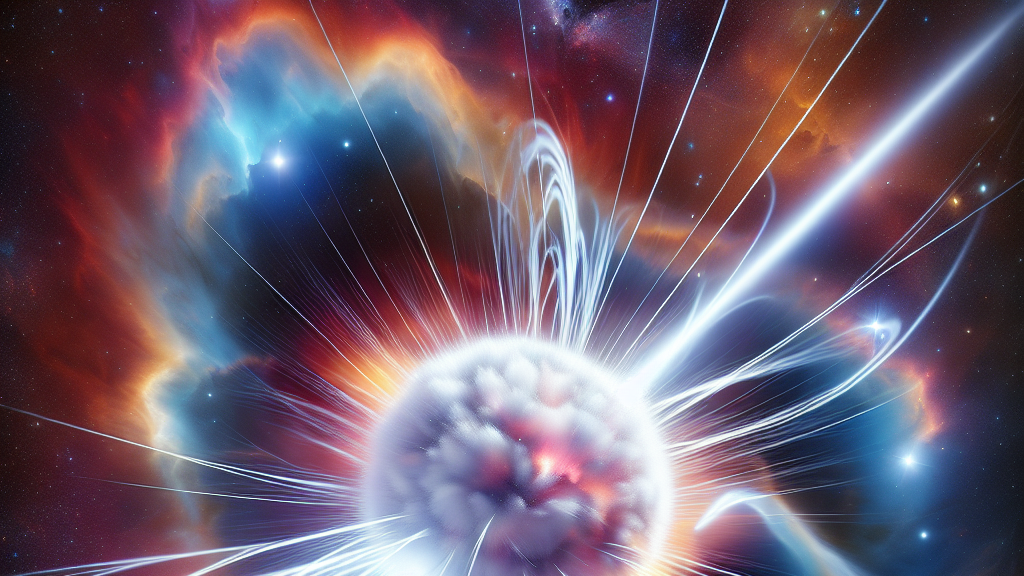
Imagine a star so dense and compact that when it finally explodes, it releases more energy in seconds than our sun does in its entire lifetime. These explosive events, known as Type Ia supernovae, have puzzled scientists for a long time. They’ve figured that these star explosions are because of white dwarfs – tiny stars that have packed on too much mass and eventually blow up. The debate, however, is all about what exactly causes this explosion; and recent studies suggest that our models can’t quite match the fireworks we observe in the universe.
When these star explosions happen, they release strange energy signatures, like gamma rays, and lots of a special type of nickel, which we see in the glow after the explosion. Researchers noticed something curious: the time it takes for gamma rays to escape these exploding stars and the amount of nickel produced should be linked. But our models aren’t cutting it—there’s more to the story. A key clue lies in the brightness of these explosions about a month after they happen, which seems to show a pattern with the explosion’s initial brightness. This pattern is surprising because traditional models of star explosions didn’t predict this.
This research is not just cosmic trivia—it could change how we understand the universe. If scientists can crack the code behind these star explosions, it might refine how we measure distances in space, leading to more accurate maps of our universe. Imagine future astronomers being able to predict cosmic events more accurately or even harnessing this knowledge to discover new planets or galaxies. The universe has its secrets, but little by little, we’re getting better at listening to the stars.
A Type Ia supernova can outshine an entire galaxy for a short period—it’s that bright!
FAQs
What makes Type Ia supernovae explode?
Type Ia supernovae likely explode because white dwarfs gain extra mass in binary star systems. Once they reach a critical point, they ignite and explode in a thermonuclear fashion.
How do scientists study star explosions?
Scientists study star explosions through observations of gamma rays, spectral analysis, and tracking brightness over time. They compare these data with computer-generated models of supernova events.
Why is it important to understand supernova explosions?
Understanding supernova explosions helps us measure cosmic distances and expand our knowledge about the universe’s structure and evolution. These events also contribute to the cosmic creation of elements essential for life.
What did recent studies reveal about supernova models?
Recent studies found that current models can’t fully explain the correlation between gamma-ray escape times, nickel production, and luminosity patterns observed in real supernova events.
How might this research impact our understanding of the universe?
Cracking the supernova code could refine cosmic measurements, leading to more accurate maps of the universe and potentially revealing insights into the processes of galaxy formation and evolution.
Background
At the heart of a Type Ia supernova is a white dwarf—a dense star-like object left after a star has run out of fuel. These white dwarfs are part of binary systems where matter from a companion star can accumulate on their surface. This process eventually leads to a catastrophic explosion once certain physical conditions are met. The explosion releases incredible amounts of energy in the form of gamma rays and heavy elements like nickel. Traditionally, scientists use complex models to predict these explosions and their aftermaths.
History
The study of supernovae has been revolutionized over the centuries. Once merely seen as mysterious bright spots in the sky, they became a focus for astronomical research in the 20th century with the advent of spectroscopic techniques and telescopes. Prior research established that supernovae could be used as cosmic mile markers, helping us to measure vast distances in the universe. However, new patterns observed in Type Ia supernovae challenge these traditional models, pushing scientists to refine their understanding further.
Based on “All known Type Ia supernovae models fail to reproduce the observed bolometric luminosity-width correlation” by Amir Sharon, Doron Kushnir, Nahliel Wygoda, available on arXiv (arxiv.org/abs/2407.06859), used under CC BY 4.0 (creativecommons.org/licenses/by/4.0/).