Connect with us

Search by keyword

Computers

Cracking Algorithms with Proof and Counterexample Duality

This research unveils a method of crafting more efficient algorithms by using the concept of duality between proofs and counterexamples, making it easier to verify the accuracy of logic-based systems.

Cracking Algorithms with Proof and Counterexample Duality

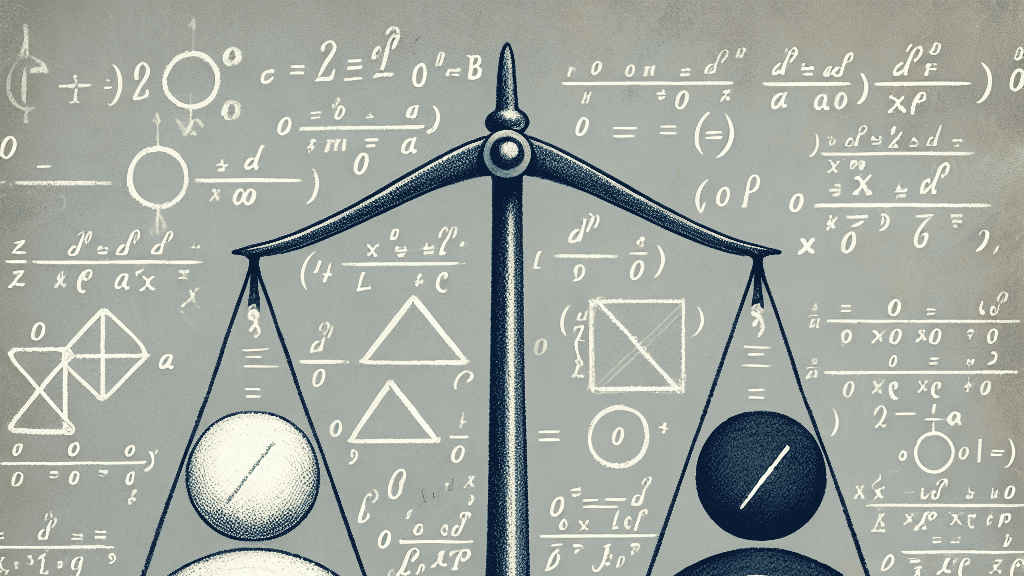
Ever wonder how your phone can predict what you’ll text next or how online systems can detect fraudulent activity? It’s all thanks to algorithms, which are basically step-by-step problem solvers running behind the scenes. A fascinating development has emerged that taps into the ‘dual’ nature of these algorithms, balancing proofs and counterexamples like a scale, ensuring that systems are not only solving problems but identifying potential errors effectively.

Presenting an innovative primal-dual framework, the research explores the balance between proofs (showing something is true) and counterexamples (highlighting what’s false). Think of it like having your cake and eating it too! By using a mathematical tool called a Lagrangian, traditionally utilized in optimization, this method melds two types of problems into a dance that guides each other. It’s a clever way to refine processes in fields like program analysis and verification by solidifying the steps needed for accurate results.

Imagine you’re verifying the safety of a new self-driving car software. The primal-dual framework can help test scenarios by both proving safe operations and identifying risky ones. This dual perspective ensures that the algorithms running these critical systems are more reliable and efficient, potentially leading to breakthroughs in technology like never before. With such advances, who knows how much smarter our systems could become!

Did you know? The concept of duality in math, where you balance opposing elements, leads to breakthroughs in tech – kind of like how yin and yang brings balance to life!

FAQs

What unexpected discovery did scientists make?

Researchers discovered a way to design algorithms by using duality, balancing proofs and counterexamples to enhance verification processes.

How does this research benefit everyday tech?

By improving how algorithms verify accuracy, it enhances reliability in many tech systems like fraud detection and AI predictions.

What makes the primal-dual framework special?

It generalizes a mathematical tool called a Lagrangian to create better verification algorithms, ensuring processes are more efficient.

What real-world problems can this solve?

This method can improve safety and efficiency in critical systems, like software for self-driving cars, by ensuring they work as intended.

Why is duality important in algorithm design?

The balance between proving correctness and finding errors makes algorithms more robust, preventing potential flaws in critical systems.

Background

Duality in mathematical terms refers to the idea of pairing two related properties to find balance and solutions. In algorithms, this can mean balancing proof (showing something is correct) with counterexamples (showing something is wrong) to refine problem-solving abilities. The Lagrangian method is a mathematical concept used in optimization to help find the best solutions under given conditions.

History

The idea of duality has roots in mathematical theory, particularly in fields like linear programming. Over the years, its concept has been adapted into algorithms and optimization problems. This research extends duality into verification and reasoning algorithms, creating a new framework to improve their efficiency.

Based on “A Primal-Dual Perspective on Program Verification Algorithms (Extended Version)” by Takeshi Tsukada, Hiroshi Unno, Oded Padon, Sharon Shoham, available on arXiv (arxiv.org/abs/2501.01512), used under CC BY 4.0 (creativecommons.org/licenses/by/4.0/).

Trending

Latest

Can AI Save Water Discover How

Computers

AI is transforming the tech world, but it uses lots of water! A new tool, SCARF, helps us measure and reduce AI's water footprint,...

Whats a Forbush Decrease and Why Should We Care Whats a Forbush Decrease and Why Should We Care

Space

Scientists just observed the biggest solar storm event in years, revealing unexpected cosmic ray patterns. Understanding these changes could help us protect our technology...

Can Cars Spot Danger Faster Than Humans Can Cars Spot Danger Faster Than Humans

Computers

Think about how quickly you react when something unexpected happens on the road. This research brings us closer to creating self-driving cars that can...

Can Fear of the Other Stop Social Harmony Can Fear of the Other Stop Social Harmony

Physics

Fear of the unknown might make it harder for people to agree and get along. This study shows that when people have strong xenophobic...

Can AI Revolutionize Breast Cancer Diagnosis Can AI Revolutionize Breast Cancer Diagnosis

Electricity

This research introduces a groundbreaking AI model that can accurately assess HER2-positive breast cancer using widely accessible staining methods, potentially revolutionizing how we diagnose...

Can AI Transform Your Singing into a Choir Can AI Transform Your Singing into a Choir

Computers

Imagine singing solo and having AI turn you into a choir. This research unveils a groundbreaking AI tool that transforms your voice into rich...

You May Also Like

Computers

Discover how studying the arrangement of pages and queues in graph layouts might lead to more efficient data organization and processing tricks that could...

Computers

This research explores how noise impacts the efficiency of machine learning algorithms, revealing that algorithms may learn faster or get stuck depending on the...

Computers

Misinformation in digital media is everywhere, but a new multi-agent AI framework aims to tackle it from all angles. By breaking down tasks like...

Computers

Discover the Blindfolded Spiderman Optimization, a new approach that redefines how we solve problems using a playful yet powerful method, outperforming many existing techniques...

Computers

Ever wished your computer could 'unlearn' personal data as easily as you could forget a bad haircut? This research challenges how effective machine unlearning...

Computers

This research explores a new type of logic that could supercharge algorithms by allowing them to make smarter choices through a concept called witnessed...

Computers

Discover how TikTok's video recommendations might be creating echo chambers and explore new research that offers strategies to diversify your experience and break free...

Physics

Discover how TikTok cleverly tailors your feed to your tastes, creating a personalized experience like no other, but at the cost of content diversity.

Economics

A study on an Indian TikTok-like app reveals that replacing algorithmic content ranking with random delivery significantly reduces exposure to harmful content. This research...

Copyright © 2024 8ig8rain.

Disclaimer: The content on 8ig8rain.com consists of AI-generated summaries of scientific abstracts from arXiv. Please note that most arXiv abstracts are preprints and may not have undergone formal peer review. While these summaries aim to convey key ideas and potential applications, they are provided for informational purposes only and should not be interpreted as validated scientific findings or professional advice. The summaries are intended to educate, spark curiosity, and inspire further exploration of science.