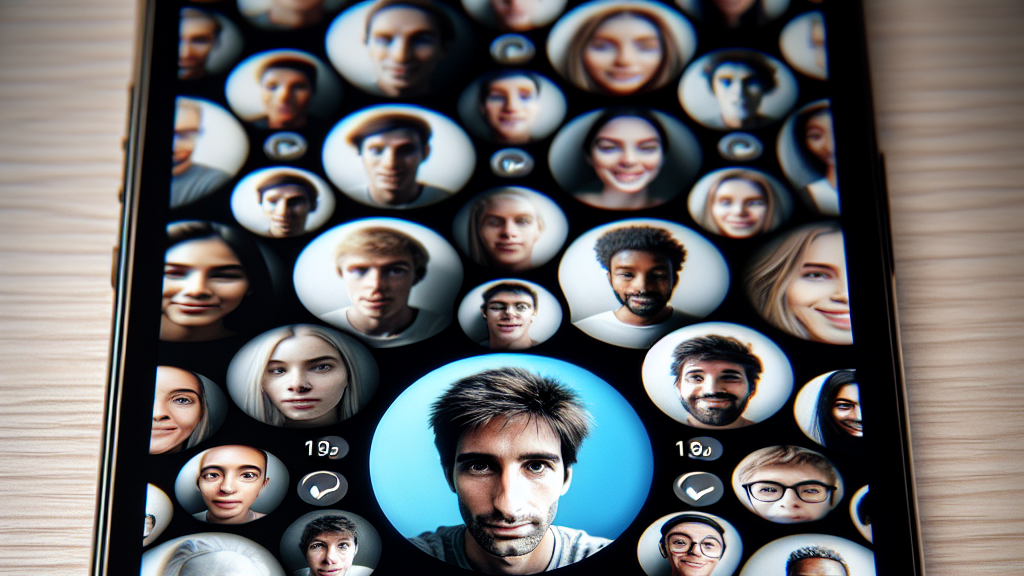
Ever felt like your TikTok feed is stuck on repeat, showing you the same types of videos again and again? This could be due to what’s known as a ‘filter bubble,’ where recommendation systems keep suggesting similar content based on your past interactions. It’s like a digital echo chamber where you’re only exposed to what the algorithms think you like, potentially limiting your perspective without even realizing it.
Recent research has used computer simulations to understand how these bubbles form on platforms like TikTok and what drives them. By analyzing real-world data, researchers found that factors like your demographic details and what categories of content you’re drawn to can intensify this effect. But don’t worry, there’s good news too! These scientists have designed strategies to diversify what you see, such as adjusting how new content is introduced to users and refining how feedback from users is used.
Imagine opening TikTok and seeing a greater variety of videos, breaking the monotony, and exposing you to new ideas and cultures. This research also highlights the importance of ensuring fairness in recommendations, especially for groups that might be overlooked, such as women and those with lower incomes. By understanding and addressing these biases, we can push for a more inclusive online environment where everyone gets a fair chance to discover something new.
Did you know that your TikTok feed might show you the same kind of videos because of what’s called a ‘filter bubble’? It’s a cycle of recommendations and feedback that keeps you in a loop!
FAQs
What is a filter bubble on TikTok?
A filter bubble on TikTok refers to the cycle where the platform’s recommendation system repeatedly shows similar types of videos based on your previous interactions, potentially limiting the diversity of content you see.
How do algorithms influence what videos I see on TikTok?
Algorithms analyze your past behavior, such as likes, shares, and watched videos, to suggest new content. This can lead to a repetitive cycle where similar videos are recommended, forming a filter bubble.
Can TikTok’s filter bubbles be reduced?
Yes, researchers are exploring strategies like introducing diverse content to users and reconsidering how feedback is weighted to break filter bubbles and increase content diversity.
How does this research help promote equity on social media?
The research suggests safeguards to address biases in recommendations that might disadvantage certain groups, ensuring a fairer digital space for everyone.
What role do demographic factors play in filter bubble formation?
Demographic factors, such as age and gender, can influence the types of content algorithms recommend, potentially intensifying filter bubbles.
Background
Recommender systems are the algorithms behind apps like TikTok that decide what content to show you next. They make decisions based on what you’ve interacted with before, learning what you like or dislike. However, because they focus on providing content similar to what you’ve shown interest in, they can accidentally limit the variety of information you encounter by creating ‘filter bubbles.’ This research uses a technology called Large Language Models (LLMs), which are like smart computer programs, to mimic and study these interactions and find ways to make them better and fairer.
History
The concept of filter bubbles became widely known with social media’s rise, where it was noticed that users were only exposed to news and content that reinforced their existing beliefs. Previous studies have focused on platforms like Facebook and Google, but short-video platforms like TikTok present new challenges and opportunities due to their rapid and highly personalized content delivery. This current research builds on these foundations by using advanced simulation techniques to understand and mitigate these effects specifically for short-video platforms.
Based on “Simulating Filter Bubble on Short-video Recommender System with Large Language Model Agents” by Nicholas Sukiennik, Haoyu Wang, Zailin Zeng, Chen Gao, Yong Li, available on arXiv (arxiv.org/abs/2504.08742), used under CC BY 4.0 (creativecommons.org/licenses/by/4.0/).