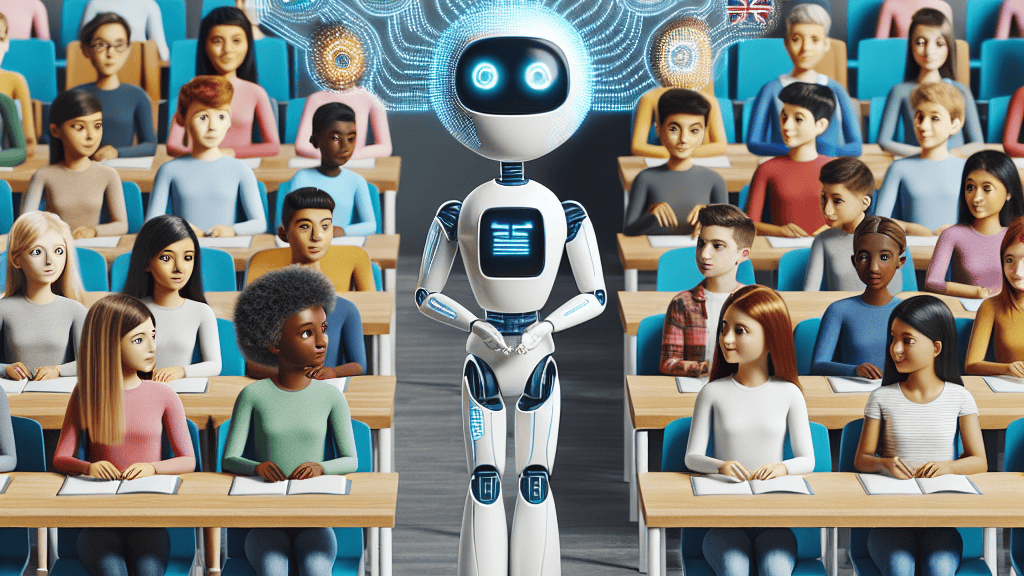
Imagine a classroom where AI assistants cater to every student’s unique cultural background. Right now, many AI language tools, like those chatbots and voice assistants we love, are kind of short-sighted. They often reflect only a narrow slice of the world’s amazing diversity, mostly echoing Western cultural norms. So, while they’re helpful, they can sometimes unintentionally overlook or misrepresent the rich array of global perspectives. That’s a big deal because it means students might not get the full, fair, and inclusive view they deserve.
This new research is changing the game by developing strategies to make AI truly global. By incorporating something called ‘multiplexity,’ which allows for a mix of cultural viewpoints, researchers are working to enrich these language models so they don’t just sing one tune. They apply different strategies, such as embedding diverse cultural principles into the AI’s core, and creating systems where multiple AI ‘agents,’ each representing a unique cultural perspective, come together to craft balanced outputs. The results are promising—showing a significant rise in cultural inclusivity and positivity in AI responses.
Think about the future, where educational tools can dynamically adapt and present information through varied cultural lenses. This means not only could the AI acknowledge and respect your cultural identity, but it could also open new doors to deeper understanding and empathy across cultures. Imagine the AI being able to provide a truly holistic education that broadens horizons and embraces the world’s diverse voices. By addressing biases in AI, this research could enhance learning experiences dramatically, making education more equitable and enriching for everyone.
Did you know? AI models today often lean heavily on Western cultural norms—sometimes overlooking the vast ocean of global diversity that’s out there!
FAQs
What unexpected discovery did scientists make about AI bias?
Scientists found that AI tools often reflect cultural biases, rooted mainly in Western norms, which can lead to unfair representations or misinterpretations of diverse global perspectives.
How can AI become more culturally inclusive?
By using strategies like contextual prompts and multi-agent systems, AI can incorporate diverse cultural viewpoints, creating outputs that respect and represent a wide range of perspectives.
What is ‘multiplexity’ and why is it important?
Multiplexity is the coexistence of diverse cultural viewpoints in AI, combining empirical sciences with different cultural values, making AI outputs more balanced and globally inclusive.
How does this research impact future educational tools?
This research could transform educational AI tools to provide richer, more inclusive, and culturally sensitive learning experiences, adapting to and respecting students’ varied cultural backgrounds.
Background
Large language models are AI tools designed to understand and generate human-like text, often used in chatbots and educational software. However, these models can inadvertently reflect cultural biases of the data they’re trained on—data that’s heavily skewed towards Western cultures. Researchers aim to address these biases through ‘multiplexity,’ a concept that incorporates multiple cultural perspectives, ensuring that AI tools respect and reflect a broader range of viewpoints.
History
The issue of bias in artificial intelligence has been a growing area of concern as AI technologies become more prevalent in society. Historically, many AI models have been criticized for reflecting the biases present in their training data. This has led to a surge in research focused on identifying and mitigating such biases to make AI more equitable and inclusive. The current study builds on these earlier efforts by introducing new methodologies that emphasize cultural diversity and inclusivity.
Based on “Toward Inclusive Educational AI: Auditing Frontier LLMs through a Multiplexity Lens” by Abdullah Mushtaq, Muhammad Rafay Naeem, Muhammad Imran Taj, Ibrahim Ghaznavi, Junaid Qadir, available on arXiv (arxiv.org/abs/2501.03259), used under CC BY 4.0 (creativecommons.org/licenses/by/4.0/).