Connect with us

Search by keyword

Computers

Can We Speed Up Complex Data Comparisons?

This research introduces a clever algorithm that speeds up comparing complex data structures, making it faster to handle changes and errors in data. Imagine finding the differences in files in seconds instead of hours!

Can We Speed Up Complex Data Comparisons

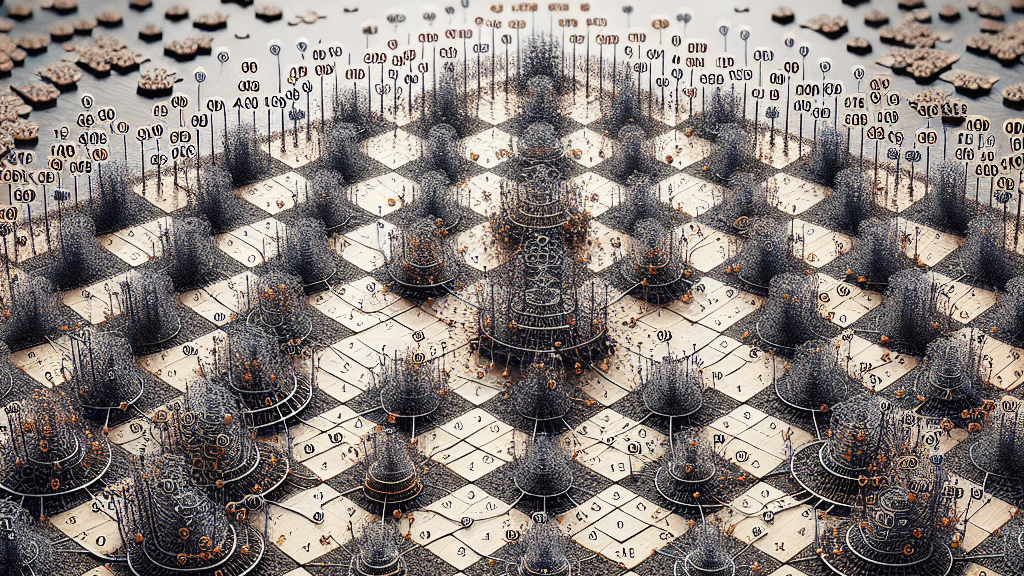
Imagine trying to spot the difference between two dense forests, tree by tree—that’s what computers do when they compare data structures called merge trees. This can be super slow, way slower than any of us would like. But what if we could make it faster, almost as if by magic? That’s where this new research comes in; it’s like giving computers a map with shortcuts.

The scientists have come up with a new algorithm that lets you decide how fast you want your computer to work. Imagine a volume knob that lets you decide between perfect accuracy and lightning speed. The algorithm is all about spotting changes in merge trees, which are used to understand complex datasets. It’s called a ‘heuristic’ approach, meaning it’s like a smart guess that helps the computer zoom through the calculations.

In the real world, this means we could quickly handle big data, like the kind used for weather forecasts or in the latest blockbuster movies, even if the data gets a bit messy or changes over time. So, whether you’re trying to predict tomorrow’s weather more accurately or speed up computer animations, this algorithm could be a game-changer!

Did you know? The term ‘NP-complete’ refers to some of the most challenging puzzles in computer science, which can take a computer forever to solve without smart tricks!

FAQs

What unexpected discovery did scientists make?

They found a way to make data comparisons much faster by tweaking accuracy settings, which could revolutionize how we handle complex datasets.

How does this new algorithm work?

It introduces a user-controlled look-ahead parameter, allowing a trade-off between speed and accuracy in analyzing data structures called merge trees.

Why should I care about merge trees?

Merge trees help make sense of huge amounts of data in various fields, from meteorology to movie production, affecting our daily weather updates and the films we enjoy.

What are saddle swaps?

Saddle swaps refer to specific changes or errors in data structures that this algorithm handles effectively, maintaining accuracy while speeding up calculations.

How can this affect my everyday life?

Faster data comparisons could lead to quicker and more accurate weather forecasts, improved technology in streaming services, and even smoother software updates.

Background

A merge tree is a data structure that helps computers understand the hierarchy and relationships within complex datasets. It’s essential for simplifying and analyzing large amounts of information efficiently. However, comparing these structures is computationally intense, typically running into problems known as ‘NP-complete,’ which are notoriously hard puzzles for computers to solve quickly.

History

The journey of understanding and manipulating merge trees has been evolving steadily. Initially, the focus was on accuracy alone, often at the expense of speed. Prior breakthroughs centered on finding efficient methods to manage changes and errors in these structures. This latest study builds on prior work by introducing a balance between precision and efficiency, allowing for more practical applications in real-world scenarios.

Based on “Accelerating Computation of Stable Merge Tree Edit Distances using Parameterized Heuristics” by Florian Wetzels, Heike Leitte, Christoph Garth, available on arXiv (arxiv.org/abs/2501.05529), used under CC BY 4.0 (creativecommons.org/licenses/by/4.0/).

Trending

Latest

Can AI Save Water Discover How

Computers

AI is transforming the tech world, but it uses lots of water! A new tool, SCARF, helps us measure and reduce AI's water footprint,...

Whats a Forbush Decrease and Why Should We Care Whats a Forbush Decrease and Why Should We Care

Space

Scientists just observed the biggest solar storm event in years, revealing unexpected cosmic ray patterns. Understanding these changes could help us protect our technology...

Can Cars Spot Danger Faster Than Humans Can Cars Spot Danger Faster Than Humans

Computers

Think about how quickly you react when something unexpected happens on the road. This research brings us closer to creating self-driving cars that can...

Can Fear of the Other Stop Social Harmony Can Fear of the Other Stop Social Harmony

Physics

Fear of the unknown might make it harder for people to agree and get along. This study shows that when people have strong xenophobic...

Can AI Revolutionize Breast Cancer Diagnosis Can AI Revolutionize Breast Cancer Diagnosis

Electricity

This research introduces a groundbreaking AI model that can accurately assess HER2-positive breast cancer using widely accessible staining methods, potentially revolutionizing how we diagnose...

Can AI Transform Your Singing into a Choir Can AI Transform Your Singing into a Choir

Computers

Imagine singing solo and having AI turn you into a choir. This research unveils a groundbreaking AI tool that transforms your voice into rich...

You May Also Like

Math

Ever wonder if Minesweeper can always be beaten? Scientists have found that beyond a certain number of mines, solving it becomes almost impossible. But...

Math

A groundbreaking math method is transforming complex engineering problems into simpler ones, offering high accuracy and broad applications, which could revolutionize fields like aerospace...

Physics

Imagine clustering data faster and smarter using quantum-inspired tech. This breakthrough could reshape how we handle massive datasets, making data analysis quicker and more...

Math

Imagine cracking complex numbers faster with fewer steps! This new approach to factorizing odd numbers, building on classic methods, could revolutionize how we solve...

Computers

Ever wonder how attackers can tell if your data was used by an algorithm? This research explores how some data points are easier to...

Physics

Quantum walks, a new method inspired by electric flow sampling, could significantly speed up processes like random walks in computer algorithms, making them much...

Physics

Researchers have unlocked the potential of high-dimensional vortex structures, paving the way for advanced data processing technologies and improved turbulence control, all through innovative...

Copyright © 2024 8ig8rain.

Disclaimer: The content on 8ig8rain.com consists of AI-generated summaries of scientific abstracts from arXiv. Please note that most arXiv abstracts are preprints and may not have undergone formal peer review. While these summaries aim to convey key ideas and potential applications, they are provided for informational purposes only and should not be interpreted as validated scientific findings or professional advice. The summaries are intended to educate, spark curiosity, and inspire further exploration of science.