Have you ever wondered how companies make sense of the mountains of data they collect every day? Enter clustering—a key method to group similar data together for easier analysis. Now imagine doing this at lightning speed with a twist of quantum magic. Sounds like science fiction? It’s closer than you think! A revolutionary version of the classic k-means clustering algorithm, enhanced by quantum computing techniques, might soon make that a reality.
This emerging technique, known as ‘quantum clustering,’ offers a fresh take on how we tackle big data sets. Unlike traditional methods that can struggle with vast amounts of information, this quantum-inspired approach promises quicker and more efficient processing. By harnessing principles from quantum physics, the algorithm cleverly simplifies the complex calculations needed to identify patterns and organize data. And there’s a twist—it’s not just quantum; there’s a classical version too, ensuring a broader range of applications.
So, what does this mean for you and me? Imagine personalized recommendations on shopping sites becoming even more accurate, or medical researchers identifying disease trends faster. With these advancements, everything from our daily online experiences to critical scientific discoveries could become more streamlined and impactful, changing how we live, work, and understand the world around us.
Did you know? Quantum algorithms can potentially solve complex problems exponentially faster than classical computers.
FAQs
What is quantum clustering, and why is it important?
Quantum clustering is an advanced method for grouping similar data points more efficiently by leveraging quantum computing principles. It’s important because it can process large datasets much faster than traditional methods, potentially transforming industries reliant on data analysis.
How does quantum clustering differ from traditional k-means clustering?
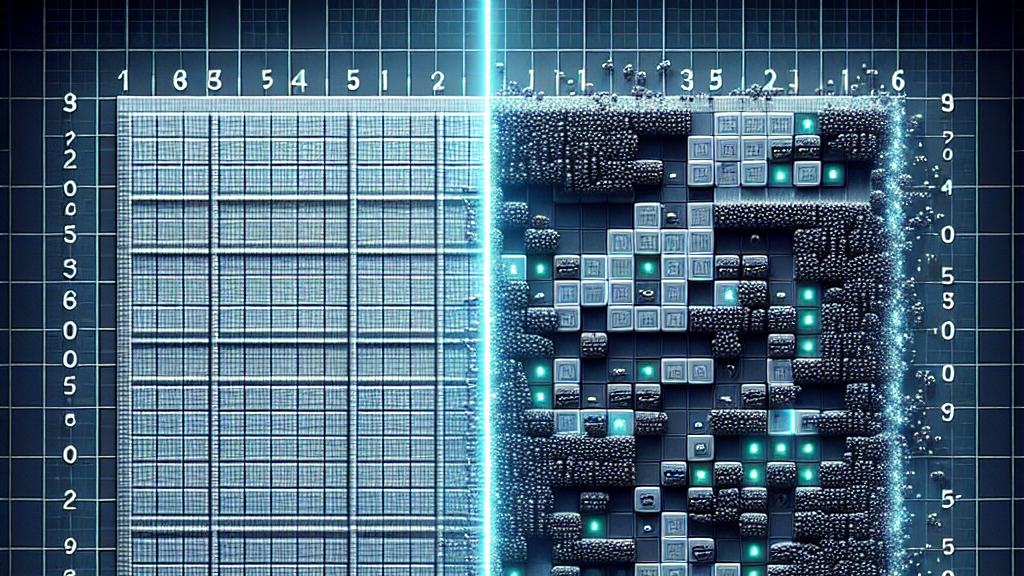
While traditional k-means clustering requires numerous iterations to organize data into clusters, quantum clustering uses quantum techniques to speed up this process, often reducing the time needed to achieve accurate clustering.
Can the benefits of quantum clustering be applied without a quantum computer?
Yes, researchers have developed a ‘dequantized’ algorithm that mimics the efficiency of quantum clustering on classical computers, allowing broader access to these benefits without needing a quantum computer.
How might quantum clustering affect everyday services like online shopping?
Quantum clustering can enhance data processing speeds, leading to faster and more accurate personalized recommendations, ultimately improving user experience on platforms like online shopping sites.
What industries stand to benefit the most from quantum clustering?
Industries that manage large volumes of data, such as finance, healthcare, and retail, could see significant improvements in data processing and decision-making capabilities through quantum clustering.
Background
Clustering is a statistical technique used to group similar data points together, making it easier to analyze large datasets. The k-means algorithm is one of the most popular methods for clustering, which iteratively assigns data points to clusters based on proximity to the cluster’s center. With the immense rise in data generation, there’s been a push to develop faster and more efficient algorithms to handle these large volumes, leading to the exploration of quantum computing techniques.
History
The k-means clustering algorithm has been a cornerstone in data analysis for decades, popular for its simplicity and effectiveness. However, with the advent of big data, traditional methods began to show limitations in terms of speed and scalability. Researchers then turned to quantum computing—a field that promises to handle complex computations efficiently—resulting in the development of quantum-inspired algorithms that marry traditional clustering with quantum mechanics principles.
Based on “Do you know what q-means?” by João F. Doriguello, Alessandro Luongo, Ewin Tang, available on arXiv (arxiv.org/abs/2308.09701), used under CC BY 4.0 (creativecommons.org/licenses/by/4.0/).