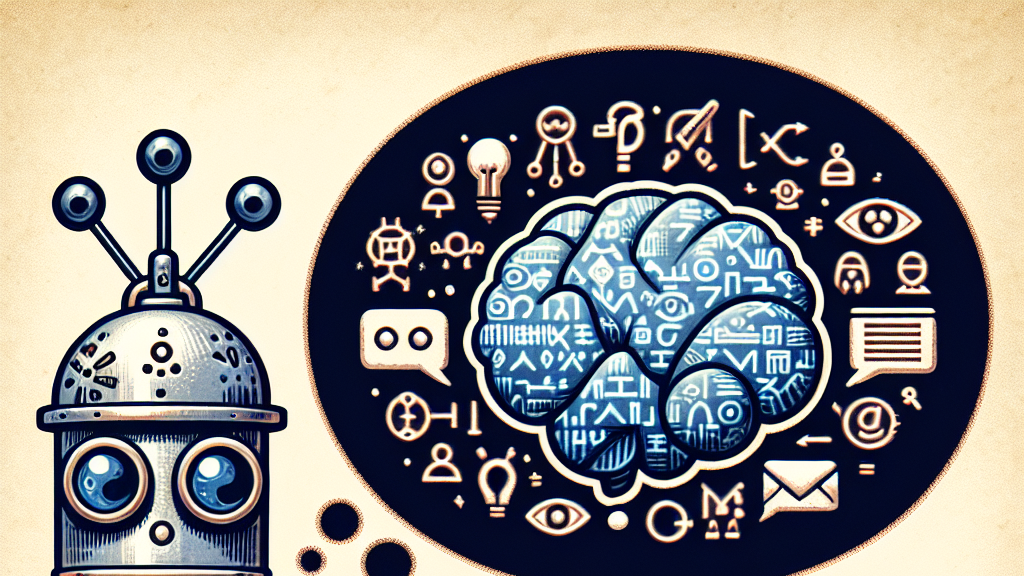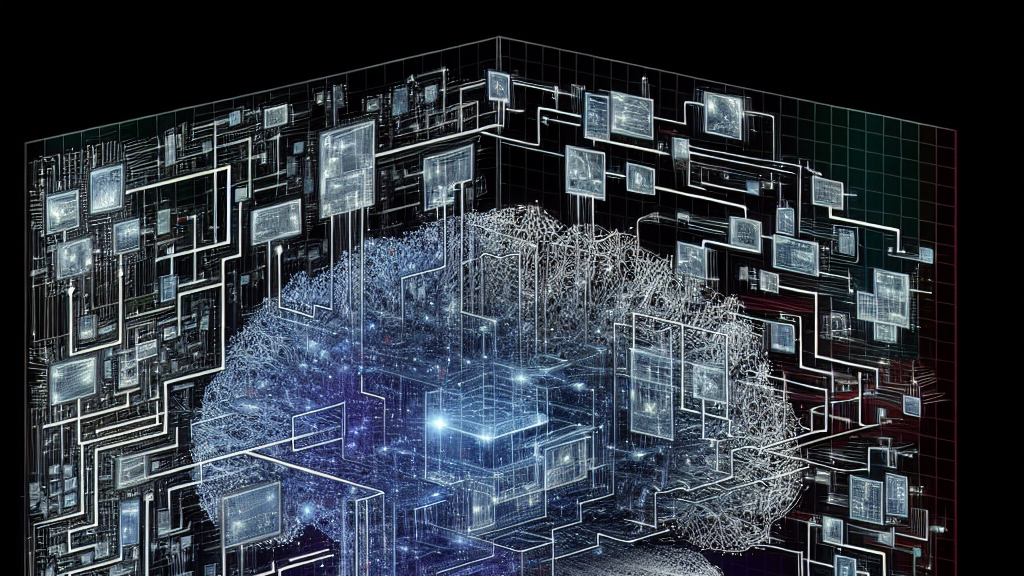
Imagine the world of artificial intelligence (AI) as a giant puzzle with millions of pieces clicking together to make sense of everything from your favorite song playlist to your online shopping recommendations. But here’s the catch: all this data needs to be kept safe and understandable. That’s where a fascinating new math trick could come in, offering a genius way to enhance privacy and transparency in AI models.
The researchers have devised a technique called tensorization, akin to organizing data into a neat stack of blocks. By employing this method, only a limited amount of data points are required to represent complex functions—a bit like solving a puzzle with fewer pieces! This method is particularly useful for making neural networks (the brains behind AI) more private by mixing up data patterns, without changing the results that users see. It can also help reveal hidden properties of materials, using these tensor stacks to learn about their underlying structures.
What does this mean for you? Essentially, this research could lead to AI apps that use and store less of your personal information while still delivering accurate predictions and timely suggestions. Imagine using a voice assistant that learns quickly and works flawlessly, all the while keeping your data secure and private. This breakthrough could reshape how AI interacts with your data, ensuring you get the best of both privacy and performance.
Did you know? This tensorization method can compress AI models, making them faster and less memory-hungry, akin to packing a suitcase with ten outfits but taking up the room of just one!
FAQs
What unexpected discovery did scientists make?
The researchers found that their tensorization method can obfuscate neural networks and enhance both privacy and interpretability.
How can this research impact everyday AI apps?
This method could make AI apps more efficient and secure by reducing the amount of data they need and improving how they handle personal information.
Why is data privacy in AI important?
Data privacy ensures that personal information shared with AI systems is kept safe and not misused, fostering trust and security in everyday tech applications.
What does tensorization mean for AI model efficiency?
Tensorization can improve model efficiency by creating a better balance between memory usage and processing speed, which is crucial for fast and effective AI performance.
How does this method enhance AI model interpretability?
By organizing data into a simpler form, tensorization helps researchers understand and visualize the insights that AI models draw from data.
Background
In the field of mathematics and computer science, tensors are like a fancier version of matrices, allowing data to be organized in more dimensions. Tensorization involves using these multidimensional data structures to simplify and compress complex data sets. This approach can be used to make computations faster and data more understandable, especially in large neural networks powering AI technologies.
History
Tensor methods have been part of mathematics for decades, traditionally used in fields like physics for modeling complex systems. With the rise of AI, these methods have gained traction for optimizing neural networks. Previous research has focused on compressing models to make them run more efficiently, while recent studies have started to explore their potential for improving privacy and transparency in machine learning.
Based on “Tensorization of neural networks for improved privacy and interpretability” by José Ramón Pareja Monturiol, Alejandro Pozas-Kerstjens, David Pérez-García, available on arXiv (arxiv.org/abs/2501.06300), used under CC BY 4.0 (creativecommons.org/licenses/by/4.0/).