Connect with us

Search by keyword

Computers

Can We Trust Our Eyes Anymore?

This research examines the rise of deepfakes—realistic fake media created with advanced AI—and why detecting them is crucial for our safety and trust in media. It dives into how these fakes are made, their potential threats, and the ongoing battle to catch them before they deceive us.

Can We Trust Our Eyes Anymore

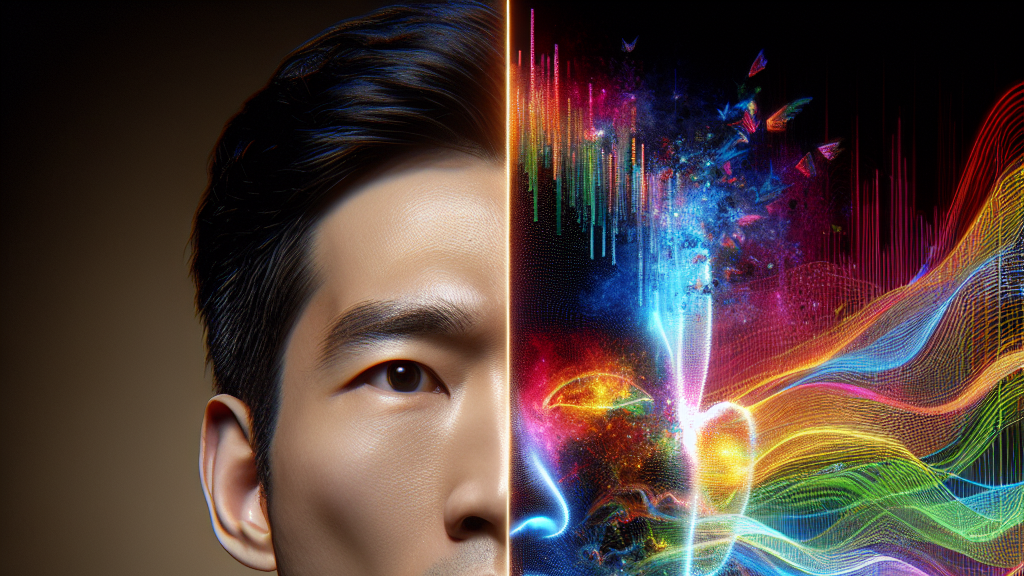
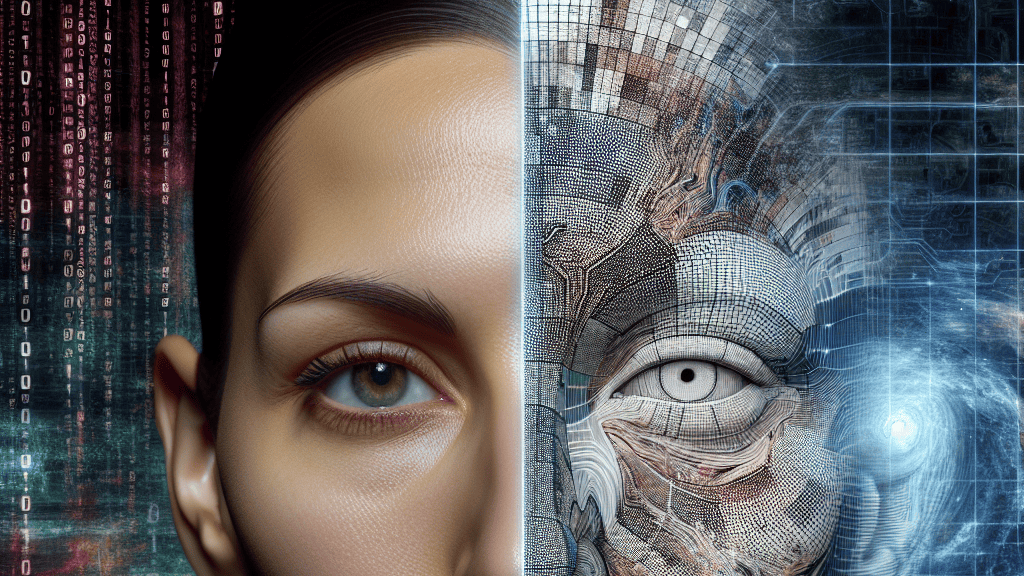
Imagine a world where you can’t trust your own eyes or ears. That’s the unsettling reality we might soon face with the rise of deepfakes—super-realistic, computer-generated fake videos, audios, and images. These aren’t just clever Photoshop—or video-editing tricks. They are crafted by cutting-edge artificial intelligence technologies that make you question everything you see and hear.

The paper delves deep into how these deepfakes are created using technologies like Variational Autoencoders and Generative Adversarial Networks. These tools are like digital artists, capable of crafting entirely new faces and voices or convincingly swapping them onto someone else’s. The study highlights the ‘arms race’ between those creating deepfakes and those trying to detect them, illustrating just how advanced both sides are in this technological tug-of-war.

But why should you care? Imagine a deepfake of a famous world leader making inflammatory statements that could spark international tension or a seemingly candid video of someone you trust saying or doing something they never did. This isn’t science fiction—it’s a potential reality. The research emphasizes that equipping ourselves with powerful detection tools could safeguard truth, protect identities, and uphold the stability of our societies in this digital age.

Did you know that some deepfakes are so convincing they require forensic analysis just to tell they’re fake?

FAQs

What unexpected discovery did scientists make?

Scientists discovered that the technology to create deepfakes is advancing rapidly, making them harder to detect and posing significant risks to privacy and security.

How do deepfakes threaten everyday life?

Deepfakes can deceive individuals, harm reputations, and undermine trust in media and communications, affecting everything from personal relationships to political processes.

What are the challenges in detecting deepfakes?

Detecting deepfakes involves constantly evolving technology to differentiate real from fake, as creators continually improve their techniques, leading to an ongoing ‘arms race’ in deepfake detection.

Why are deepfakes more than just entertainment?

While some deepfakes are used for fun or creativity, their misuse poses serious threats, including blackmail, misinformation, and potential impacts on democracy and justice systems.

What tools do researchers use to detect deepfakes?

Researchers use advanced deep learning models and algorithms to identify unique patterns or inconsistencies in the media that indicate manipulation.

Background

Deepfakes are created using advanced artificial intelligence and machine learning techniques. Two popular methods are Generative Adversarial Networks and Variational Autoencoders. These involve training computers to learn patterns of how different people’s faces or voices behave and then use that information to create hyper-realistic false media. Detecting deepfakes requires equally sophisticated technology that can spot subtle discrepancies in the media that might indicate it’s been faked.

History

The inception of deepfakes traces back to early image manipulation and voice cloning technologies. Generative Adversarial Networks and Variational Autoencoders have significantly enhanced the realism of deepfakes. These advancements have led to significant concerns about their potential misuse. Over the years, researchers have made breakthroughs in deepfake detection, developing techniques to identify the unique markers of fake media.

Based on “Generating and Detecting Various Types of Fake Image and Audio Content: A Review of Modern Deep Learning Technologies and Tools” by Arash Dehghani, Hossein Saberi, available on arXiv (arxiv.org/abs/2501.06227), used under CC BY 4.0 (creativecommons.org/licenses/by/4.0/).

Trending

Latest

Can AI Save Water Discover How

Computers

AI is transforming the tech world, but it uses lots of water! A new tool, SCARF, helps us measure and reduce AI's water footprint,...

Whats a Forbush Decrease and Why Should We Care Whats a Forbush Decrease and Why Should We Care

Space

Scientists just observed the biggest solar storm event in years, revealing unexpected cosmic ray patterns. Understanding these changes could help us protect our technology...

Can Cars Spot Danger Faster Than Humans Can Cars Spot Danger Faster Than Humans

Computers

Think about how quickly you react when something unexpected happens on the road. This research brings us closer to creating self-driving cars that can...

Can Fear of the Other Stop Social Harmony Can Fear of the Other Stop Social Harmony

Physics

Fear of the unknown might make it harder for people to agree and get along. This study shows that when people have strong xenophobic...

Can AI Revolutionize Breast Cancer Diagnosis Can AI Revolutionize Breast Cancer Diagnosis

Electricity

This research introduces a groundbreaking AI model that can accurately assess HER2-positive breast cancer using widely accessible staining methods, potentially revolutionizing how we diagnose...

Can AI Transform Your Singing into a Choir Can AI Transform Your Singing into a Choir

Computers

Imagine singing solo and having AI turn you into a choir. This research unveils a groundbreaking AI tool that transforms your voice into rich...

You May Also Like

Computers

Imagine keeping your digital secrets safe as they zoom across the web thanks to a clever tech trick. By breaking data into pieces and...

Computers

New research reveals that the internal 'thinking process' of AI personal assistants could be leaking your sensitive information. This could affect how we trust...

Computers

This research uncovers vulnerabilities in AI that could expose private and sensitive data while fine-tuning these models for specific fields like healthcare. By understanding...

Electricity

AI struggles to detect fake emotional speech, risking new types of voice-based cyber attacks. This research proposes an innovative solution with emotion-focused models to...

Computers

A groundbreaking study reveals that many bots, especially AI-driven ones, often disregard online privacy rules set by websites, suggesting a need for better protective...

Computers

Imagine if someone could perfectly mimic your voice with just a short audio clip. That's the challenge with voice cloning, and why VoiceMark's new...

Computers

Imagine a world where your loved ones can live independently at home, yet stay safe from potential accidents without giving up their privacy. Researchers...

Computers

Voice deepfakes aren't just about sound anymore; even small changes in text can fool detection systems, raising concerns for audio security. This could affect...

Computers

This research explores new ways to understand and potentially trick large language models more safely and efficiently, which could help us improve AI systems...

Copyright © 2024 8ig8rain.

Disclaimer: The content on 8ig8rain.com consists of AI-generated summaries of scientific abstracts from arXiv. Please note that most arXiv abstracts are preprints and may not have undergone formal peer review. While these summaries aim to convey key ideas and potential applications, they are provided for informational purposes only and should not be interpreted as validated scientific findings or professional advice. The summaries are intended to educate, spark curiosity, and inspire further exploration of science.