Connect with us

Search by keyword

Computers

Can Brain Power Boost AI Efficiency?

Scientists are borrowing tricks from the brain’s playbook to make AI systems faster and more energy-efficient. By combining brain-like spiking signals at key points with traditional neural networks, they’ve crafted a hybrid system that drastically cuts energy use and speeds up data processing.

Can Brain Power Boost AI Efficiency

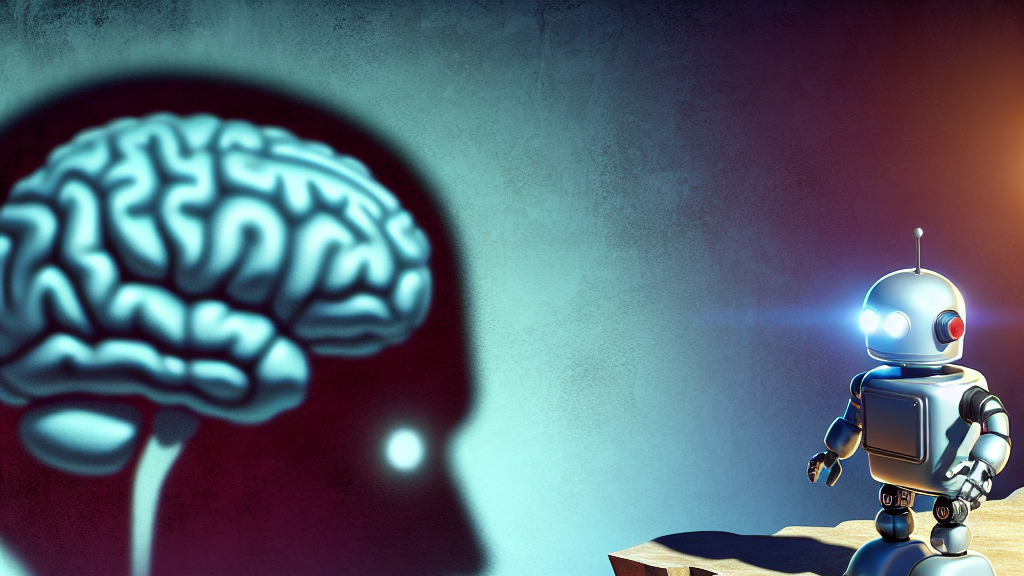
Imagine if your computer or phone could think like a brain, making it faster and using less battery. That’s what’s happening with a new approach inspired by the brain’s ability to send messages quickly and energy-efficiently across long distances. Scientists are taking cues from the way our brains communicate to tackle slow and power-hungry AI systems.

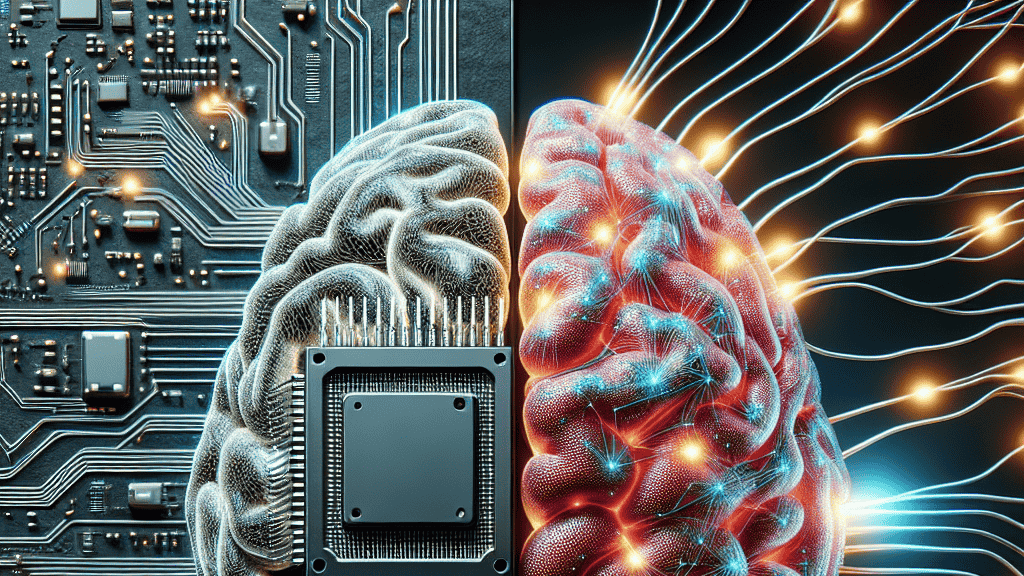
The research introduces a hybrid neural network architecture called SNAP, which cleverly combines elements of both spiking and traditional neural networks. These spiking neural networks are great at sending information across long distances without using much energy, much like the brain does. By placing these efficient pathways at bandwidth bottlenecks, like the edges of computer chips, and keeping high-power processing inside, SNAP creates a seamless flow of information that’s both fast and energy-efficient.

In real-world applications, this brainy approach means that AI systems could become significantly more powerful without the need for massive amounts of energy, making everything from your smartphone to AI language models much faster and more efficient. It’s like having the brain’s efficiency with the processing power of state-of-the-art technology, all working together to power the next generation of artificial intelligence.

Did you know the human brain uses about as much power as a 20-watt light bulb, yet it processes immense amounts of data faster than some of the largest supercomputers?

FAQs

What unexpected discovery did scientists make?

They found that combining spiking neural networks with traditional models can drastically improve energy efficiency and reduce processing time, directly inspired by the brain’s efficient communication.

How does SNAP change AI technology?

SNAP integrates brain-like spiking signals in AI systems to address energy and data processing bottlenecks, making them faster and more efficient.

Why are spiking neural networks important?

Spiking neural networks mimic the brain’s way of sending information efficiently, using less energy and speeding up data flow, crucial for improving AI scalability.

How might this affect my everyday tech?

Devices could become faster and more energy-efficient, leading to longer battery life and better performance in AI-driven applications like voice assistants and image recognition.

What’s the big deal about brain-inspired AI?

By learning from the brain’s energy efficiency, AI systems can be scaled up without the usual high energy costs, paving the way for more sustainable technology advancements.

Background

The brain communicates through sparse, spike-based signals which use very little energy. Spiking neural networks try to replicate this method for energy efficiency but have struggled with scaling and performance. By integrating them strategically within a broader architecture, they can provide significant benefits in overcoming communication bottlenecks in AI systems.

History

The journey of AI trying to mimic the brain dates back many decades. Early neural networks sought to replicate human thinking processes but were limited by computational power and energy demands. The development of spiking neural networks attempted to capture the brain’s efficiency but faced challenges in performance. SNAP represents a significant step forward by seamlessly blending these networks with traditional methods, optimizing both energy use and processing speed.

Based on “Learnable Sparsification of Die-to-Die Communication via Spike-Based Encoding” by Joshua Nardone, Ruijie Zhu, Joseph Callenes, Mohammed E. Elbtity, Ramtin Zand, Jason Eshraghian, available on arXiv (arxiv.org/abs/2501.08645), used under CC BY 4.0 (creativecommons.org/licenses/by/4.0/).


Trending

Latest

Can AI Save Water Discover How

Computers

AI is transforming the tech world, but it uses lots of water! A new tool, SCARF, helps us measure and reduce AI's water footprint,...

Whats a Forbush Decrease and Why Should We Care Whats a Forbush Decrease and Why Should We Care

Space

Scientists just observed the biggest solar storm event in years, revealing unexpected cosmic ray patterns. Understanding these changes could help us protect our technology...

Can Cars Spot Danger Faster Than Humans Can Cars Spot Danger Faster Than Humans

Computers

Think about how quickly you react when something unexpected happens on the road. This research brings us closer to creating self-driving cars that can...

Can Fear of the Other Stop Social Harmony Can Fear of the Other Stop Social Harmony

Physics

Fear of the unknown might make it harder for people to agree and get along. This study shows that when people have strong xenophobic...

Can AI Revolutionize Breast Cancer Diagnosis Can AI Revolutionize Breast Cancer Diagnosis

Electricity

This research introduces a groundbreaking AI model that can accurately assess HER2-positive breast cancer using widely accessible staining methods, potentially revolutionizing how we diagnose...

Can AI Transform Your Singing into a Choir Can AI Transform Your Singing into a Choir

Computers

Imagine singing solo and having AI turn you into a choir. This research unveils a groundbreaking AI tool that transforms your voice into rich...

You May Also Like

Computers

Dive into the world of AI mistrust, where computers don't always know when they're wrong! Discover how teaching AI to see like us might...

Computers

Discover how setting a simple power cap on processors can lead to 25% more energy efficiency compared to traditional methods, all while maintaining good...

Computers

Imagine saving electricity without sacrificing your computer’s performance. This study shows that a simple power cap can make your server more energy-efficient by up...

Materials

Researchers have discovered that plasma-powered engines can achieve the highest efficiency possible by using a unique caloric equation of state. This breakthrough could open...

Physics

Switching to electricity-based technology like heat pumps and electric cars makes our energy use much more efficient and sustainable. By doing this, we can...

Computers

This research explores how emotionally responsive AI is changing our lives—from potentially boosting mental health to posing risks like emotional manipulation. Whether influencing education,...

Computers

Imagine a world where AI doesn't just follow orders but feels for us, understanding our emotions to help more effectively. This research shows that...

Electricity

Discover how miniature algorithms can boost the performance of your everyday smart devices by making them more energy-efficient and effective in communication! This innovation...

Computers

Imagine if AI could 'feel' fear to dodge danger! Researchers are tapping into biological and psychological insights to make machines smarter, using concepts like...

Copyright © 2024 8ig8rain.

Disclaimer: The content on 8ig8rain.com consists of AI-generated summaries of scientific abstracts from arXiv. Please note that most arXiv abstracts are preprints and may not have undergone formal peer review. While these summaries aim to convey key ideas and potential applications, they are provided for informational purposes only and should not be interpreted as validated scientific findings or professional advice. The summaries are intended to educate, spark curiosity, and inspire further exploration of science.