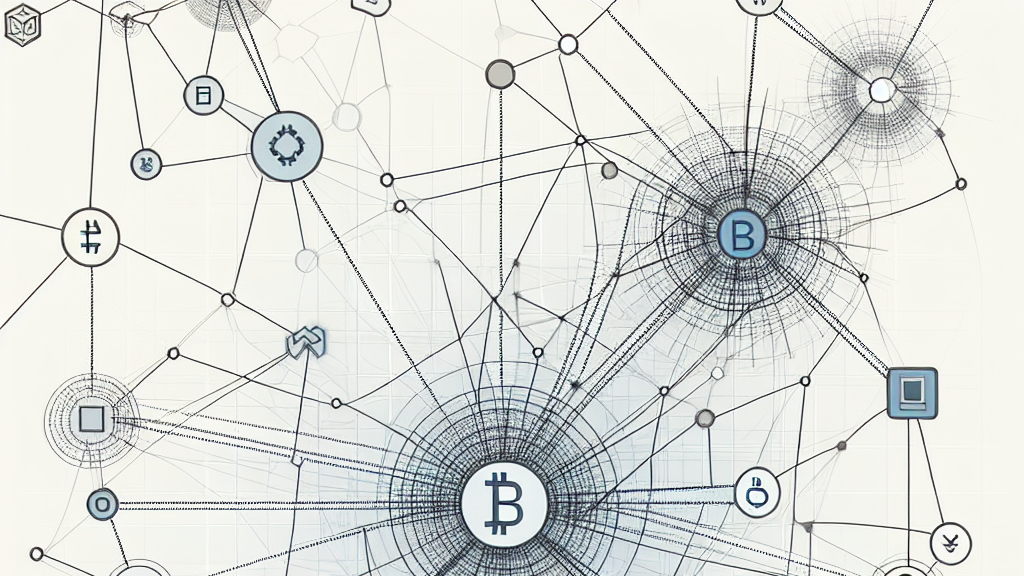
Imagine if you could make money by simply taking advantage of price differences between two stores. In the world of cryptocurrencies, this is not just a daydream but a reality. People are making significant profits by using clever strategies to trade digital assets between different blockchain networks, creating what is known as arbitrage opportunities.
Recent research has uncovered how traders cleverly exploit these opportunities across different blockchains. They use strategies that are either sequence-independent, where trades don’t rely on a specific order, or sequence-dependent, which involves using asset bridges to transfer value between chains. By analyzing these strategies across nine different blockchains, the researchers identified over 260,000 arbitrage opportunities, resulting in profits worth millions. However, this also introduces challenges like network congestion and centralized control among a few traders.
What does this mean for you? Well, it could revolutionize how digital trading is done, potentially opening up new avenues for everyday investors like us to profit from this high-tech world. With better strategies and understanding of these arbitrages, it might just become easier for more people to join in on these lucrative opportunities.
Did you know that traders made over $9 million last year just by exploiting differences in prices between blockchain networks?
FAQs
What are cross-chain arbitrages in blockchain trading?
Cross-chain arbitrages in blockchain trading refer to profit-making opportunities where traders exploit price differences of the same digital asset across different blockchain networks. They use strategies to buy low on one network and sell high on another.
How do Sequence-Independent and Sequence-Dependent Arbitrage strategies work?
Sequence-Independent Arbitrage strategies involve making trades in different directions across chains without relying on a specific order, while Sequence-Dependent strategies require using asset bridges to transfer value between blockchains. Both aim to capitalize on price discrepancies.
Why should I care about cross-chain arbitrages and MEV?
Understanding cross-chain arbitrages and Maximal Extractable Value (MEV) can reveal how profits are made in the crypto world and highlight potential investment opportunities. This knowledge can also help you make informed decisions if you are participating in blockchain trading.
What are the risks associated with cross-chain arbitrages?
Cross-chain arbitrages pose risks like network congestion, which can lead to failed transactions, and centralization, where a few traders dominate the market. There are also security challenges related to the decentralization of networks.
How could this research impact the future of cryptocurrency trading?
This research sheds light on the mechanics of cross-chain trading, paving the way for more efficient and secure trading strategies. It can help minimize risks and improve liquidity, benefiting both seasoned traders and newcomers to the digital asset market.
Background
Blockchains are digital ledgers that securely record transactions. Decentralized Exchanges (DEXes) allow the trading of various digital assets without a central authority. The emergence of Layer-1 (L1) and Layer-2 (L2) networks has expanded the blockchain ecosystem, but this also fragments liquidity—meaning the same asset can have different prices across different networks, creating opportunities for arbitrage.
History
Cryptocurrency trading began with a single blockchain—Bitcoin. As more networks developed, exchanges moved from centralized platforms to decentralized ones (DEXes), offering various cryptocurrencies. This led to fragmented markets, providing arbitrage opportunities, which traders keenly exploited. However, while single-chain arbitrages were well-studied, cross-chain arbitrages remained complex due to non-atomic nature—where transactions aren’t completed at once, making execution challenging.
Based on “Pandora’s Box: Cross-Chain Arbitrages in the Realm of Blockchain Interoperability” by Burak Öz, Christof Ferreira Torres, Jonas Gebele, Filip Rezabek, Bruno Mazorra, Florian Matthes, available on arXiv (arxiv.org/abs/2501.17335), used under CC BY 4.0 (creativecommons.org/licenses/by/4.0/).