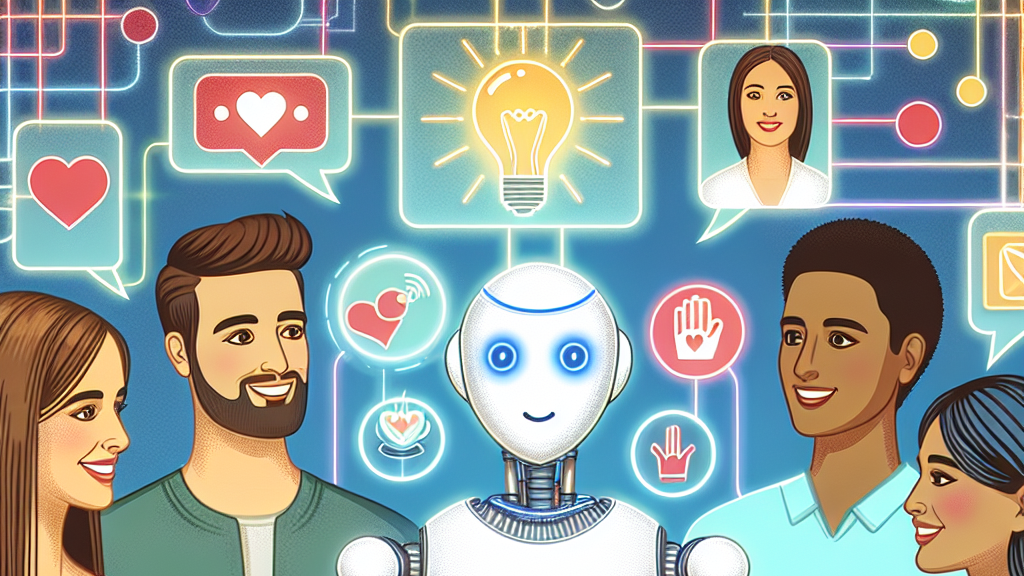
Imagine a future where AI isn’t just a tool but feels like a friend. Recent research reveals that Americans are increasingly viewing artificial intelligence (AI) as warm and human-like, changing the way we relate to this technology. It’s interesting how our mental images and metaphors of AI play a significant role in shaping how we perceive and trust it.
This study collected responses from 12,000 individuals across the U.S. to understand public perceptions of AI using metaphors. By analyzing these metaphors alongside participants’ views, researchers discovered that people tend to see AI as both warm and competent. Different groups, like women and older adults, are more likely to attribute human-like traits to AI, which influences their trust and willingness to use it.
Why does this matter? Because the way we perceive AI can shape its future use and development. If AI feels more relatable and trustworthy, it opens doors for it to become an integral and positive part of our daily lives. Imagine elderly care robots that are perceived as caring friends or AI teachers seen as supportive mentors—these are potential outcomes of this perception shift.
Did you know that people are more likely to trust AI if they see it as warm and human-like? This perception shift influences our willingness to adopt AI technologies in daily life.
FAQs
[Collection], [Collection], [Collection], [Collection], [Collection]
Background
Artificial intelligence (AI) refers to computer systems that perform tasks that usually require human intelligence, like recognizing speech, solving problems, or making decisions. To study public perceptions, researchers often rely on surveys, but this research uses metaphors, a more nuanced approach to understand how people mentally frame and interpret AI.
History
For years, AI was predominantly seen as futuristic and emotionless, often depicted in sci-fi as cold or threatening. As AI technologies have become more prevalent and integrated into everyday life, researchers began examining public perceptions to understand trust and acceptance levels. This study builds on previous work by using a metaphor-based approach that provides deeper insight into people’s cognitive associations with AI.
Based on “From tools to thieves: Measuring and understanding public perceptions of AI through crowdsourced metaphors” by Myra Cheng, Angela Y. Lee, Kristina Rapuano, Kate Niederhoffer, Alex Liebscher, Jeffrey Hancock, available on arXiv (arxiv.org/abs/2501.18045), used under CC BY 4.0 (creativecommons.org/licenses/by/4.0/).