Connect with us

Search by keyword

Economics

Why Do We Stick with Faulty Technology?

This research shows why we sometimes keep using faulty technology, even when we know it’s not the best choice, and how this affects industries like finance and AI.

Why Do We Stick with Faulty Technology
✨Researched by humans. Explained by robots. Learn more.

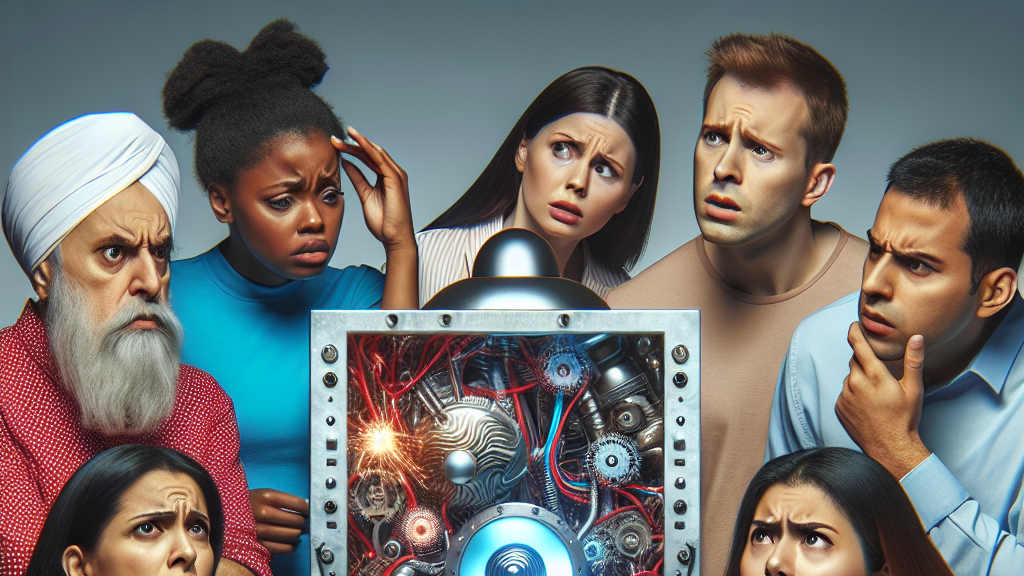
Imagine being told to switch to a new, flashy gadget, only to find out it doesn’t work as well as promised. But here’s the catch—everyone else is still using it, even if it seems broken. This might sound like a quirky story from the future, but it’s a real dilemma faced by businesses and industries today. This research dives into why this happens and what it means for our tech-driven world.

The study looks at a scenario where a leader tries to get a group to vet a new technology. The leader can’t punish the whole group if they don’t do their job, so people find it easy to slack off collectively. New technologies, although promising, open up the door for this type of behavior, sometimes leading to big failures. Even when some people realize a tech is flawed, they might still keep using it because everyone else is too.

A real-world example is the financial crisis of 2008, where mortgage securitization showed similar patterns. Today, as industries rush to adopt artificial intelligence, there’s a risk we might repeat history. If businesses don’t carefully vet the technology, it could lead to inefficiencies and failures that affect us all. It’s a reminder to be cautious and thorough when jumping on the latest tech bandwagon.

Even when people know a technology doesn’t work well, they might keep using it just because everyone else does!

FAQs

Why do people continue to use faulty technology?

People might keep using faulty technology because it becomes a group norm, or they see others doing the same, leading to coordinated behavior even when it’s not efficient.

How does this research explain the 2008 financial crisis?

The research explains how mortgage securitization became a widely adopted but flawed practice, resulting in widespread economic issues due to collective inaction to vet the technology properly.

What is coordinated shirking and why is it a problem?

Coordinated shirking happens when groups avoid responsibility together, leading to failures in vetting new technology and potentially large-scale production failures.

Could this research help prevent future technology failures?

Yes, by understanding these patterns, industries can create better systems for technology vetting, reducing the risk of adopting flawed technologies.

Why is technology adoption important for industries like AI?

Technology adoption is crucial for AI because improper vetting and use could lead to significant inefficiencies or harmful outcomes, affecting productivity and innovation.

Background

The study is based on a principal-agent model where a leader (the principal) tries to get a group (the agents) to test out a new technology. Since it’s too costly to punish everyone if they don’t do their job, agents might collectively decide not to work hard. This is known as coordinated shirking, and it can lead to technology being adopted even when it’s not effective.

History

The concept of principal-agent dynamics has been studied for decades, focusing on how to manage and motivate groups efficiently. During the 2008 financial crisis, poor vetting of new financial instruments like mortgage-backed securities led to widespread economic issues. As technology rapidly evolves, similar patterns are emerging in areas like artificial intelligence, raising concerns about the effectiveness of adoption processes.

Based on “Coordinated Shirking in Technology Adoption” by Nicholas H. Tenev, available on arXiv (arxiv.org/abs/2503.17613), used under CC BY 4.0 (creativecommons.org/licenses/by/4.0/).


Trending

Latest

Can AI Save Water Discover How

Computers

AI is transforming the tech world, but it uses lots of water! A new tool, SCARF, helps us measure and reduce AI's water footprint,...

Whats a Forbush Decrease and Why Should We Care Whats a Forbush Decrease and Why Should We Care

Space

Scientists just observed the biggest solar storm event in years, revealing unexpected cosmic ray patterns. Understanding these changes could help us protect our technology...

Can Cars Spot Danger Faster Than Humans Can Cars Spot Danger Faster Than Humans

Computers

Think about how quickly you react when something unexpected happens on the road. This research brings us closer to creating self-driving cars that can...

Can Fear of the Other Stop Social Harmony Can Fear of the Other Stop Social Harmony

Physics

Fear of the unknown might make it harder for people to agree and get along. This study shows that when people have strong xenophobic...

Can AI Revolutionize Breast Cancer Diagnosis Can AI Revolutionize Breast Cancer Diagnosis

Electricity

This research introduces a groundbreaking AI model that can accurately assess HER2-positive breast cancer using widely accessible staining methods, potentially revolutionizing how we diagnose...

Can AI Transform Your Singing into a Choir Can AI Transform Your Singing into a Choir

Computers

Imagine singing solo and having AI turn you into a choir. This research unveils a groundbreaking AI tool that transforms your voice into rich...

You May Also Like

Computers

Imagine your online searches giving you exactly what you need, every time. AI is enhancing search engines by generating synthetic data that helps make...

Computers

Researchers explore fairness in AI models, specifically vision-language ones, revealing biases in gender and race. They introduce a new method to balance these biases,...

Computers

This research delves into how advanced AI models can both transform and threaten internet security. It reveals AI's role in boosting cybercrime, urging a...

Computers

AI is not just smart; it's possibly involved in shady internet activities. New research explores how AI might be connected to cybercrime, urging policymakers...

Computers

AI tech might be aiding cybercriminals, raising big questions about how we balance innovation with safety. It's crucial for policymakers, developers, and the public...

Computers

Discover how AI isn't here to take your job, but to make it easier by teaming up with human skills and boosting productivity.

Computers

AI-generated music is on the rise, making it crucial to distinguish between human and machine-made songs. This research delves into the methods and implications...

Computers

With AI becoming smarter but more mysterious, there's growing concern about its accountability. This research unveils the puzzle of making AI transparent and suggests...

Computers

Imagine being able to create amazing 3D designs just by snapping a photo, without needing to know anything about 3D modeling software. That's the...

Copyright © 2024 8ig8rain.

Disclaimer: The content on 8ig8rain.com consists of AI-generated summaries of scientific abstracts from arXiv. Please note that most arXiv abstracts are preprints and may not have undergone formal peer review. While these summaries aim to convey key ideas and potential applications, they are provided for informational purposes only and should not be interpreted as validated scientific findings or professional advice. The summaries are intended to educate, spark curiosity, and inspire further exploration of science.