Imagine if the materials around us could behave like living organisms—changing, evolving, and even ‘thinking’ in response to their environment. This isn’t science fiction; it’s happening thanks to new advancements in material science. Researchers are developing active, responsive materials with life-like properties that hold the key to innovative applications like self-repairing structures or adaptable fabrics. However, because these materials are so complex, scientists face the challenge of managing massive amounts of data to understand them.
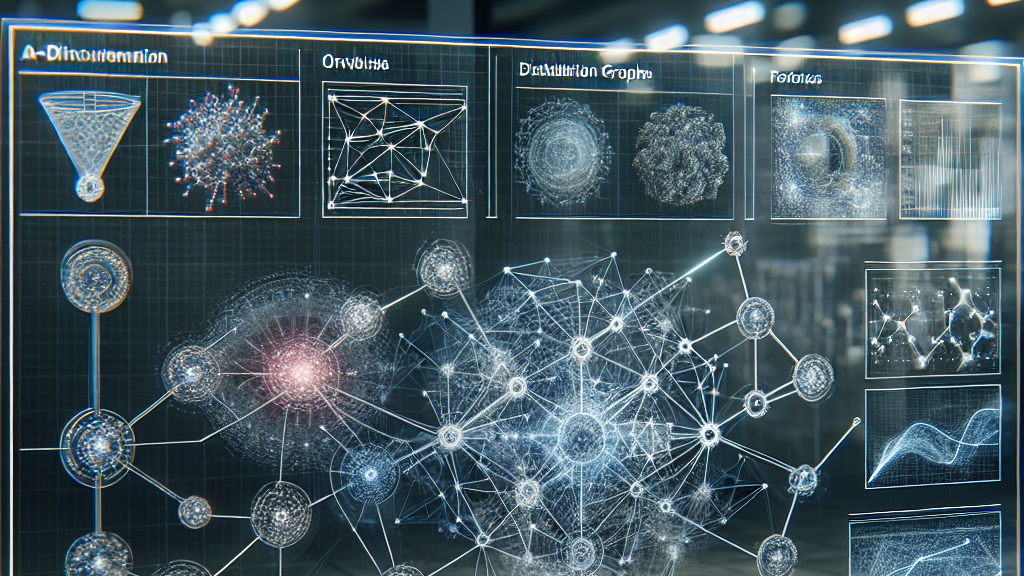
Here’s where BARCODE comes in. This new software tool helps researchers tackle this complexity head-on. BARCODE can quickly analyze vast amounts of video data from microscopic views of these materials, creating a visual and quantitative ‘fingerprint’ that captures their unique properties without taking up loads of space. By breaking down complex material behaviors into simple, easy-to-understand metrics, BARCODE makes it possible for even non-experts to access, compare, and share data about these materials. The research demonstrated BARCODE’s effectiveness by using it on datasets from networks that mimic the internal skeletons of cells and layers of cells themselves.
Imagine the future possibilities: self-repairing roads, clothing that adapts to weather changes, or medical implants that adjust to the body’s needs. This isn’t just about creating something new—it’s about making high-tech materials accessible and understandable, opening the door to a world where science fiction meets reality. By simplifying complex data, BARCODE could transform industries, making advanced materials more usable in everyday life.
The concept of materials with life-like qualities wasn’t possible until recent breakthroughs made it a reality.
FAQs
What is BARCODE in the context of materials science?
BARCODE is a software tool that automates the analysis of complex data from active, life-like materials, allowing researchers to create simplified ‘fingerprints’ of these materials for easier study.
How does BARCODE simplify material analysis?
BARCODE reduces the complexity and size of data by creating a visual and quantitative representation, or fingerprint, of a material’s unique properties, making it easier to understand and share.
Why is the study of active, responsive materials important?
Studying these materials is crucial because they possess life-like qualities and can be used to develop innovations like self-repairing structures and adaptive clothing, transforming various industries.
Who can use the BARCODE software?
BARCODE is designed to be accessible to non-experts, enabling broader access, sharing, and comparison of material data across different fields.
How could this research change our daily lives in the future?
This research can lead to everyday applications like roads that fix themselves and clothing that adjusts to weather conditions, making advanced technology a part of everyday life.
Background
Active, responsive, nonequilibrium materials are a new class of engineered materials that can dynamically change and self-organize in a manner similar to living organisms. This means they have the potential to perform complex functions or adapt to different environments, offering revolutionary applications in various fields. Understanding these materials requires analyzing vast and complex data which traditional methods struggle to handle, necessitating new tools like BARCODE.
History
The study of materials has evolved significantly over the years, moving from static, unchanging materials to those that can adapt and respond. The integration of biological concepts into material science has been a game-changer, leading to the development of active materials that mimic the dynamic properties of life. This study builds on previous research by providing a practical tool to manage and analyze these complex new materials efficiently.
Based on “BARCODE: Biomaterial Activity Readouts to Categorize, Optimize, Design and Engineer for high throughput screening and characterization of dynamically restructuring soft materials” by Qiaopeng Chen, Aditya Sriram, Ayan Das, Katarina Matic, Maya Hendija, Keegan Tonry, Jennifer L. Ross, Moumita Das, Ryan J. McGorty, Rae M. Robertson-Anderson, Megan T. Valentine, available on arXiv (arxiv.org/abs/2501.18822), used under CC BY 4.0 (creativecommons.org/licenses/by/4.0/).