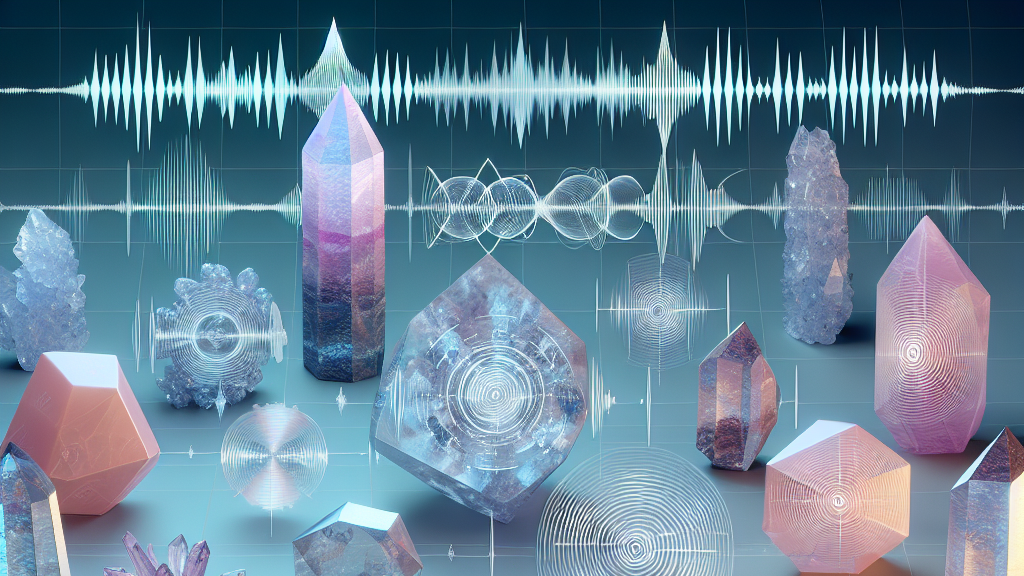
Imagine if a crystal could ‘sing’ the same song as another, even if they looked nothing alike! This idea gets at the heart of a fascinating question—can different structures produce identical vibrational modes? It’s similar to wondering if two distinct drums could sound the same when struck. Recent research is uncovering crystals and materials that might do exactly this, opening up a world of possibilities.
Scientists are digging deep into the concept of isospectrality, which essentially asks if two different structures can share the same set of vibrations. Think of it as two different keys unlocking the same mystery box of sounds. They’ve found this to be true in certain crystal structures, using a combination of mathematical theory and clever algorithms. They identified patterns where crystals, despite being structured differently, resonate the same way, just like two mismatched friends sharing identical laughs.
Why does this matter? Well, imagine creating materials with these unusual properties—materials that could be used to control sound waves in novel ways, or where energy is stored and released in sync despite differing shapes. This could impact everything from designing new musical instruments to engineering materials for better soundproofing or energy efficiency. It’s a new frontier where science and sound play a harmonious tune.
Did you know? In music, it’s impossible for two pianos to have identical vibrations, but in crystal science, it’s actually possible!
FAQs
What is isospectrality in the context of crystal vibrations?
Isospectrality refers to the phenomenon of having two different crystal structures that share the same vibrational modes, meaning they ‘sound’ identical when vibrated, even though their physical forms differ.
How can this research on isospectral crystals affect everyday life?
Discovering isospectral crystals can lead to novel materials that manage sound and energy in unique ways, potentially improving technologies in soundproofing, energy storage, and even musical instruments.
What is the significance of the theta function in this research?
The theta function is a mathematical tool used to determine whether different crystal structures are isospectral, meaning they share the same vibrational patterns.
Can different shaped drums have the same vibrational modes?
The research draws on the famous question, ‘Can one hear the shape of a drum?’ but extends it to crystal structures, suggesting some differently shaped crystals could indeed ‘sound’ the same.
What is the potential impact of this research on future technologies?
Understanding isospectrality could lead to advancements in acoustics, creating materials that manage sound in unprecedented ways, which can influence various fields from architecture to consumer electronics.
Background
Isospectrality involves the study of how different objects or systems can have the same set of eigenvalues, or vibrational modes. The concept is often applied to the Laplacian operator, which helps determine how vibrations occur in a space. In mathematics and physics, this can reveal whether distinct forms or structures can exhibit identical vibrational properties, similar to whether different drum shapes can produce the same sound patterns.
History
The question ‘Can one hear the shape of a drum?’ traces back to mathematical inquiries about whether different geometric objects can have the same spectral properties, specifically, the same vibrational frequencies. Over the years, this query has influenced various fields of mathematics and physics. The current study extends this question to the realm of crystallography, examining whether diverse crystal configurations can share identical vibrational spectra.
Based on “Can one hear the shape of a crystal?” by Haina Wang, Salvatore Torquato, available on arXiv (arxiv.org/abs/2502.02819), used under CC BY 4.0 (creativecommons.org/licenses/by/4.0/).