Connect with us

Search by keyword

Materials

Can You Hear the Shape of a Crystal?

This research dives into whether different shaped crystals can produce the same ‘sound’, answering an age-old puzzle about geometry and vibrations. This could change how we understand and utilize material properties in technology and beyond.

Can You Hear the Shape of a Crystal
✨Researched by humans. Explained by robots. Learn more.

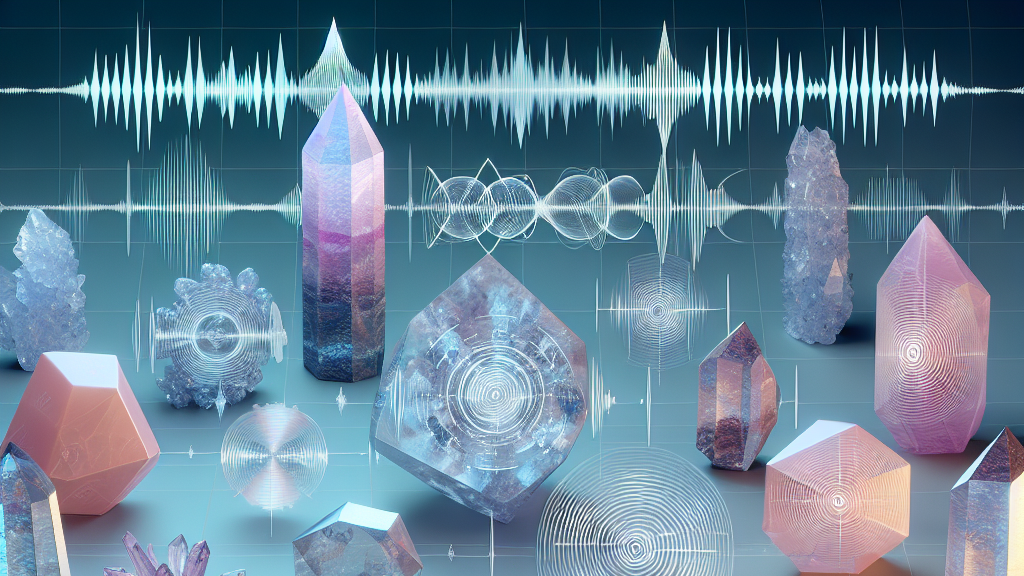
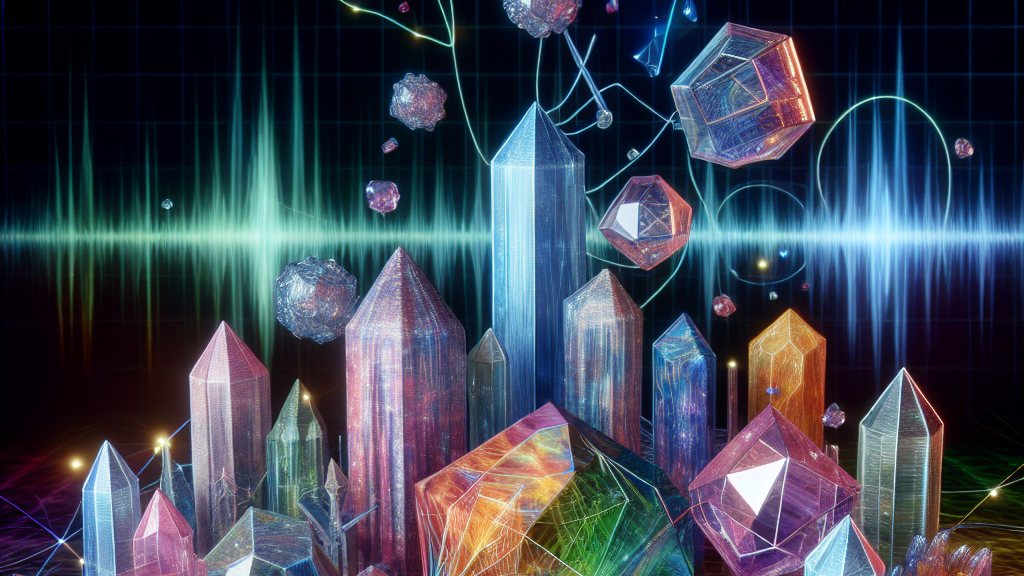
Have you ever wondered if different shaped objects can produce the same sound waves? Imagine this: two drums of different shapes vibrating identically. This mind-bending idea extends into the world of crystals, and scientists are exploring just that! They want to know whether crystals with different shapes can have identical vibrational modes, or in simpler terms, if these crystals can produce the same ‘sound’. This intriguing question taps into a famous puzzle once posed: ‘Can you hear the shape of a drum?’

Researchers are delving deeper into this mystery by looking at the specific arrangements of atoms in crystals, known as lattice structures, across different dimensions. They want to find out the minimum number of atoms needed in these arrangements to see if two seemingly different structures can share the same ‘notes’. They’ve discovered that with just a few particles in one, two, and three-dimensional spaces, crystals can indeed possess these shared characteristics.

Imagine in the future, we could design materials with tailored properties by simply changing how atoms are arranged. This could revolutionize technology, allowing us to craft materials that behave identically even if they look different at a microscopic level. From creating more efficient solar panels to developing stronger building materials, understanding these unique vibrational symmetries could unlock endless possibilities!

Crystals can ‘sing’ the same tune even if they’re shaped differently!

FAQs

What is isospectrality in the context of crystal structures?

Isospectrality refers to different crystal structures having the same set of vibration modes or ‘spectra’. This means that despite their differing shapes, they can essentially produce the same ‘sound’.

How does the research determine minimum particle bases for isospectral crystals?

Researchers use rigorous mathematical approaches and precise numerical algorithms to identify the smallest number of particles in a crystal’s structure that can still share the same vibrational properties as another, different structure.

Why is the study of isospectral crystals significant?

Understanding isospectral crystals can significantly impact material sciences by allowing the development of materials with targeted properties. This can lead to innovative advancements in technology, including improved energy efficiency and stronger construction materials.

Background

The study of isospectrality revolves around understanding how different structures can have identical sets of eigenvalues, or spectra. In simpler terms, it’s like figuring out how different instruments can play the same note. In mathematics and physics, this concept is explored through the Laplacian operator, which essentially analyzes vibrations or modes of a given shape or structure.

History

The concept of isospectrality extends from a historical mathematical puzzle known as ‘Can you hear the shape of a drum?’. This question originated from the study of how different geometric shapes can produce identical acoustic signatures or vibrational sounds. Over time, this inquiry has expanded beyond simple shapes to more complex structures like crystals in multiple dimensions.

Based on “Can one hear the shape of a crystal?” by Haina Wang, Salvatore Torquato, available on arXiv (arxiv.org/abs/2502.02819), used under CC BY 4.0 (creativecommons.org/licenses/by/4.0/).

Trending

Latest

Can AI Save Water Discover How

Computers

AI is transforming the tech world, but it uses lots of water! A new tool, SCARF, helps us measure and reduce AI's water footprint,...

Whats a Forbush Decrease and Why Should We Care Whats a Forbush Decrease and Why Should We Care

Space

Scientists just observed the biggest solar storm event in years, revealing unexpected cosmic ray patterns. Understanding these changes could help us protect our technology...

Can Cars Spot Danger Faster Than Humans Can Cars Spot Danger Faster Than Humans

Computers

Think about how quickly you react when something unexpected happens on the road. This research brings us closer to creating self-driving cars that can...

Can Fear of the Other Stop Social Harmony Can Fear of the Other Stop Social Harmony

Physics

Fear of the unknown might make it harder for people to agree and get along. This study shows that when people have strong xenophobic...

Can AI Revolutionize Breast Cancer Diagnosis Can AI Revolutionize Breast Cancer Diagnosis

Electricity

This research introduces a groundbreaking AI model that can accurately assess HER2-positive breast cancer using widely accessible staining methods, potentially revolutionizing how we diagnose...

Can AI Transform Your Singing into a Choir Can AI Transform Your Singing into a Choir

Computers

Imagine singing solo and having AI turn you into a choir. This research unveils a groundbreaking AI tool that transforms your voice into rich...

You May Also Like

Math

The study reveals that even the tiniest change in magnetic symmetry can drastically influence how magnetic forces are distributed, highlighting a surprising sensitivity in...

Physics

This study explores the groundbreaking idea that tiny particles called neutrinos, known for being neutral, might actually carry tiny electric charges. If proven true,...

Physics

Discover how understanding symmetry can revolutionize quantum physics, potentially unlocking new technological advancements that affect our daily lives.

Space

Scientists found a way to unlock hidden structures in space using fractals, helping us understand phenomena like supernovas better. This could revolutionize how we...

Math

This study dives into the mysterious world of materials' properties using math! It offers insights into creating stable materials by understanding topological phases in...

Materials

This research explores the intriguing possibility that crystals with different structures can have identical vibrational patterns. By discovering identical spectra among diverse crystals, we...

Materials

Newly uncovered symmetries in magnets might unlock their hidden powers, offering exciting possibilities for futuristic technology and materials.

Physics

This research explores a new way to think about the fabric of our universe, revealing potential connections to fundamental forces and particles. By understanding...

Copyright © 2024 8ig8rain.

Disclaimer: The content on 8ig8rain.com consists of AI-generated summaries of scientific abstracts from arXiv. Please note that most arXiv abstracts are preprints and may not have undergone formal peer review. While these summaries aim to convey key ideas and potential applications, they are provided for informational purposes only and should not be interpreted as validated scientific findings or professional advice. The summaries are intended to educate, spark curiosity, and inspire further exploration of science.