Connect with us

Search by keyword

Computers

How AI is Revolutionizing Complex Equations

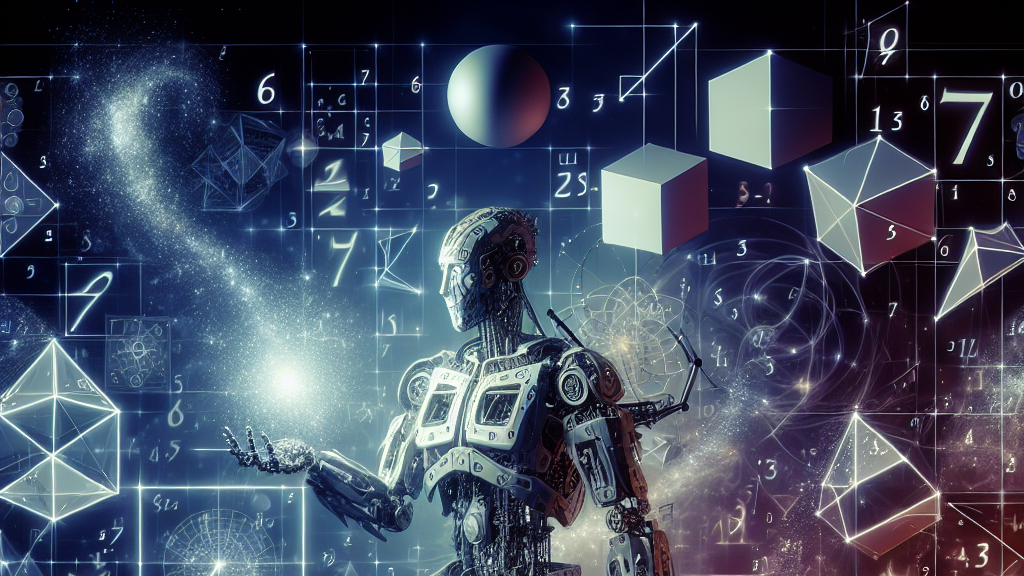
Imagine a world where AI solves mind-boggling equations faster and more precisely than ever before. This research unveils a new AI-powered approach to tackle complex equations, which could change everything from predicting financial markets to modeling turbulent weather.

How AI is Revolutionizing Complex Equations
✨Researched by humans. Explained by robots. Learn more.

Imagine a world where artificial intelligence can solve equations that are so complex, they make your head spin. That’s exactly what researchers are doing by using AI to tackle equations that describe how things change over time and space, which are crucial in understanding everything from weather patterns to financial markets.

Instead of relying on traditional methods that break down these equations into tiny bits, researchers developed a new AI method that allows for a direct and more efficient approach. They created two innovative neural network designs that can predict these equations’ outcomes with higher accuracy. One focuses on fitting the data as best as possible, while the other zeroes in on enforcing initial conditions precisely. By doing away with the tedious process of breaking things into smaller parts (a process known as discretization), this new AI framework can handle much bigger and more complicated problems.

Think of it this way: if a financial analyst could predict market trends more accurately, they could make better decisions on investments. Or picture meteorologists being able to forecast storms and weather patterns with much more precision, helping communities better prepare. This AI-powered method could revolutionize entire fields by providing a clearer picture of complex processes, offering solutions that were previously out of reach.

Did you know? Some equations are so complex that even the most powerful computers struggle to solve them without help from advanced AI.

FAQs

What are Stochastic Partial Differential Equations (SPDEs)?

Stochastic Partial Differential Equations are mathematical equations used to model systems influenced by randomness, such as financial markets or weather. They describe how these systems evolve over time and space.

How does artificial intelligence help solve SPDEs?

Artificial intelligence, particularly through neural networks, offers a new way of solving these complex equations without traditional methods. This approach is faster, more accurate, and capable of handling larger, more complex problems.

Why is this new AI method important?

This AI method is groundbreaking because it eliminates the need for discretization, a computationally intensive process. By removing this step, it allows for direct estimation of complex equations’ expected values, opening new doors in fields like finance and meteorology.

How could this affect the financial industry?

This method can enhance the ability to predict market trends and manage risks more effectively, potentially leading to smarter investment strategies and financial planning.

Can this research impact weather forecasting?

Yes, by providing more accurate models of complex systems, this method could significantly improve weather forecasts, helping people better prepare for storms and natural disasters.

Background

Stochastic Partial Differential Equations (SPDEs) are equations that model complex systems influenced by randomness and change over time and space, such as weather patterns or financial markets. Solving these equations traditionally involves breaking them into simpler parts, an inefficient process called discretization.

History

SPDEs have long been used in scientific fields, but their complexity often made them difficult to solve accurately. Traditional methods involved discretization, which is computationally intensive. The development of neural networks and AI has offered new ways to solve these equations in a more efficient manner, building on the initial breakthroughs in computational mathematics and machine learning.

Based on “Chaos into Order: Neural Framework for Expected Value Estimation of Stochastic Partial Differential Equations” by Ísak Pétursson, María Óskarsdóttir, available on arXiv (arxiv.org/abs/2502.03670), used under CC BY 4.0 (creativecommons.org/licenses/by/4.0/).


Trending

Latest

Can AI Save Water Discover How

Computers

AI is transforming the tech world, but it uses lots of water! A new tool, SCARF, helps us measure and reduce AI's water footprint,...

Whats a Forbush Decrease and Why Should We Care Whats a Forbush Decrease and Why Should We Care

Space

Scientists just observed the biggest solar storm event in years, revealing unexpected cosmic ray patterns. Understanding these changes could help us protect our technology...

Can Cars Spot Danger Faster Than Humans Can Cars Spot Danger Faster Than Humans

Computers

Think about how quickly you react when something unexpected happens on the road. This research brings us closer to creating self-driving cars that can...

Can Fear of the Other Stop Social Harmony Can Fear of the Other Stop Social Harmony

Physics

Fear of the unknown might make it harder for people to agree and get along. This study shows that when people have strong xenophobic...

Can AI Revolutionize Breast Cancer Diagnosis Can AI Revolutionize Breast Cancer Diagnosis

Electricity

This research introduces a groundbreaking AI model that can accurately assess HER2-positive breast cancer using widely accessible staining methods, potentially revolutionizing how we diagnose...

Can AI Transform Your Singing into a Choir Can AI Transform Your Singing into a Choir

Computers

Imagine singing solo and having AI turn you into a choir. This research unveils a groundbreaking AI tool that transforms your voice into rich...

You May Also Like

Computers

Dive into the world of AI mistrust, where computers don't always know when they're wrong! Discover how teaching AI to see like us might...

Computers

This research explores how emotionally responsive AI is changing our lives—from potentially boosting mental health to posing risks like emotional manipulation. Whether influencing education,...

Computers

Imagine a world where AI doesn't just follow orders but feels for us, understanding our emotions to help more effectively. This research shows that...

Computers

Imagine if AI could 'feel' fear to dodge danger! Researchers are tapping into biological and psychological insights to make machines smarter, using concepts like...

Computers

Ever wonder if an AI could lie to you? Researchers are diving into AI's ability to deceive us, discovering how models might strategically trick...

Computers

This research shows how AI Transformers can decode complex math secrets like never before, potentially transforming how we understand geometry using minimal data.

Computers

This research shows how a new AI approach can make detecting hacker attacks more reliable and adaptable, potentially transforming how we keep our digital...

Space

AI is stepping up its game in the hunt for dark matter, using pulsars to decode mysterious cosmic signals that could change how we...

Computers

Ever wondered if we can make AI models smaller without losing any information? This new technique called ZipNN can save a ton of space...

Copyright © 2024 8ig8rain.

Disclaimer: The content on 8ig8rain.com consists of AI-generated summaries of scientific abstracts from arXiv. Please note that most arXiv abstracts are preprints and may not have undergone formal peer review. While these summaries aim to convey key ideas and potential applications, they are provided for informational purposes only and should not be interpreted as validated scientific findings or professional advice. The summaries are intended to educate, spark curiosity, and inspire further exploration of science.