Connect with us

Search by keyword

Computers

Can We Stop Forgetting While Learning New Things?

This breakthrough helps machines remember while learning new things, just like humans! It could revolutionize how robots recognize objects, leading to smarter technology in our daily lives.

Can We Stop Forgetting While Learning New Things
✨Researched by humans. Explained by robots. Learn more.

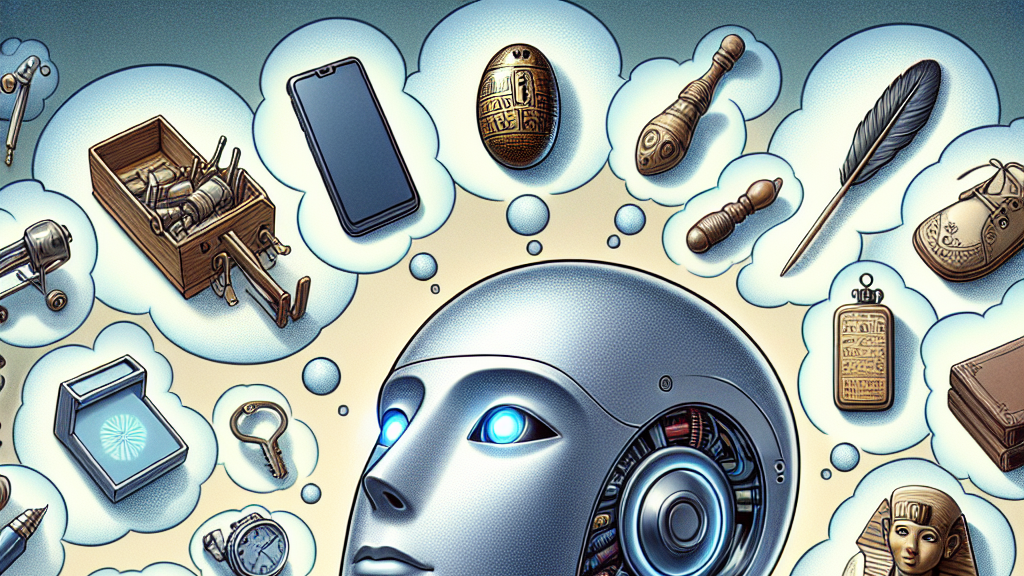
Imagine if every time you tried to learn something new, you forgot everything you already knew. That might sound strange, but it’s a big problem for artificial intelligence systems learning to recognize objects over time. As these systems learn new objects, they often ‘forget’ how to recognize the old ones—a phenomenon known as catastrophic forgetting. But fear no more, because researchers have cracked this problem wide open!

By dissecting a popular object detection method called Faster R-CNN, researchers discovered that the forgetting issue mainly plagues a part of the system known as the RoI Head classifier. Armed with this knowledge, they developed an innovative solution called NSGP-RePRE. This clever design uses something called Regional Prototype Replay to help store important details of objects, much like how we remember key facts about a city. It also includes Null Space Gradient Projection, which keeps everything aligned correctly as the system learns, ensuring old and new knowledge coexist.

This research could have a massive impact on real-world applications like robotics or self-driving cars. Imagine robots in manufacturing lines that can keep track of new types of products without needing to be retrained endlessly. Or think about personal home robots that can adapt to new household items without losing the ability to recognize familiar ones. These advances could lead to smarter, more efficient technology in every aspect of our lives.

Did you know that ‘catastrophic forgetting’ is like if every time you learned a new friend’s name, you forgot all your old friends’ names?

FAQs

What is catastrophic forgetting in AI systems?

Catastrophic forgetting is when AI systems learn new information but lose the ability to recall previously learned information, similar to suddenly forgetting old knowledge when you learn something new.

How does the NSGP-RePRE method help machines remember?

The NSGP-RePRE method helps by storing important details of objects through Regional Prototype Replay and aligning new and old information with Null Space Gradient Projection, ensuring the AI retains its memory while learning new things.

Why is solving catastrophic forgetting important in object detection?

Solving catastrophic forgetting is crucial because it allows AI systems to continuously improve their understanding and recognition capabilities without losing previous knowledge, leading to more reliable and efficient technologies in fields like robotics and automation.

Background

In the realm of machine learning, AI systems are trained to recognize and classify objects. However, as they update this knowledge with new data, they can unintentionally overwrite or ‘forget’ previous information. This phenomenon is called catastrophic forgetting. The challenge is to enable AI systems to expand their knowledge without losing what they have already learned, making them robust and reliable over time.

History

The concept of catastrophic forgetting has been a known issue in incremental learning, a field aiming to let AI systems learn continuously over time. Earlier approaches often relied on replaying old data or transferring knowledge from one model to another. This study builds on these concepts by dissecting Faster R-CNN to pinpoint specific sources of forgetting, leading to more targeted solutions like NSGP-RePRE.

Based on “Demystifying Catastrophic Forgetting in Two-Stage Incremental Object Detector” by Qirui Wu, Shizhou Zhang, De Cheng, Yinghui Xing, Di Xu, Peng Wang, Yanning Zhang, available on arXiv (arxiv.org/abs/2502.05540), used under CC BY 4.0 (creativecommons.org/licenses/by/4.0/).


Trending

Latest

Can AI Save Water Discover How

Computers

AI is transforming the tech world, but it uses lots of water! A new tool, SCARF, helps us measure and reduce AI's water footprint,...

Whats a Forbush Decrease and Why Should We Care Whats a Forbush Decrease and Why Should We Care

Space

Scientists just observed the biggest solar storm event in years, revealing unexpected cosmic ray patterns. Understanding these changes could help us protect our technology...

Can Cars Spot Danger Faster Than Humans Can Cars Spot Danger Faster Than Humans

Computers

Think about how quickly you react when something unexpected happens on the road. This research brings us closer to creating self-driving cars that can...

Can Fear of the Other Stop Social Harmony Can Fear of the Other Stop Social Harmony

Physics

Fear of the unknown might make it harder for people to agree and get along. This study shows that when people have strong xenophobic...

Can AI Revolutionize Breast Cancer Diagnosis Can AI Revolutionize Breast Cancer Diagnosis

Electricity

This research introduces a groundbreaking AI model that can accurately assess HER2-positive breast cancer using widely accessible staining methods, potentially revolutionizing how we diagnose...

Can AI Transform Your Singing into a Choir Can AI Transform Your Singing into a Choir

Computers

Imagine singing solo and having AI turn you into a choir. This research unveils a groundbreaking AI tool that transforms your voice into rich...

You May Also Like

Computers

Imagine if playing games could make a computer program better at understanding and creating text! This research suggests that by using creative tasks like...

Computers

This study flips the script on how we think breakthroughs happen, showing that it’s not just about mixing ideas from different fields but rather...

Computers

Despite more scientists and studies than ever, breakthroughs aren't keeping pace. This research uncovers that innovation often comes from displacing main ideas in a...

Electricity

What if you could control a computer just by moving your eyes? This study explores a new technology, using a tiny device in the...

Computers

Imagine moving things without touching them, just like magic! This cutting-edge research uses sound waves and robots to transport objects through the air, revolutionizing...

Computers

Digital transformation in urban planning could revolutionize how cities function, from easing traffic to enhancing public services, especially as challenges like outdated practices and...

Computers

Unlocking the mysteries of complex data visuals can be a game-changer for students! This research shows that a special teaching method called Mastery Learning...

Computers

By learning from each other like humans do, AI systems can tackle more complex tasks faster and adapt over time, opening up new possibilities...

Space

This research has unlocked a faster way to explore the universe using gravitational lensing, an astronomical phenomenon that could reveal hidden secrets of quasars...

Copyright © 2024 8ig8rain.

Disclaimer: The content on 8ig8rain.com consists of AI-generated summaries of scientific abstracts from arXiv. Please note that most arXiv abstracts are preprints and may not have undergone formal peer review. While these summaries aim to convey key ideas and potential applications, they are provided for informational purposes only and should not be interpreted as validated scientific findings or professional advice. The summaries are intended to educate, spark curiosity, and inspire further exploration of science.