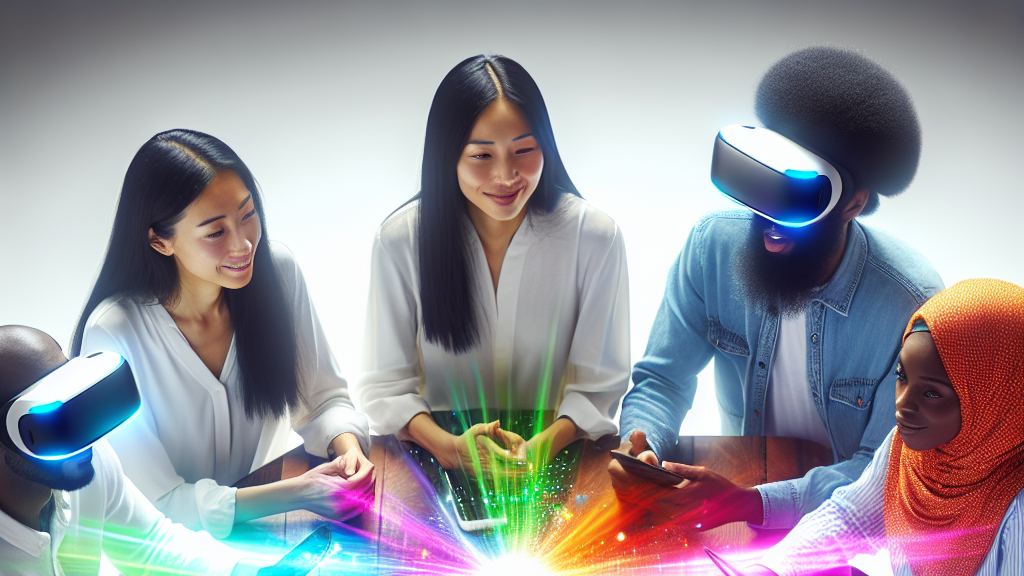
Have you ever started in a new group and felt like an outsider? It’s a common experience, and often it stems from how much the existing team already knows and trusts each other. But what if I told you that virtual reality could change all that? Yes, putting on those VR goggles might be the key to making you feel instantly closer to your new teammates as if you’ve known them forever.
This fascinating study explored how VR can transform the dynamics of team formation. In a clever experiment, researchers compared how people felt joining teams in-person versus in virtual reality. Newcomers who joined via VR reported feeling closer to existing team members compared to those who joined face-to-face. It seems like VR might help bridge the initial awkwardness and perceived differences that often come with meeting new people, creating a sense of belonging and inclusion right from the start.
Imagine stepping into a new job or group project and, instead of feeling out of place, you instantly click with everyone as if you’ve been working together for ages. This study suggests that VR technology isn’t just for gaming or entertainment—it’s a tool that could revolutionize how we work together, helping everyone from students to professionals feel like part of the team from day one. It’s an exciting prospect that could foster better communication and collaboration across the board.
Did you know that people using VR as newcomers feel closer to their teammates than those meeting face-to-face?
FAQs
How can virtual reality enhance team closeness?
Virtual reality helps new team members feel more connected by bridging perceived differences, making it easier for them to integrate and communicate with existing team members right from the beginning.
Why didn’t incumbents feel closer to newcomers through VR?
While VR improved the newcomer’s sense of closeness, existing team members might not have perceived significant differences in their interactions, possibly due to being already comfortable within the team setting.
What types of teams could benefit most from VR inclusion?
Teams that often integrate new members, such as project teams or workplaces with high turnover, could benefit greatly from VR, as it fosters a quicker sense of belonging and trust.
How does VR impact communication in teams?
By creating an immersive and engaging environment, VR can help team members communicate more effectively, reducing misunderstandings and fostering a more inclusive atmosphere.
Could VR replace in-person meetings completely?
While VR offers many benefits, it’s unlikely to fully replace in-person interactions. However, it can complement them by providing a tool for improving team dynamics, especially when remote communication is necessary.
Background
Understanding team dynamics is crucial for success in any collaborative setting. Typically, forming strong relationships requires trust and good communication, which can take time, particularly when new members join. Virtual reality offers a unique opportunity to create an immersive environment where these relationships can be accelerated by allowing individuals to interact in a more engaging and personal way compared to traditional means like emails or phone calls.
History
Team dynamics and inclusion have long been subjects of study, with early research focusing on in-person interactions. As technology developed, studies began to explore how online communication tools could help integrate newcomers. This latest research takes it a step further by comparing traditional in-person methods with cutting-edge VR technology, showing that VR can create a more inclusive and cohesive team environment.
Based on “Breaking the Familiarity Bias: Employing Virtual Reality Environments to Enhance Team Formation and Inclusion” by Mariana Fernandez-Espinosa, Kara Clouse, Dylan Sellars, Danny Tong, Michael Bsales, Sophonie Alcindor, Timothy D Hubbard, Michael Villano, Diego Gómez-Zará, available on arXiv (arxiv.org/abs/2502.09912), used under CC BY 4.0 (creativecommons.org/licenses/by/4.0/).