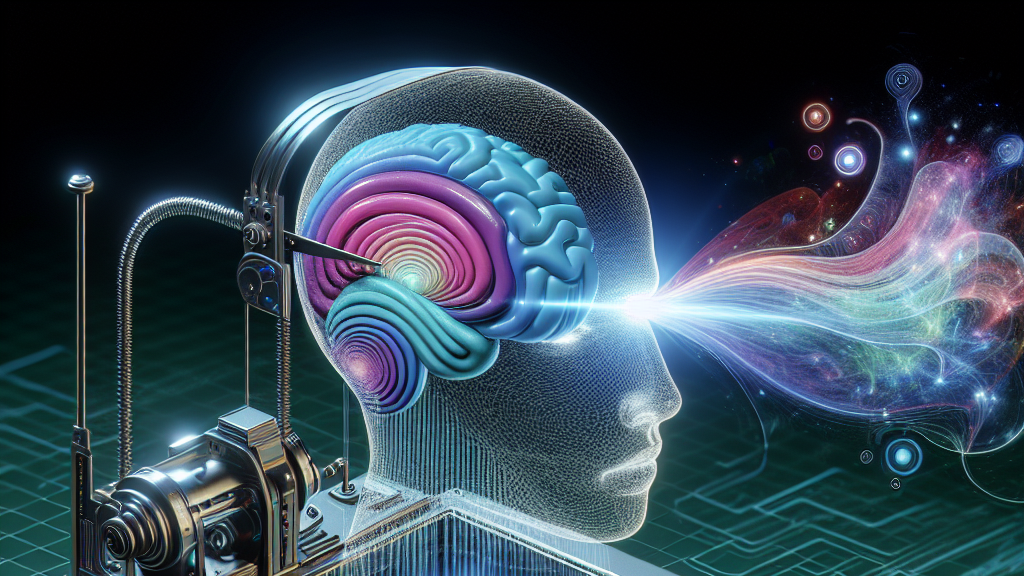
Ever wondered if you could create something just by thinking about it? Thanks to the latest research, we’re one step closer to making that a reality. Scientists have developed a way to turn brainwaves, specifically the signals captured by an EEG, into 3D objects. That’s right, your thoughts could shape digital worlds or even virtual reality environments.
The process involves capturing brain signals through EEG—a portable and non-invasive method—then translating those signals into 3D models with the help of advanced deep learning. Unlike traditional methods that rely on expensive and cumbersome fMRI machines, this method makes 3D creation accessible and real-time. The research utilizes neural decoding techniques to interpret the brain’s activity, creating visuals that computers understand. This could change how we interact with technology, making it more intuitive and responsive.
Imagine a future where you can think up designs for a video game environment or contribute to developing prosthetics just by visualizing them in your mind. Not only could this technology revolutionize gaming and virtual reality, but it could also aid people who need customized neuroprosthetics, all made possible through their unique brain patterns. This is far more than science fiction—it’s a glimpse into a new era of mind-driven technology.
Did you know? EEG technology can be used to create 3D images based on your thoughts, paving the way for brain-to-computer interfaces that feel like science fiction!
FAQs
How does EEG technology translate brainwaves into 3D objects?
EEG captures electrical activity from the brain, which is then decoded using neural networks to identify key spatial features. These features are processed by generative models to create detailed 3D structures.
What are the benefits of using EEG over fMRI for brain-computer interfaces?
EEG is more affordable, non-invasive, and mobile compared to the bulky and expensive fMRI, which makes it better suited for real-time applications and everyday use.
Can this technology be used in virtual reality environments?
Yes, the ability to convert EEG signals into 3D models opens new possibilities for immersive virtual environments where users can create and interact using thought alone.
What could this mean for neuroprosthetics?
This technology could enable customized prosthetic designs based on an individual’s brain patterns, enhancing the personalization and functionality of neuroprosthetics.
Are there ethical concerns with decoding brain signals?
While there is immense potential, privacy and consent are crucial areas of concern, as this technology involves interpreting personal neural data.
Background
Electroencephalography (EEG) is a technique that records brain activity through electrodes placed on the scalp, capturing the electrical impulses that our neurons generate. It’s commonly used because it is non-invasive and provides real-time data. In the context of this research, EEG data is decoded using advanced deep learning techniques, which are then interpreted to create visual representations of what the brain is ‘thinking.’ This innovative approach forms a bridge between cognitive processes and tangible digital outputs.
History
Brain-computer interfaces have long focused on translating brain activity into commands for technology, beginning with early attempts to control cursors or prosthetic limbs. fMRI, known for its detailed imaging of brain activity, previously dominated the field but was limited by its cost and practicality for everyday use. Recent advancements focused on making the BCI more accessible and affordable. Using EEG, researchers have found a novel way to convert these brain signals into three-dimensional forms, building on the momentum of neural decoding and generative models.
Based on “Mind2Matter: Creating 3D Models from EEG Signals” by Xia Deng, Shen Chen, Jiale Zhou, Lei Li, available on arXiv (arxiv.org/abs/2504.11936), used under CC BY 4.0 (creativecommons.org/licenses/by/4.0/).