Connect with us

Search by keyword

Space

How Space Shock Waves Supercharge Particles

Discover how shock waves in space act like cosmic particle boosters, giving us clues about the origins of cosmic rays and the mysteries of the universe.

How Space Shock Waves Supercharge Particles
✨Researched by humans. Explained by robots. Learn more.

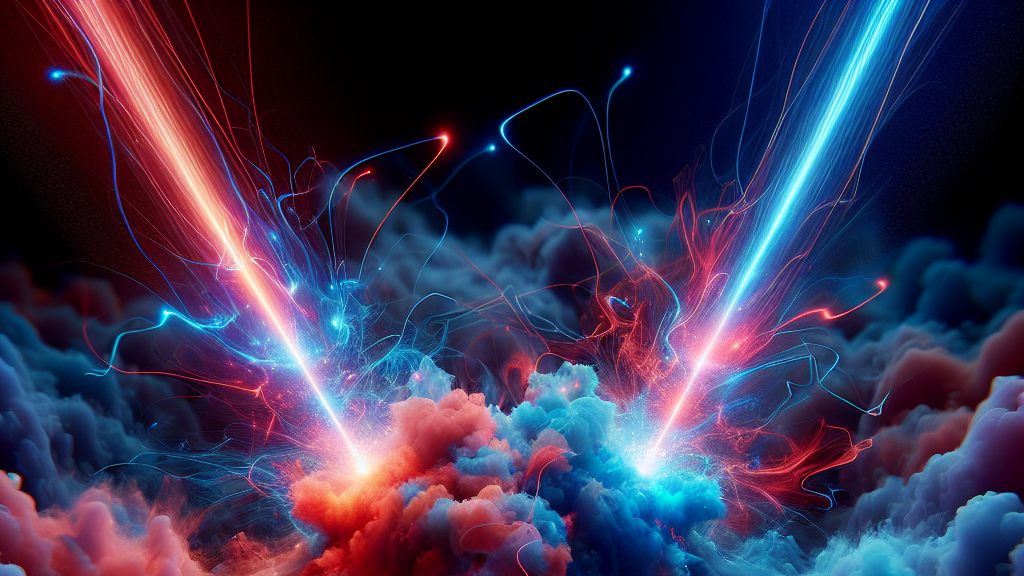
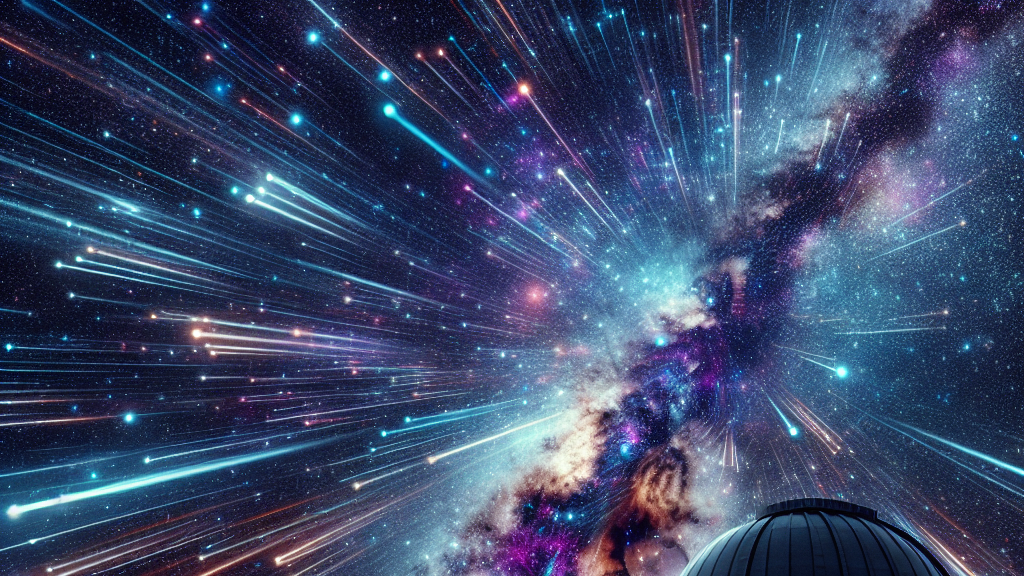
Imagine powerful waves in space that can give particles a ‘supercharge,’ like a turbo boost, launching them at incredible speeds. These cosmic shock waves are found in places like supernova remnants and are nature’s way of accelerating particles without actually colliding with them, which is pretty wild if you think about it. Scientists have been piecing together how these waves work, and it turns out they play a huge role in powering up cosmic rays that zoom across the universe.

By studying satellite data and using the latest theories, scientists have built a more accurate model to explain how these shock waves can consistently speed up electrons to super-fast, or relativistic, speeds. Much like a snowball gathering speed down a hill, electrons get their boost through interactions with different kinds of waves and ever-changing stellar winds found in outer space. This helps us understand not only how these particles gain such high energy but also gives us clues about where these cosmic rays are possibly coming from.

So why does this matter to you? Well, it connects directly to understanding phenomena like solar flares or space weather that can affect Earth’s technology, like satellites and power grids. Imagine having more advanced technologies that can predict these kinds of cosmic energies or new ways to protect our systems from potential damage. Who knew that a better understanding of space shock waves could have such a practical impact here on Earth?

Did you know that the shock waves from a supernova can accelerate particles to nearly the speed of light, making them nature’s fastest movers?

FAQs

What exactly are collisionless shock waves found in space?

Collisionless shock waves are powerful waves in space that can accelerate particles to high speeds without physical collisions, often found in places like supernova remnants.

How do these shock waves accelerate electrons?

Through a combination of transient structures and interactions with waves and varying stellar wind conditions, allowing electrons to gain energy rapidly.

Why is understanding shock waves important for us on Earth?

Studying shock waves can help improve our ability to predict space weather events that may impact Earth’s technology, like satellites and power grids.

What role do shock waves play in the formation of cosmic rays?

Shock waves are believed to be one of the main accelerators that give cosmic rays their high energy, helping us understand their origins and behavior.

Can we replicate such shock wave conditions on Earth?

Yes, scientists can create similar shock wave conditions in laboratories for better study, mimicking those found in space environments.

Background

Shock waves in space, known as collisionless shock waves, are unique because they increase particle energy without physical collisions. They create conditions where electrons can gain enough speed to reach what we call relativistic speeds, close to the speed of light. This is significant in space environments, where such waves are naturally occurring in supernovae, planetary, and stellar settings.

History

Collisionless shock waves have intrigued scientists since discovering cosmic rays over a century ago. Early theories focused on the basic mechanics of shock waves, but it wasn’t until satellite technologies and lab simulations improved that we could understand the full scope. Recent studies have highlighted the multiscale nature of these waves, with advances in plasma physics playing a crucial role.

Based on “Revealing an unexpectedly low electron injection threshold via reinforced shock acceleration” by Savvas Raptis, Ahmad Lalti, Martin Lindberg, Drew L. Turner, Damiano Caprioli, James L. Burch, available on arXiv (arxiv.org/abs/2502.10643), used under CC BY 4.0 (creativecommons.org/licenses/by/4.0/).

Trending

Latest

Can AI Save Water Discover How

Computers

AI is transforming the tech world, but it uses lots of water! A new tool, SCARF, helps us measure and reduce AI's water footprint,...

Whats a Forbush Decrease and Why Should We Care Whats a Forbush Decrease and Why Should We Care

Space

Scientists just observed the biggest solar storm event in years, revealing unexpected cosmic ray patterns. Understanding these changes could help us protect our technology...

Can Cars Spot Danger Faster Than Humans Can Cars Spot Danger Faster Than Humans

Computers

Think about how quickly you react when something unexpected happens on the road. This research brings us closer to creating self-driving cars that can...

Can Fear of the Other Stop Social Harmony Can Fear of the Other Stop Social Harmony

Physics

Fear of the unknown might make it harder for people to agree and get along. This study shows that when people have strong xenophobic...

Can AI Revolutionize Breast Cancer Diagnosis Can AI Revolutionize Breast Cancer Diagnosis

Electricity

This research introduces a groundbreaking AI model that can accurately assess HER2-positive breast cancer using widely accessible staining methods, potentially revolutionizing how we diagnose...

Can AI Transform Your Singing into a Choir Can AI Transform Your Singing into a Choir

Computers

Imagine singing solo and having AI turn you into a choir. This research unveils a groundbreaking AI tool that transforms your voice into rich...

You May Also Like

Space

Scientists just observed the biggest solar storm event in years, revealing unexpected cosmic ray patterns. Understanding these changes could help us protect our technology...

Physics

Imagine catching illegal drugs hidden in cargo using cosmic rays! This new tech leverages particles from space to safely and quickly scan shipments, potentially...

Physics

Imagine lasers that can shape gas clouds to create powerful ion beams, potentially changing how we approach certain medical treatments—fascinating, right?

Space

AI is now being used to unearth the secrets of outer space, tapping into the ultra-high energies of cosmic rays and galaxy formations to...

Space

AI is helping scientists unlock the mysteries of cosmic rays from outer space. By using advanced networks called Transformers, researchers are learning more about...

Space

Transformers, the same tech behind smarter chatbots, are now being used to uncover hidden patterns in cosmic rays from galaxies. This means our understanding...

Space

Scientists have identified a new component of cosmic rays at incredibly high energies, using a cutting-edge observatory. This research could offer vital insights into...

Physics

This research unveils how thunderstorms can produce cosmic-ray-like energy bursts, reshaping how we view storm-related phenomena and potentially altering weather prediction models.

Physics

Imagine there are hidden forces around black holes that stop cosmic gamma rays but let neutrinos through! This study suggests dark matter could be...

Copyright © 2024 8ig8rain.

Disclaimer: The content on 8ig8rain.com consists of AI-generated summaries of scientific abstracts from arXiv. Please note that most arXiv abstracts are preprints and may not have undergone formal peer review. While these summaries aim to convey key ideas and potential applications, they are provided for informational purposes only and should not be interpreted as validated scientific findings or professional advice. The summaries are intended to educate, spark curiosity, and inspire further exploration of science.