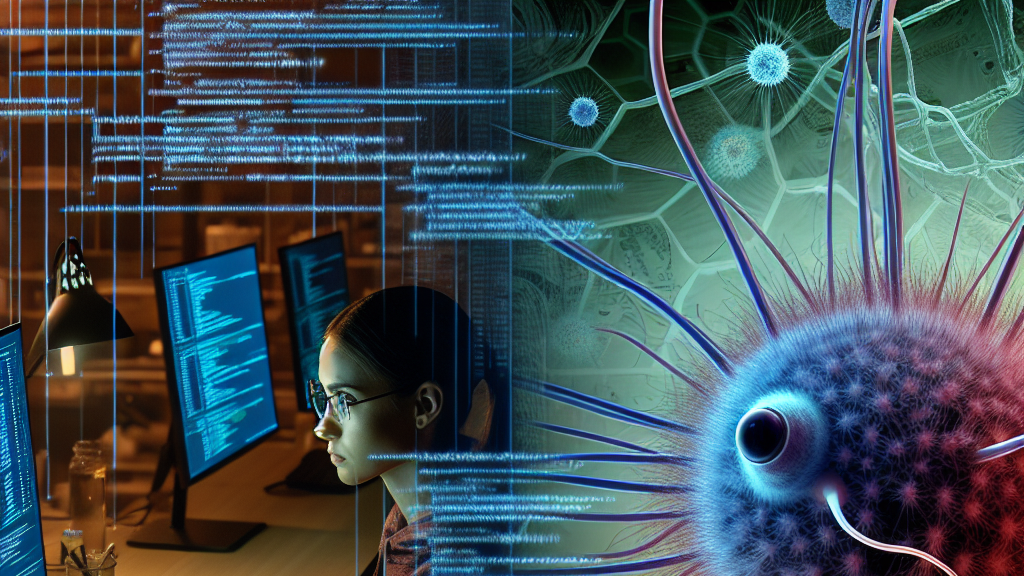
It might sound odd, but what if parasites and cyber exploiters are actually good for us? Normally, we see these as pesky threats that need to be crushed. But look closer, and you’ll see they play a surprising role in making our systems stronger and more adaptable. Think of them as unintentional superheroes that expose our weaknesses, helping us build resilience both in nature and the digital world.
The idea is that by pushing systems to their limits, these ‘threats’ force necessary changes and improvements. For example, when cyber attackers find ways into supposedly secure networks, they help uncover vulnerabilities that might have been missed otherwise. Similarly, parasites in the environment can highlight the weak points in an ecosystem, driving it to adapt and evolve to survive. This spontaneous testing not only reveals flaws but also inspires innovative solutions to reinforce defenses.
Imagine a world where our online security gets better every time there’s a cyberattack. That’s what happened with the recent breach of the DOGE website. It forced developers to rethink and strengthen their security measures, making the site safer than before. Likewise, in nature, creatures facing parasites often develop stronger immune systems. By turning adversity into opportunity, both digital and biological systems become more robust, ensuring their long-term survival.
Parasites are responsible for an estimated 10% of known animal species’ diversity!
FAQs
How do parasites and cybersecurity threats help strengthen systems?
Parasites and cybersecurity threats act as stress-testers, revealing hidden vulnerabilities in biological and digital systems. By exposing these weaknesses, they encourage systems to adapt and fortify themselves, leading to stronger defenses and greater resilience.
What was the impact of the DOGE website breach?
The breach of the DOGE website highlighted existing security vulnerabilities, prompting developers to enhance their cybersecurity measures. This event exemplifies how adversarial forces can drive improvements and innovation in digital security.
Can parasites really have a positive impact on ecosystems?
Yes, parasites can play a positive role in ecosystems by highlighting weak points and encouraging adaptation. Over time, this leads to more diversified and resilient systems, ultimately benefiting the overall health and stability of the ecosystem.
Why should we care about the role of parasites and cyber threats?
Understanding the role of parasites and cyber threats is crucial because it challenges us to think differently about what constitutes a threat. By recognizing the potential benefits these adversaries offer, we can focus on leveraging these insights to build more robust systems, both in nature and technology.
How does this new understanding affect everyday life?
Realizing the benefits adversarial forces provide can change how we approach security and adaptation in everyday life. It encourages proactive vulnerability assessments and innovation, leading to enhanced safety and resilience in both personal and professional spheres.
Background
In both biology and cybersecurity, systems face constant threats from adversaries. Parasites attack host organisms, while cyber exploiters target digital networks. These threats can seem destructive, but they play a crucial role in revealing weaknesses. Systems must adapt and evolve in response, leading to stronger defenses and resilience. This research explores how parasites and hackers act as catalysts for innovation and adaptation, converting threats into opportunities for improvement.
History
Historically, both biological systems and technology have continually faced threats from adversaries. In ecology, parasites have been studied for centuries, revealing complex host-parasite interactions that drive evolution. Meanwhile, in cybersecurity, the arms race between hackers and defenders has sparked continuous advancements in security technology. This paper builds on these understandings by linking the roles of biological and digital adversaries, emphasizing their importance in systemic evolution.
Based on “The Cyber Immune System: Harnessing Adversarial Forces for Security Resilience” by Krti Tallam, available on arXiv (arxiv.org/abs/2502.17698), used under CC BY 4.0 (creativecommons.org/licenses/by/4.0/).