Imagine uncovering a mystery that has puzzled scientists for decades—one that could change our understanding of the universe. That’s exactly what researchers are doing by studying how light bends around galaxy clusters to find dark matter, the hidden yet vast component of our cosmos.
This study focuses on the galaxy cluster Abell S1063, using a method called Curved Arc Basis to map out tiny hidden structures made of dark matter. By capturing images with the James Webb Space Telescope, scientists used different techniques to model the source of the light. They found that a method called Delaunay source modeling is more accurate, revealing how tricky it is to pinpoint dark matter without getting fooled by false signals.
This research isn’t just for stargazers. By understanding dark matter, we could eventually revolutionize technology or even see space in a whole new way. One day, the methods perfected here might help us map out invisible forces that influence everything, from the formation of stars to the evolution of galaxies, changing the way we look at the night sky and even our place within it.
Did you know that dark matter makes up about 85% of the universe’s mass, yet it can’t be seen or touched?
FAQs
What is dark matter and why is it important?
Dark matter is an invisible substance that makes up most of the universe’s mass. It’s crucial for understanding how galaxies form and evolve, even though we can’t see it directly.
How does gravitational lensing help find dark matter?
Gravitational lensing bends light around massive objects like galaxy clusters, revealing hidden structures. It’s a key tool for mapping dark matter because it shows how unseen mass distorts space.
What role does the James Webb Space Telescope play in this research?
The telescope provides high-quality images in multiple wavelengths, allowing scientists to accurately model sources of light and distinguish actual dark matter signatures from false detections.
Why is Delaunay source modeling important in studying dark matter?
Delaunay source modeling offers a more accurate way to map light sources that gravitational lensing affects, reducing false positives when identifying dark matter structures.
Could this research change our everyday lives?
Yes! By understanding dark matter better, we could unravel mysteries of the cosmos, potentially leading to innovations in technology or even new perspectives on the universe.
Background
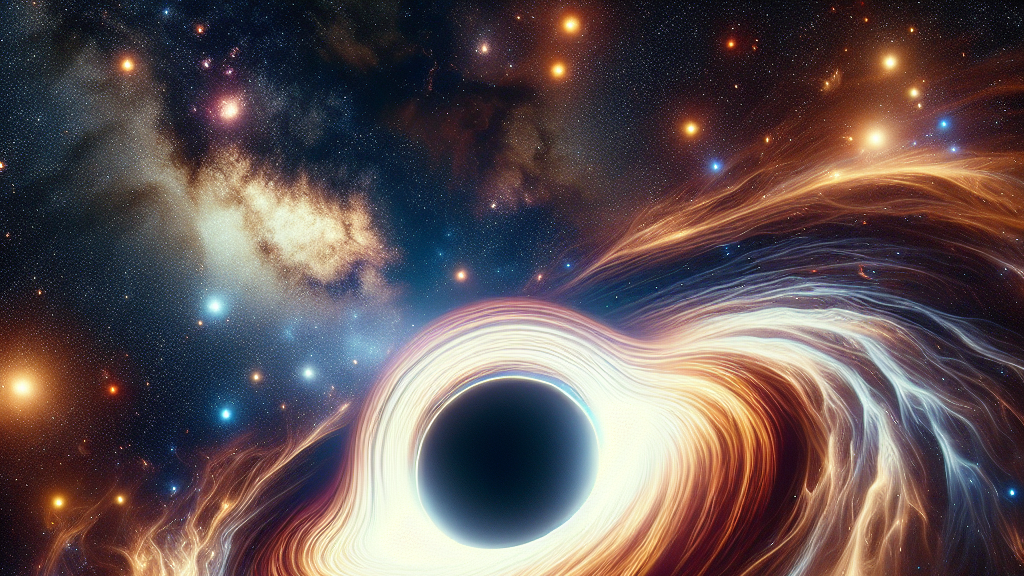
Gravitational lensing is like a cosmic magnifying glass that bends light from distant galaxies around massive objects like galaxy clusters, revealing things we can’t see directly. This effect can help us map dark matter, which despite being invisible, has a gravitational pull influencing how galaxies move and form.
History
The concept of dark matter dates back to the early 20th century when astronomers noticed galaxies didn’t have enough visible mass to account for their movements. Over the years, different methods like gravitational lensing have been developed to study it, leading to new insights about our universe’s hidden mass.
Based on “Dark Matter Substructure or Source Model Systematics? A Case Study of Cluster Lens Abell S1063” by Nino Ephremidze, Chandrika Chandrashekar, Atınç Çağan Şengül, Cora Dvorkin, available on arXiv (arxiv.org/abs/2502.18571), used under CC BY 4.0 (creativecommons.org/licenses/by/4.0/).