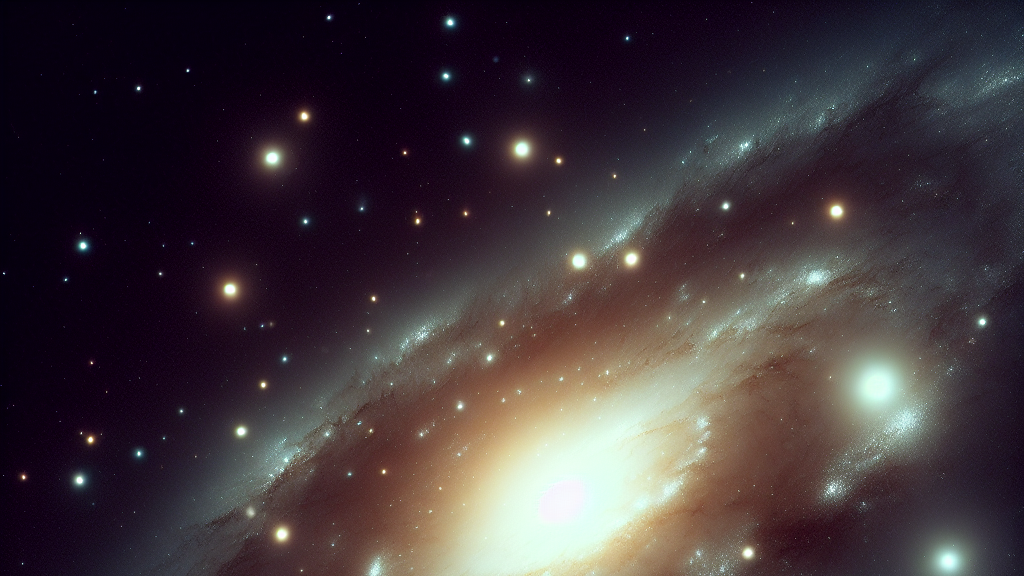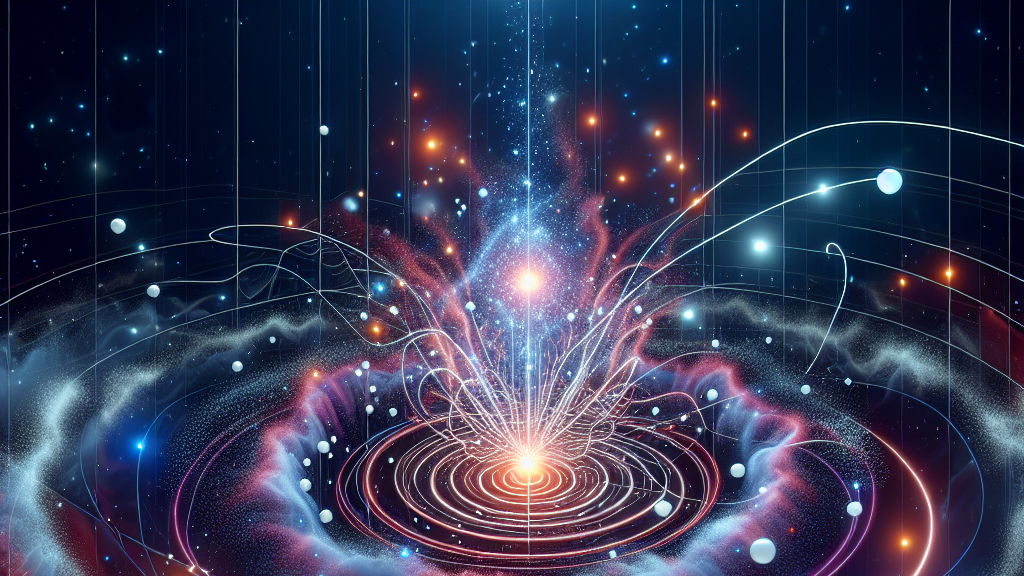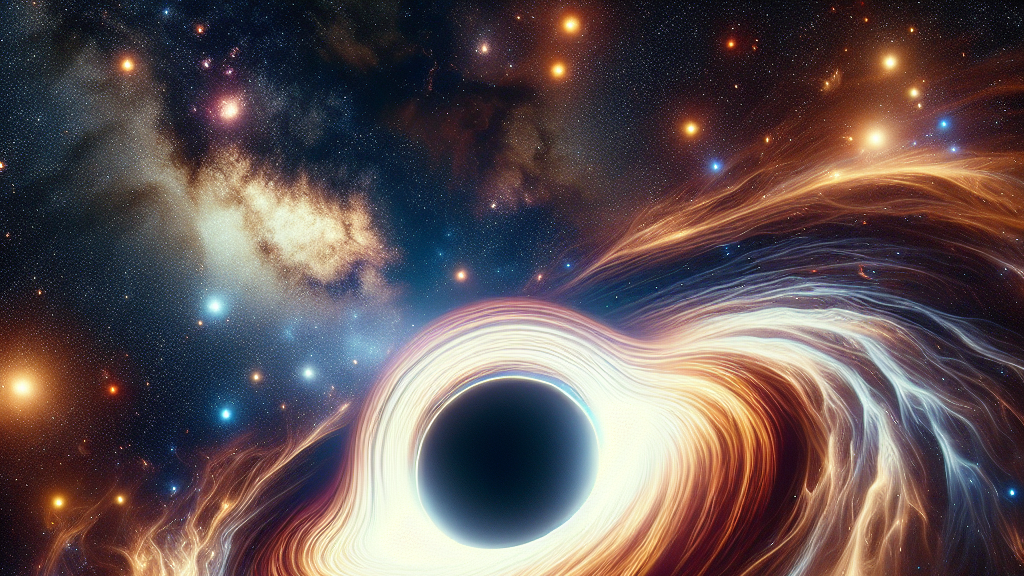
Ever wondered what’s lurking around those mysterious black holes in the universe? It turns out, scientists might have found a way to weigh something invisible—dark matter—right in the vicinity of these cosmic giants! By eavesdropping on light echoes, known as reverberation mapping, from distant galaxies, researchers have begun to sketch out what’s hidden around supermassive black holes.
Here’s how it works: In some galaxies, known as active galactic nuclei (AGN), bright centers light up due to the feeding frenzy of the supermassive black hole at its core. Scientists can observe different light signals emitted at various distances from the black hole, mapping out the mass hidden at each layer. Surprisingly, they found hints of dark matter swirling within these layers, suggesting a ‘dark matter spike’—a mysterious cosmic phenomenon!
Imagine being able to predict cosmic behaviors based on this invisible mass. If we can measure dark matter around black holes, scientists could refine their understanding of how galaxies evolve, inform space exploration strategies, and perhaps even decode the dark matter puzzle that boggles the universe. Space is not only the final frontier—it’s a cosmic mystery waiting to be unraveled, and you’re invited to be part of this adventure.
Supermassive black holes are thought to weigh millions or even billions of times the mass of our sun, surrounded by an elusive halo of dark matter!
FAQs
What is reverberation mapping used for in astronomy?
Reverberation mapping is a technique used to measure the mass around black holes by observing light echoes from active galactic nuclei (AGN). This helps scientists study the dynamics and distribution of mass, including dark matter, around these cosmic giants.
How do scientists estimate dark matter density near supermassive black holes?
Scientists estimate dark matter density by observing the variation in light emitted from different regions around the black hole, which allows them to infer the mass present. This method provides insights into the density profile of dark matter.
What did the study discover about dark matter nearby supermassive black holes?
The study found hints of dark matter around five out of fourteen active galactic nuclei, particularly in the farthest object observed, 3C 390, suggesting a potential rise in dark matter presence with distance.
What is dark matter, and why is it important?
Dark matter is an invisible substance that makes up much of the universe’s mass. Understanding it is crucial to decoding gravitational dynamics, galaxy formation, and the overall structure of the cosmos.
How could this discovery impact our understanding of the universe?
This discovery offers a new way to measure dark matter, impacting theories on galaxy evolution and the fundamental nature of the universe, potentially unlocking new paths for space exploration and scientific advancement.
Background
In space science, dark matter is a substance that doesn’t emit or interact with light like ordinary matter, making it invisible and detectable only through its gravitational effects. Supermassive black holes sit at the centers of galaxies and feed on surrounding material, emitting light that can be studied. Reverberation mapping uses these light signals to map mass distributions, crucial for studying dark matter.
History
The study of dark matter dates back to the 1930s when Swiss astronomer Fritz Zwicky discovered that galaxies in clusters moved faster than visible matter alone could explain. Since then, scientists have developed various methods to understand dark matter. This research takes a new step by using reverberation mapping in active galactic nuclei to observe dark matter near black holes.
Based on “A novel method to trace the dark matter density profile around supermassive black holes with AGN reverberation mapping” by Mayank Sharma, Gonzalo Herrera, Nahum Arav, Shunsaku Horiuchi, available on arXiv (arxiv.org/abs/2506.10122), used under CC BY 4.0 (creativecommons.org/licenses/by/4.0/).