Connect with us

Search by keyword

Computers

Can Projection Heads Boost AI Learning?

This research unveils how a little-known technique called the ‘projection head’ can revolutionize AI learning, making artificial intelligence smarter by filtering out unnecessary data. Imagine AI that learns more effectively—potentially leading to breakthroughs in various fields.

Can Projection Heads Boost AI Learning
✨Researched by humans. Explained by robots. Learn more.

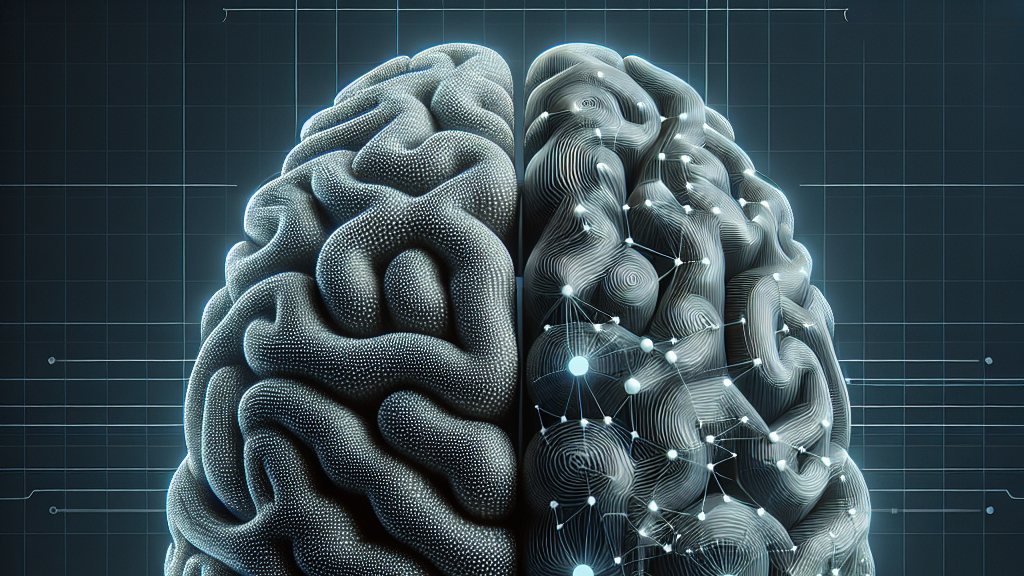
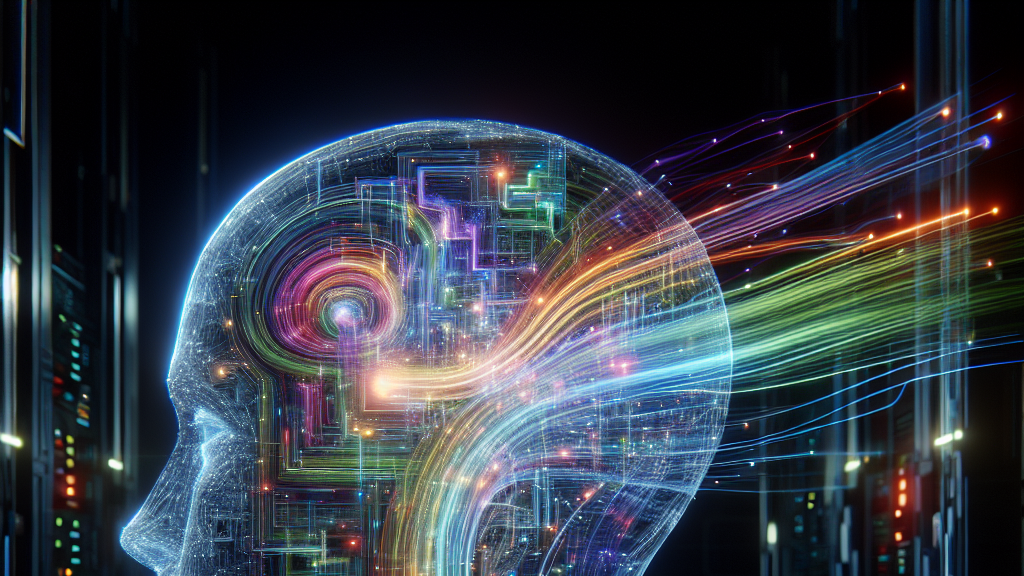
Imagine a world where artificial intelligence (AI) can learn and adapt more efficiently, making dramatic improvements overnight. That’s the potential of a special technique researchers have been investigating, called the ‘projection head.’ This method works like a super-smart filter, helping AI focus on the most important information while ignoring the noise. Just like how a keen ear catches the main tune in a busy orchestra, a projection head helps AI zero in on what really matters.

The exciting part is that the projection head might just be the secret ingredient to turbocharge AI learning. It sits at a critical junction in AI’s brain, working its magic during the training phase. By operating as an ‘information bottleneck,’ it ensures only the relevant data gets through for further processing. This clever trick not only boosts AI’s performance but also opens doors to more advanced designs, making AI not just faster but smarter.

In the future, this could mean AI systems that are better at understanding complex visual information, like distinguishing between species in wildlife imagery or improving security systems by recognizing objects in crowded environments. Think of it as giving AI a pair of spectacles to see the world more clearly. As researchers refine this concept, we could witness AI learning at a level we once thought impossible, potentially transforming everyday technology around us.

Did you know that a projection head can filter out information AI doesn’t need, making computers ‘think’ more clearly?

FAQs

What is a projection head’s role in AI learning?

A projection head acts as a filter during AI training, focusing AI on relevant information, which helps improve its learning abilities.

How does the projection head improve AI performance?

The projection head works as an information bottleneck, allowing only important data for the task to pass through, thus enhancing AI’s ability to process and act on data efficiently.

Can the projection head concept be applied to real-world applications?

Yes, it can improve AI’s capabilities in fields like security, healthcare, and wildlife conservation by enhancing its data processing skills, leading to more accurate and useful outcomes.

What datasets showed improved performance with the projection head?

Datasets like CIFAR-10, CIFAR-100, and ImageNet-100 exhibited improved AI performance when a projection head was used during training.

How might the projection head influence future AI technology?

This concept could lead to the development of more sophisticated AI systems, potentially changing how technology interacts with us and the world.

Background

In AI training, the projection head is a component that helps AI models refine which information is useful and which can be ignored. It takes inspiration from the idea of an ‘information bottleneck,’ a concept where only the critical data needed for a task is allowed through, improving the AI’s efficiency and effectiveness. This is crucial because AI learns from massive datasets, and cutting through the noise can significantly enhance performance.

History

Contrastive learning has made waves in AI, focusing on how systems learn by comparing similar and different elements. The projection head is a newer addition to this approach, offering significant gains in performance by controlling the flow of information during training. It’s a leap forward from earlier methods, providing a clearer understanding of how to optimize AI learning processes.

Based on “Projection Head is Secretly an Information Bottleneck” by Zhuo Ouyang, Kaiwen Hu, Qi Zhang, Yifei Wang, Yisen Wang, available on arXiv (arxiv.org/abs/2503.00507), used under CC BY 4.0 (creativecommons.org/licenses/by/4.0/).


Trending

Latest

Can AI Save Water Discover How

Computers

AI is transforming the tech world, but it uses lots of water! A new tool, SCARF, helps us measure and reduce AI's water footprint,...

Whats a Forbush Decrease and Why Should We Care Whats a Forbush Decrease and Why Should We Care

Space

Scientists just observed the biggest solar storm event in years, revealing unexpected cosmic ray patterns. Understanding these changes could help us protect our technology...

Can Cars Spot Danger Faster Than Humans Can Cars Spot Danger Faster Than Humans

Computers

Think about how quickly you react when something unexpected happens on the road. This research brings us closer to creating self-driving cars that can...

Can Fear of the Other Stop Social Harmony Can Fear of the Other Stop Social Harmony

Physics

Fear of the unknown might make it harder for people to agree and get along. This study shows that when people have strong xenophobic...

Can AI Revolutionize Breast Cancer Diagnosis Can AI Revolutionize Breast Cancer Diagnosis

Electricity

This research introduces a groundbreaking AI model that can accurately assess HER2-positive breast cancer using widely accessible staining methods, potentially revolutionizing how we diagnose...

Can AI Transform Your Singing into a Choir Can AI Transform Your Singing into a Choir

Computers

Imagine singing solo and having AI turn you into a choir. This research unveils a groundbreaking AI tool that transforms your voice into rich...

You May Also Like

Computers

This study reveals a groundbreaking way to enhance AI models, making them think more like humans by transforming how they process and remember information....

Computers

Imagine if computers could learn like our brains do, becoming smarter over generations. Evolutionary conditioning could make artificial neural networks learn faster and with...

Computers

Imagine AI learning medicine from YouTube videos! Researchers have shown that educational videos designed for humans can astonishingly train AI models, improving their ability...

Computers

Imagine if artificial intelligence could learn like human brains, storing knowledge efficiently and predicting the future. This research dives deep into how AI models...

Computers

Discover how a small tweak, the 'projection head,' could make AI smarter by focusing only on what's essential. This insight promises to reshape how...

Computers

Researchers are improving how artificial intelligence learns from limited data by addressing a crucial flaw in existing methods, making AI training more efficient and...

Computers

AI-generated videos are flooding the internet, and they’re not just fun to watch—they’re actually influencing what videos get recommended to you. This research uncovers...

Computers

AI may struggle like a computer having memory issues, but by learning from how humans handle new information, researchers are making AI more adaptable...

Computers

By teaching AI to understand human likes and dislikes more efficiently, this research aims to make smarter tech that aligns better with our needs,...

Copyright © 2024 8ig8rain.

Disclaimer: The content on 8ig8rain.com consists of AI-generated summaries of scientific abstracts from arXiv. Please note that most arXiv abstracts are preprints and may not have undergone formal peer review. While these summaries aim to convey key ideas and potential applications, they are provided for informational purposes only and should not be interpreted as validated scientific findings or professional advice. The summaries are intended to educate, spark curiosity, and inspire further exploration of science.