Connect with us

Search by keyword

Computers

Can VR Boost Your Emergency Skills?

This research explores a unique VR fire drill simulator that analyzes emotions in real time to enhance training outcomes, paving the way for more engaging and effective experiences in virtual environments.

Can VR Boost Your Emergency Skills
✨Researched by humans. Explained by robots. Learn more.

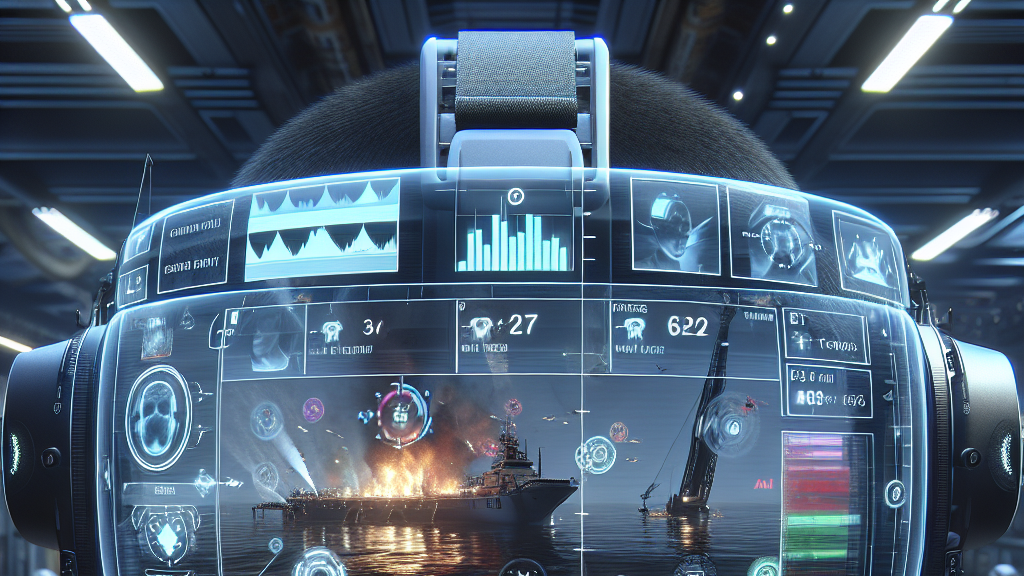
Imagine a VR world where your emotions shape the experience! That’s what a recent study on an emotion-aware VR fire drill simulator has achieved. It’s designed to train ship crews by detecting their emotional reactions in real time, enhancing how they learn under stress. But it’s not just about the tech—it’s about making sure the experience is as immersive and educational as possible.

This innovative simulator uses advanced gadgets like the Meta Quest Pro headsets to track your eyes and facial expressions. It presents challenges in the form of emergencies, where each level gets tougher as you advance. The main goal is to monitor how users deal with stressful situations, improving their decision-making skills and emotional resilience in real emergencies.

So, what does this mean for the future? Think about how emergency training, or any kind of learning, could be transformed. By understanding and adapting to each person’s emotional responses, such simulators could provide more tailored and effective learning experiences. Imagine a future where your emotions guide your training, making it not only educational but also engaging and personal!

Did you know? Real-time emotion detection can reduce task completion times by up to 32% in VR environments!

FAQs

How does the VR fire drill simulator detect emotions?

The VR fire drill simulator uses advanced eye-tracking and facial expression analysis to detect emotions in real time, helping improve learning outcomes by assessing trainees’ responses under stress.

Why is emotion detection important in virtual reality training?

Emotion detection is crucial because it allows training programs to adapt to individual needs, enhancing decision-making and emotional resilience in stressful situations, making the experience more immersive and educational.

What improvements were made in the VR simulator’s second version?

The second version of the VR simulator included a better user interface, visual cues, and a real-time task tracker, which significantly improved user performance and reduced task completion times by up to 32%.

How does prior experience with VR or gaming affect training efficiency?

Participants with previous experience in VR or gaming navigated the fire drill scenarios more efficiently, indicating that familiarity with virtual environments can lead to better performance in similar simulations.

What future applications could emotion-aware VR technology have?

Emotion-aware VR technology could revolutionize various training programs, education, and even entertainment by providing personalized experiences that adapt to users’ emotional states for more effective and engaging outcomes.

Background

Virtual Reality (VR) is a simulated experience that can be similar to or entirely different from the real world. Key methodologies in this research involve using VR to create simulated environments and integrating emotion detection through eye-tracking and facial expression analysis to adapt the experience based on the user’s emotional state.

History

VR technology has evolved significantly, offering immersive experiences across various fields. Initially focused on gaming and entertainment, recent advancements have shifted towards education and training. This study builds on the trend of using VR for practical applications, such as emergency preparedness, by incorporating emotional intelligence into the experience.

Based on “Towards an Emotion-Aware Metaverse: A Human-Centric Shipboard Fire Drill Simulator” by Musaab H. Hamed-Ahmed, Diego Ramil-López, Paula Fraga-Lamas, Tiago M. Fernández-Caramés, available on arXiv (arxiv.org/abs/2503.03570), used under CC BY 4.0 (creativecommons.org/licenses/by/4.0/).

Trending

Latest

Can AI Save Water Discover How

Computers

AI is transforming the tech world, but it uses lots of water! A new tool, SCARF, helps us measure and reduce AI's water footprint,...

Whats a Forbush Decrease and Why Should We Care Whats a Forbush Decrease and Why Should We Care

Space

Scientists just observed the biggest solar storm event in years, revealing unexpected cosmic ray patterns. Understanding these changes could help us protect our technology...

Can Cars Spot Danger Faster Than Humans Can Cars Spot Danger Faster Than Humans

Computers

Think about how quickly you react when something unexpected happens on the road. This research brings us closer to creating self-driving cars that can...

Can Fear of the Other Stop Social Harmony Can Fear of the Other Stop Social Harmony

Physics

Fear of the unknown might make it harder for people to agree and get along. This study shows that when people have strong xenophobic...

Can AI Revolutionize Breast Cancer Diagnosis Can AI Revolutionize Breast Cancer Diagnosis

Electricity

This research introduces a groundbreaking AI model that can accurately assess HER2-positive breast cancer using widely accessible staining methods, potentially revolutionizing how we diagnose...

Can AI Transform Your Singing into a Choir Can AI Transform Your Singing into a Choir

Computers

Imagine singing solo and having AI turn you into a choir. This research unveils a groundbreaking AI tool that transforms your voice into rich...

You May Also Like

Computers

Exploring how VR can make you feel queasy and stressed long after you take off the headset! Extended exposure to virtual reality might be...

Computers

This study reveals how people with schizophrenia use YouTube vlogs to share their emotional journeys, combining verbal and visual storytelling to engage viewers better....

Computers

Imagine your doctor performing an ultrasound on you from hundreds of miles away! A new virtual reality system lets experts conduct accurate ultrasounds in...

Computers

Imagine your favorite song changing its tune to match your mood! AffectMachine-Pop promises a future where music can instantly adapt to how you feel,...

Computers

Mixed reality can transform how we interact with digital worlds, but it also opens doors to manipulation through dark patterns. Understanding how these affect...

Computers

Virtual reality might be the key to training humans to control robots on the Moon or Mars, cutting down mission time and errors. This...

Computers

The next-gen wireless networks, 6G, promise to turbocharge our digital experiences with blazing speeds and enhanced connectivity, thanks to advanced tech that overcomes 5G's...

Computers

Imagine using your brainwaves to design 3D objects! This groundbreaking research translates EEG brain signals into digital avatars, revolutionizing virtual reality and opening new...

Computers

New research shows that we can turn brain waves into 3D objects using affordable and non-invasive brainwave recordings. This could bring mind-controlled tech closer...

Copyright © 2024 8ig8rain.

Disclaimer: The content on 8ig8rain.com consists of AI-generated summaries of scientific abstracts from arXiv. Please note that most arXiv abstracts are preprints and may not have undergone formal peer review. While these summaries aim to convey key ideas and potential applications, they are provided for informational purposes only and should not be interpreted as validated scientific findings or professional advice. The summaries are intended to educate, spark curiosity, and inspire further exploration of science.