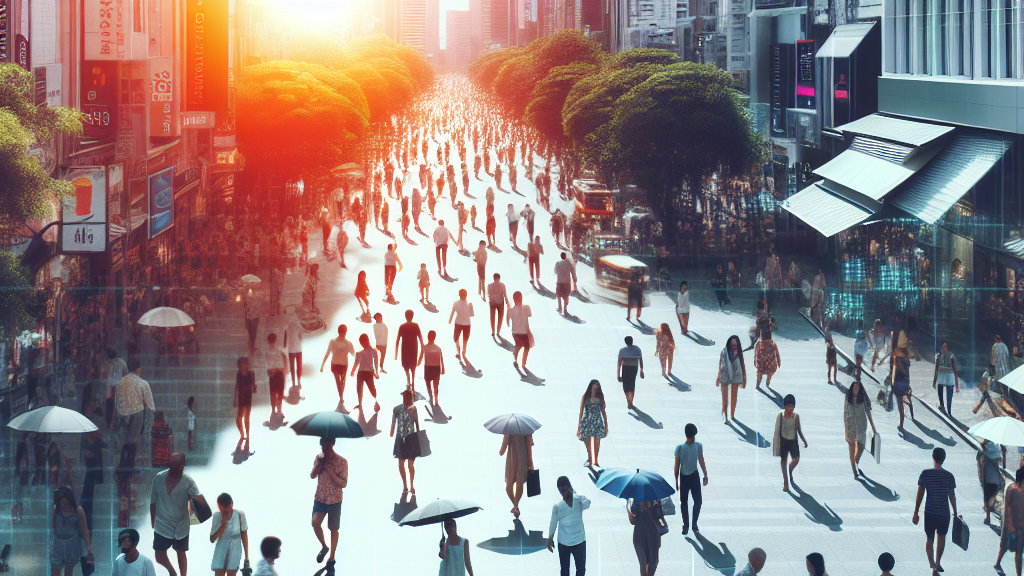
Extreme heat is not just an uncomfortable inconvenience; it’s a growing concern that reshapes how we live, especially in European cities where older populations are prevalent. When temperatures soar, people’s daily routines are disrupted, affecting everything from how often they travel to where they go. This shift doesn’t just affect individuals—it has ripple effects across entire communities and economies.
Using data from 13 million people in Spain, researchers discovered that movements on hot days drop by up to 10%, with even sharper decreases in the afternoons when temperatures peak. By examining various groups, the study found older adults tend to stay home to avoid the heat, whereas those with lower incomes often can’t afford to skip work. These changes mean fewer people are out interacting in city centers, impacting social dynamics and economic activities.
Imagine a city where extreme heat becomes the norm. Fewer people on the streets could mean less business for cafes, markets, and services, altering the very fabric of community life. In the future, understanding these patterns could help city planners design more heat-resilient environments—like creating shaded walkways and scheduling work differently to keep our urban centers vibrant and thriving, even in the heat.
During extreme heat, people in cities can cut their mobility by up to 20% in the afternoons, drastically altering daily routines.
FAQs
How does extreme heat affect mobility in European cities?
Extreme heat causes a significant drop in mobility, with people traveling up to 20% less during peak temperatures. This decrease particularly affects city centers, impacting daily routines and economic activities.
What groups are most affected by heat-related mobility changes?
Older adults are more likely to reduce travel during extreme heat, while people with lower incomes may have less flexibility to adjust their routines, often continuing to work despite the heat.
Why does extreme heat affect economic activity in cities?
Reduced mobility means fewer interactions and less foot traffic in urban areas, which can decrease sales for businesses and lower the overall vibrancy of city life, impacting the local economy.
How can cities adapt to combat the effects of extreme heat?
Cities can design more heat-resilient environments by adding shaded areas, adjusting work schedules, and enhancing public transportation to ensure urban centers remain lively and accessible.
Why is understanding heat’s effect on mobility important?
By understanding how heat alters movement, cities can plan better for sustainable living conditions and economic resilience, adapting to climate change effectively.
Background
Extreme heat can seriously affect human behavior and cities’ social and economic fabric. Heat waves are becoming more frequent due to climate change, and understanding their effects helps us adapt and plan. The study uses data from mobile networks, which track people’s movements, providing insights into how extreme temperatures influence daily activities.
History
The study of heat impacts on human behavior has evolved from small-scale observations to large-scale data analysis thanks to technology. Earlier studies focused on specific groups or regions, but now, researchers can use vast datasets like mobile network data to understand broader patterns and impacts on entire populations.
Based on “Extreme heat reduces and reshapes urban mobility” by Andrew Renninger, Carmen Cabrera, available on arXiv (arxiv.org/abs/2501.03978), used under CC BY 4.0 (creativecommons.org/licenses/by/4.0/).