Imagine self-driving cars that can perform maneuvers usually reserved for Hollywood stunt drivers. We’re not talking about just having a car stop or swerve to avoid a pedestrian; we mean executing precise, high-speed turns that demonstrate the car’s agility and enhance its safety on the road. This exciting development could transform your everyday ride into something significantly smarter and safer.
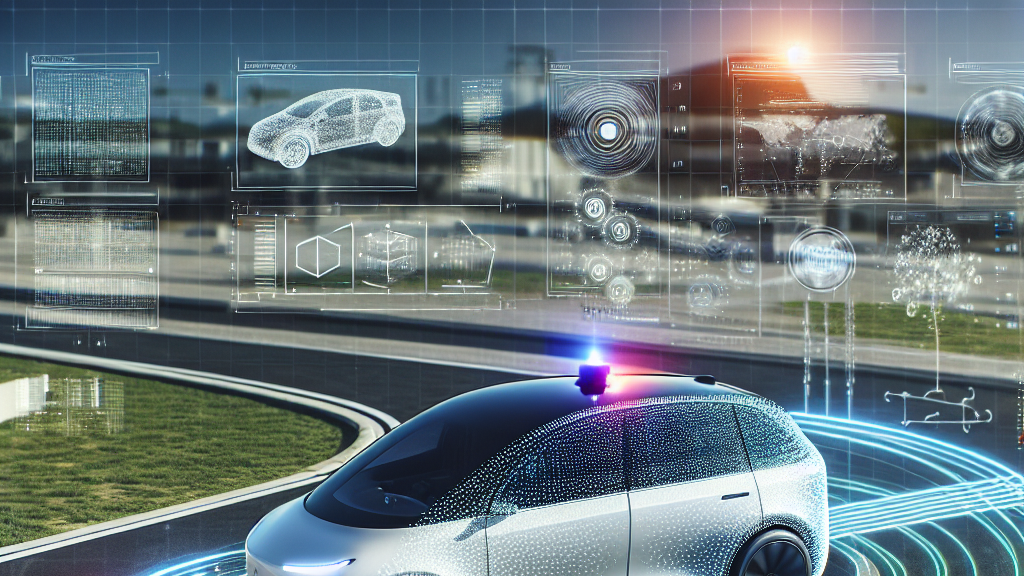
Researchers have developed a framework called ManeuverGPT, which uses artificial intelligence to teach autonomous vehicles how to perform these incredible moves. The system works within a simulated environment, where it refines its driving skills through a clever, text-based approach. Imagine if your car could read instructions and learn to do a J-turn, a high-speed maneuver performed by expert drivers, by understanding and adjusting to different car models and dynamics.
The real-world implications of this are huge. Picture a self-driving car on a busy highway when something unexpected happens, like debris falling off a truck. Instead of a simple swerve, the car could execute a complex maneuver to safely avoid the obstacle, all thanks to this new AI technology. This could mean fewer accidents and a lot more confidence for those of us who still feel a bit nervous about handing the reins over to a machine.
Did you know that a self-driving car can learn to perform a J-turn just by understanding text instructions? Imagine teaching a car to drive like a pro stunt driver!
FAQs
How does ManeuverGPT teach self-driving cars to perform stunts?
ManeuverGPT uses artificial intelligence to teach self-driving cars stunt-like maneuvers through a simulation, where AI agents understand and refine driving commands based on text instructions and vehicle dynamics.
What types of maneuvers can self-driving cars learn using this framework?
Using ManeuverGPT, self-driving cars can learn high-agility maneuvers like J-turns, which allow them to perform precise, high-speed turns typically done by professional drivers.
Why are stunt-like maneuvers important for self-driving cars?
Stunt-like maneuvers enhance a vehicle’s ability to avoid hazards dynamically, improving safety by handling unexpected obstacles in the road with precision.
How does this technology ensure safety while performing high-speed maneuvers?
The AI framework includes a safety validation process, where physics-based and safety constraints are checked to ensure all maneuvers are performed safely.
Can self-driving cars perform these moves in real-world scenarios?
While the research is currently in a simulation stage, the potential for real-world application exists, where cars could use these skills to avoid hazards effectively.
Background
The fundamental idea behind this research is to use large language model-based software to control self-driving cars in a way that mimics the agility and precision seen in stunt driving. By using a language-based approach, the cars ‘read’ instructions and adapt to perform complex driving maneuvers, enhancing their autonomous control capabilities in critical situations. This involves understanding vehicle dynamics, the safe execution of maneuvers, and refining the AI’s driving parameters iteratively.
History
The journey to achieve this level of control in self-driving cars has built on decades of advancements in autonomous vehicle technology and the recent explosion of artificial intelligence and machine learning capabilities. Earlier research focused on basic obstacle avoidance and route following, whereas this new study pushes the envelope by combining AI with high-dynamic driving techniques. By leveraging language models, this research moves beyond traditional algorithmic approaches and into a more intuitive, adaptable control system for vehicles.
Based on “ManeuverGPT Agentic Control for Safe Autonomous Stunt Maneuvers” by Shawn Azdam, Pranav Doma, Aliasghar Moj Arab, available on arXiv (arxiv.org/abs/2503.09035), used under CC BY 4.0 (creativecommons.org/licenses/by/4.0/).