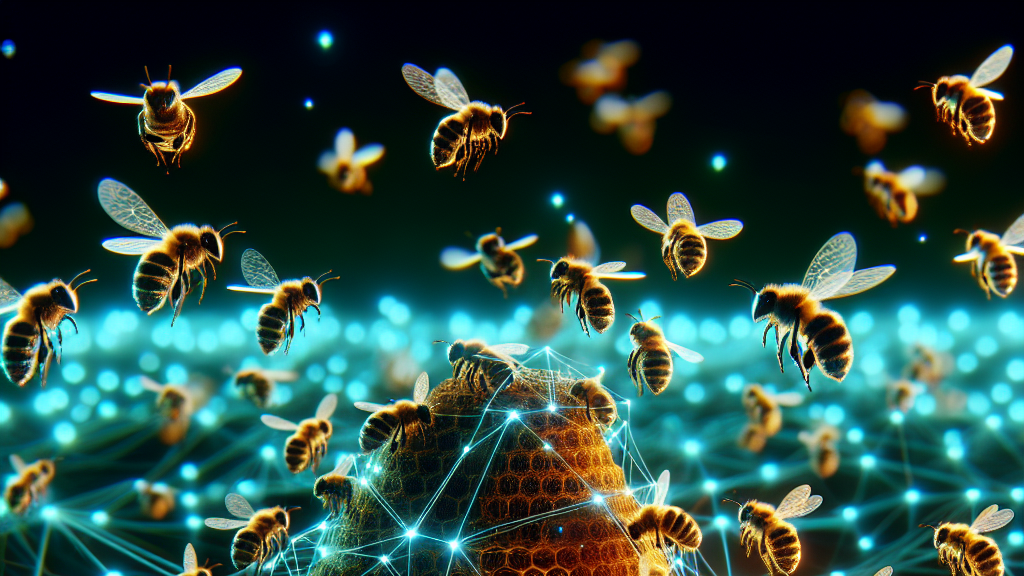
Imagine if every time you faced a tough problem, you could call on a team of experts to brainstorm solutions together. This is exactly what researchers are trying to achieve with AI models in a groundbreaking project that mimics the way animals swarm in nature. They call it the ‘Society of HiveMind,’ and it’s designed to make artificial intelligence even more powerful by pooling together different AI models to tackle complex challenges.
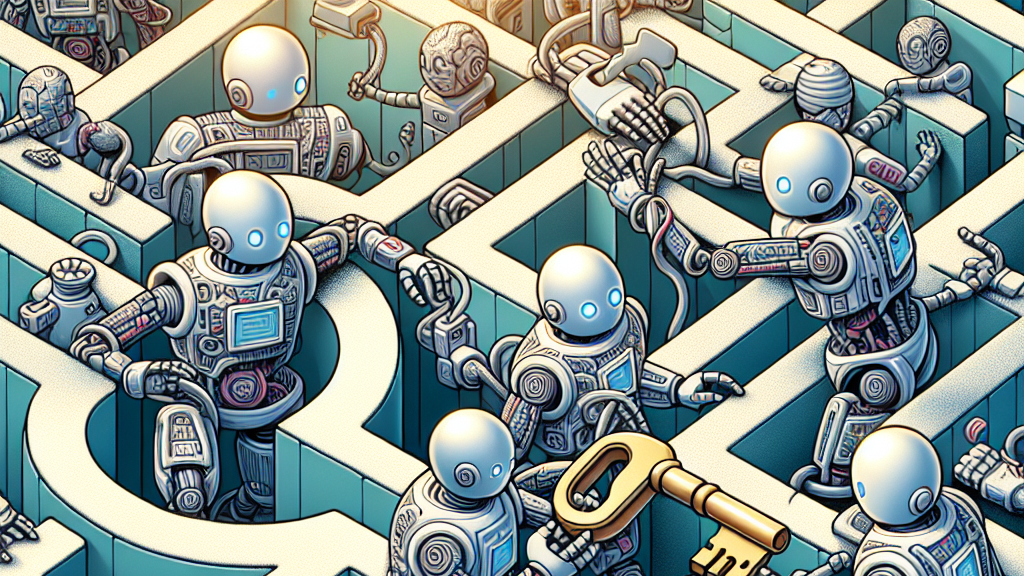
The essence of this research is creating a system where multiple AI models can collaborate like a team or a hive of bees. While individual AI models are great at gathering and processing real-world knowledge like facts and data, their genius really shines when they unite to solve problems requiring deep logical reasoning. So, by combining their strengths, these AI models can think more creatively and effectively than working alone.
In the future, this cooperative AI approach could revolutionize how we use technology. Picture your smart home devices, all working together seamlessly to anticipate your needs and solve problems before you even know they exist. Or imagine disaster response systems that coordinate multiple AI models to strategize and manage complex crisis scenarios efficiently. These are just a few examples of how this research could change our lives for the better.
Just like bees working in a hive, AI models can learn and improve by communicating and collaborating with each other.
FAQs
What is the Society of HiveMind and how does it work?
The Society of HiveMind is a framework that allows multiple AI models to collaborate, similar to how animal swarms function in nature. It aims to enhance AI’s problem-solving abilities by uniting diverse models to improve logical reasoning capabilities.
Why is swarm intelligence significant for AI development?
Swarm intelligence is important because it allows AI to tackle more complex problems through collective reasoning. By mimicking animal swarms, AI can learn to solve tasks more efficiently and creatively than through solo efforts.
How could multi-agent systems like SOHM impact everyday technology?
Multi-agent systems like SOHM could lead to smarter, more responsive technology that anticipates user needs, improves crisis management, and enhances decision-making processes by integrating diverse AI models for better reasoning.
Background
Multi-agent systems in AI involve multiple models working together to solve problems, inspired by natural swarming behavior. This study explores how combining separate AI models into a collective can enhance their problem-solving abilities, particularly in logical reasoning tasks.
History
The concept of multi-agent systems has evolved from studies in both artificial intelligence and natural systems like ant colonies and bird flocks. Over time, research has focused on how AI can mimic these natural systems to improve collaboration and efficiency, leading to developments like the Society of HiveMind.
Based on “The Society of HiveMind: Multi-Agent Optimization of Foundation Model Swarms to Unlock the Potential of Collective Intelligence” by Noah Mamie, Susie Xi Rao, available on arXiv (arxiv.org/abs/2503.05473), used under CC BY 4.0 (creativecommons.org/licenses/by/4.0/).