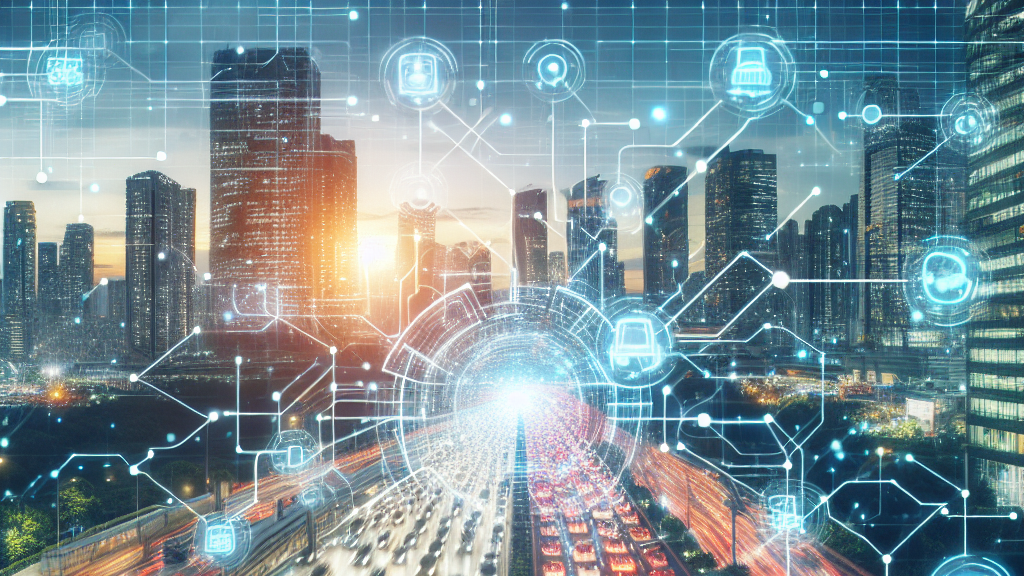
We all know the frustration of sitting in traffic, wondering if there will ever be a way to beat the jams. But what if, instead of just enduring these disruptions, our city streets could actually improve because of them? That’s exactly what this exciting new research is proposing—a way to make city traffic not just resilient but ‘antifragile,’ meaning it thrives under pressure.
The research introduces a groundbreaking concept: using a smart learning algorithm that adapts to traffic challenges in real-time. Unlike old systems that merely resist disruptions, this method learns from them and gets better. It analyzes traffic patterns and anticipates issues, making the flow smoother even when you’d expect chaos. It’s like having a traffic smart assistant that learns from every hiccup to ensure a better driving experience next time.
Imagine a future where your commute isn’t a daily frustration, but something that constantly improves. This research could lead to technology capable of making urban traffic networks less congested and more efficient. So, during rush hour, instead of more delays, you could experience a smoother drive, saving time and reducing stress on the roads.
Did you know that the term ‘antifragile’ describes a system that gets stronger with stress? Unlike being just robust or resilient, it’s like a city traffic network that thrives on chaos!
FAQs
What makes antifragility different from robust traffic systems?
While robust systems resist changes, antifragile ones learn and improve from them, making city traffic more efficient under stress.
How does reinforcement learning help in traffic management?
Reinforcement learning adapts to real-time traffic changes, predicting and responding to disruptions to enhance flow and reduce jams.
Could this research actually reduce my commute time?
Yes, by adapting and thriving on disruptions, the new system aims to make traffic flow smoother, potentially leading to quicker commutes.
Why are current traffic systems struggling with disruptions?
Traditional models fail to account for real-world unpredictability, unlike the new model that learns and improves with each challenge.
What’s the future impact of antifragile traffic systems?
These systems could revolutionize urban mobility, turning traffic disruptions into opportunities for better flow and reduced congestion.
Background
Understanding the concept of antifragility requires realizing that most systems at best only withstand stress and return to their original state—this is resilience. But antifragility is different; it means that a system actually improves when faced with stressors or disruptions. In the context of traffic, this means that instead of merely resisting jams and maintaining status quo, the traffic system learns from each disruption to become more efficient over time.
History
The journey towards understanding and improving traffic systems has come a long way. Earlier efforts were focused on robust and resilient systems that could effectively handle routine disruptions without failing. However, they lacked the ability to improve when facing recurring challenges. Antifragility in traffic systems is inspired by this need for continuous improvement under stress and the limitations of past models, paving the way for more advanced, self-improving traffic networks.
Based on “Antifragile Perimeter Control: Anticipating and Gaining from Disruptions with Reinforcement Learning” by Linghang Sun, Michail A. Makridis, Alexander Genser, Cristian Axenie, Margherita Grossi, Anastasios Kouvelas, available on arXiv (arxiv.org/abs/2402.12665), used under CC BY 4.0 (creativecommons.org/licenses/by/4.0/).