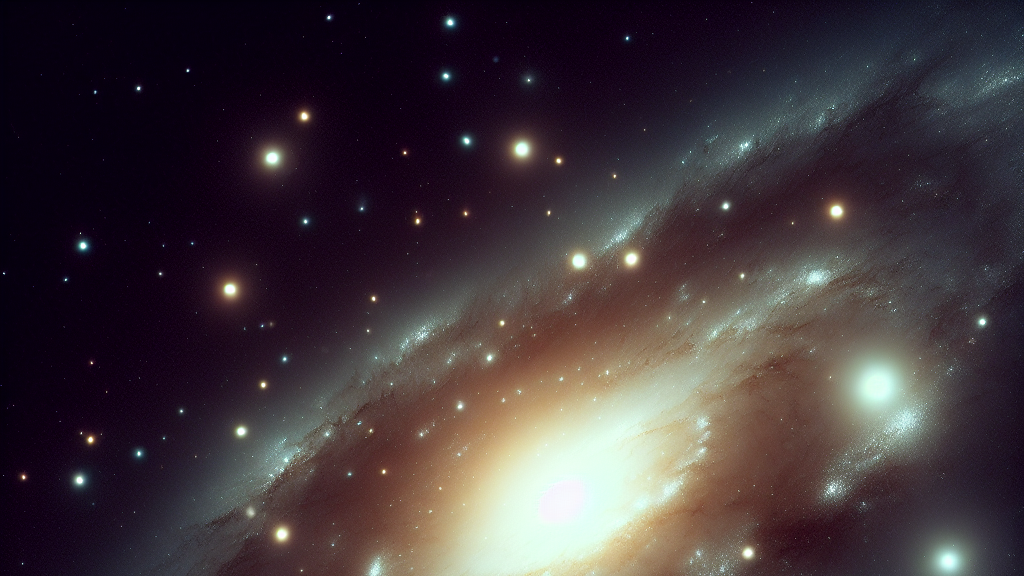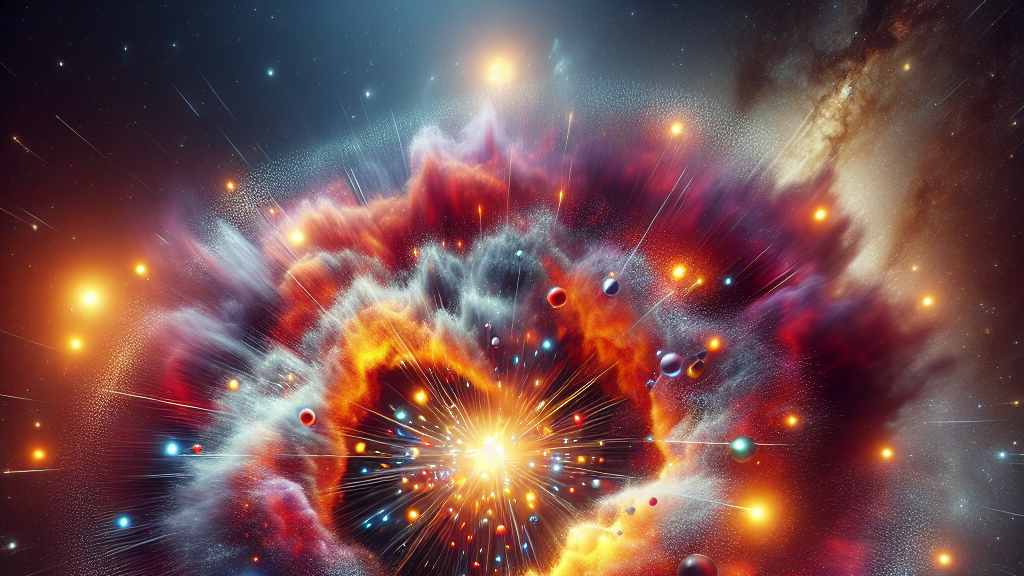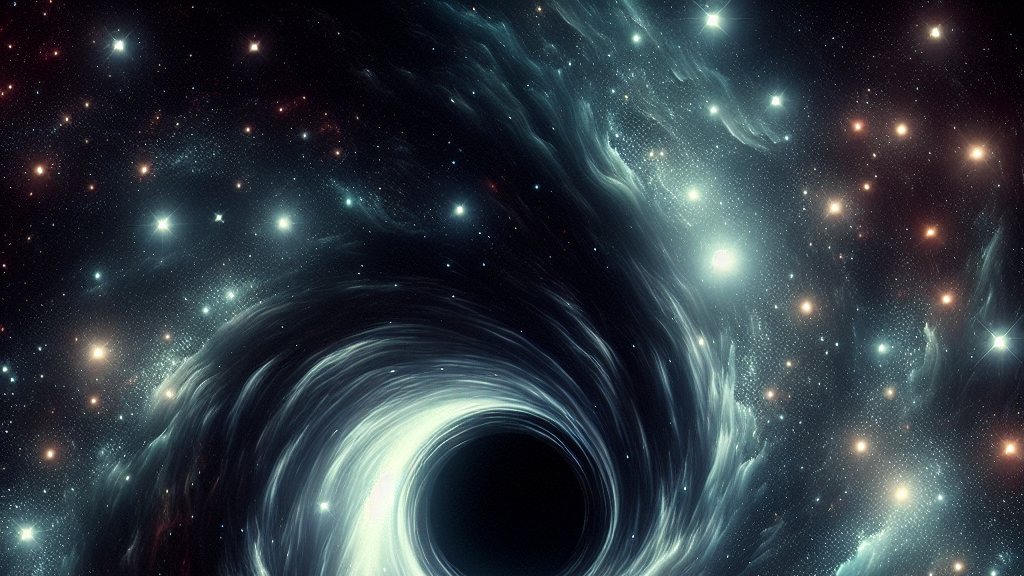
Imagine if mysterious cosmic giants called black holes could actually be powered by an invisible force in space. That’s what scientists are discovering as they explore how these celestial entities formed in the earliest times of the Universe. These findings could revolutionize our understanding of how the cosmos evolved from a chaotic spread of particles into the universe we know today, with its vast galaxies and intricate cosmic structures.
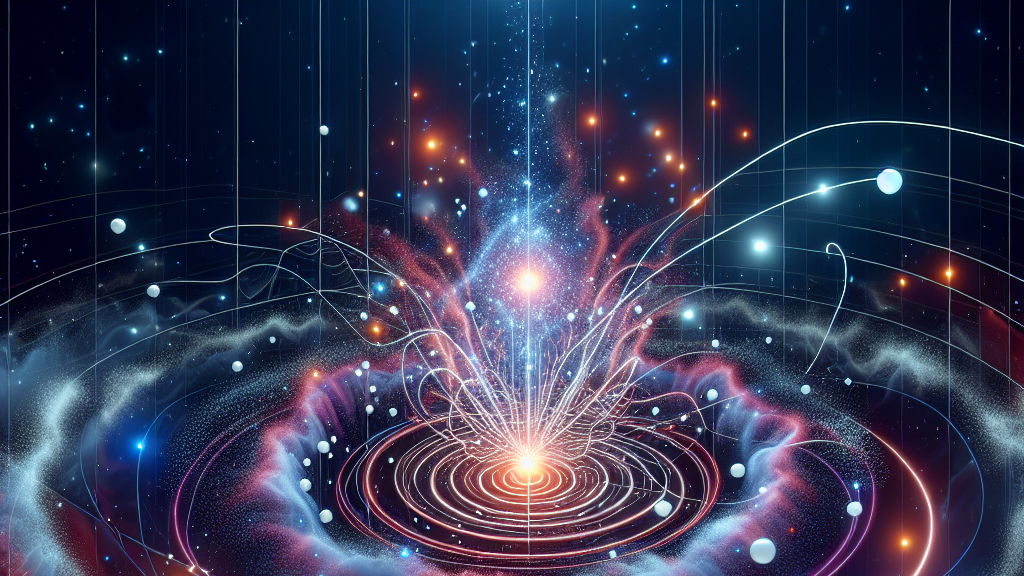
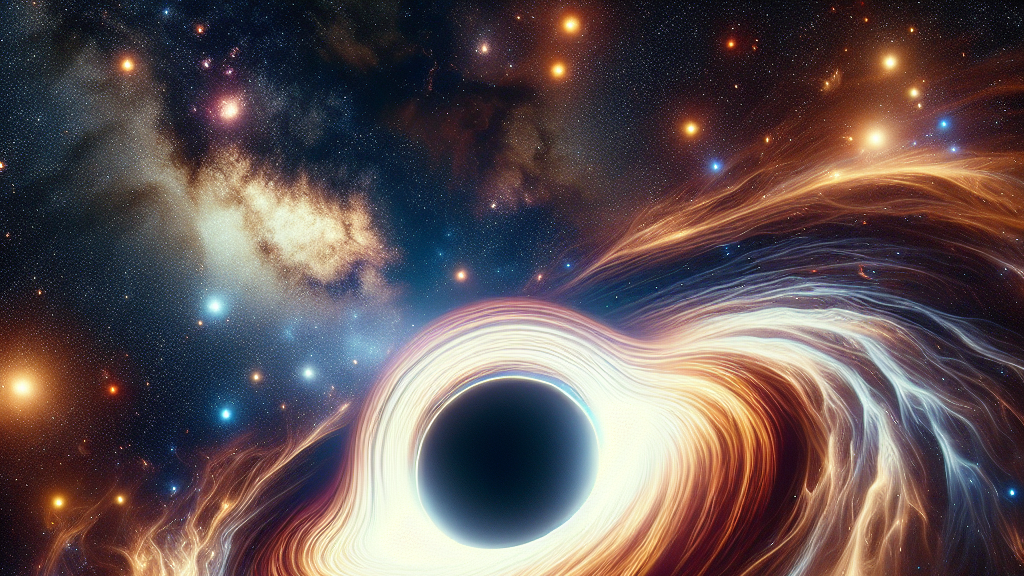
The core of this research is the study of self-interacting dark matter, a type of material that doesn’t interact with light, making it invisible to us. Scientists are using a clever method involving Monte-Carlo simulations—which is like rolling dice with the Universe’s rules—to predict how this dark matter could collapse under its gravity to create black holes. The fascinating thing is, these processes are believed to have occurred during the early Universe, resulting in the formation of black holes that can grow into supermassive entities, explaining mysterious cosmic objects known as ‘little red dots.’
Why does this matter? Well, understanding the role of dark matter in black hole formation could transform space science. For instance, if we crack this puzzle, it could lead to more accurate cosmic models, predicting how galaxies evolve. Picture future astronomers using this knowledge to backtrack cosmic events and uncover hidden truths about the growth of our own Milky Way. The more we learn, the closer we get to unveiling the Universe’s biggest mysteries!
Did you know? Some black holes can grow to be over a billion times the mass of our Sun, yet start from tiny seeds likely powered by dark matter!
FAQs
What role does dark matter play in the formation of black holes?
Dark matter, specifically self-interacting dark matter, might cause the gravitational collapse of matter in the early Universe, leading to the formation of black hole seeds that grow into massive entities.
Why are these findings significant for the study of the Universe?
They could alter our understanding of cosmic evolution, offering insights into how galaxies and cosmic structures formed from the chaotic past of the Universe.
How do scientists simulate these cosmic events?
Researchers use Monte-Carlo simulations, a statistical method that mimics random processes, to explore various scenarios of dark matter interactions and their role in black hole formation.
What are ‘little red dots’ in the cosmic context?
‘Little red dots’ are early, often elusive cosmic objects believed to be active galactic nuclei with supermassive black holes, providing insight into the Universe’s developmental stages.
Can this research affect our understanding of dark matter?
Yes, it provides a complementary method to test and constrain models of dark matter, potentially revealing its true nature and how it influences cosmic structures.
Background
Self-interacting dark matter refers to particles that interact with each other through forces other than gravity, which could lead to gravitational collapse, forming dense regions that might seed black holes. Understanding these processes helps scientists use black holes as cosmic probes to study the mysterious dark matter. Monte-Carlo methods, which rely on repeated random sampling, are used to predict possible outcomes and investigate these cosmic phenomena.
History
Black holes are a central subject in astrophysics, with theories about their formation evolving over decades. The idea that self-interacting dark matter could contribute to their early formation builds on previous work that focused on gravitational forces alone. This study adds a fresh perspective by suggesting that dark matter’s self-interactions might have played a crucial role during the Universe’s infancy, possibly explaining some mysterious cosmic observations.
Based on “Formation of the Little Red Dots from the Core-collapse of Self-interacting Dark Matter Halos” by Fangzhou Jiang (Peking University Kavli Institute), Zixiang Jiang (Peking University Department of Astronomy), Haonan Zheng (Peking University Kavli Institute), Luis C. Ho (Peking University Kavli Institute, Peking University Department of Astronomy), Kohei Inayoshi (Peking University Kavli Institute), Xuejian Shen (MIT Department of Physics, MIT Kavli Institute), Mark Vogelsberger (MIT Kavli Institute), Wei-Xiang Feng (Tsinghua University Department of Physics), available on arXiv (arxiv.org/abs/2503.23710), used under CC BY 4.0 (creativecommons.org/licenses/by/4.0/).