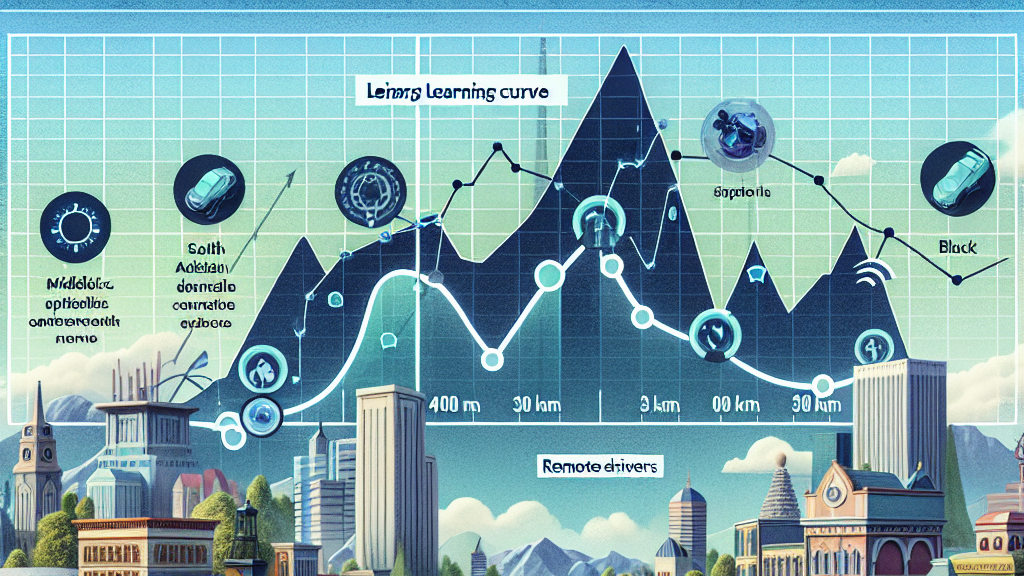
Imagine a world where cars are driven remotely, and safety is the top priority. That’s what researchers are focusing on with Remote Driving Systems. They’ve discovered something fascinating: the more experience remote drivers get, particularly in the first 400 kilometers, the less they need safety drivers to step in. Think of it like learning to ride a bike—all those wobbles get smoother with practice.
The study involved data from a whopping 14,000 kilometers of remote driving. It showed that remote drivers, with just a little bit of training, quickly reduce the number of times safety drivers have to take over. They analyzed what caused remote drivers to disengage and even identified four common scenarios where safety drivers were most likely to intervene. It’s like they uncovered a secret playbook on how remote drivers can get better and safer, faster.
This research could change how we think about driving. As remote driving becomes more common, especially in busy city environments, the efficiency and safety of these systems hinge on solid driver training. Imagine hopping into a remotely driven car that glides through city streets, knowing that the remote driver has been trained to handle complex scenarios with ease. One day soon, this could be the norm, keeping us safer while cutting down on traffic chaos.
Did you know? Remote drivers can significantly improve their skills in just 400 kilometers of training!
FAQs
What is the significance of studying remote driver training?
Understanding how remote drivers improve their skills can lead to better safety and efficiency in remote driving systems, especially in complex urban environments.
How quickly can remote drivers reduce safety driver interventions?
Remote drivers can significantly reduce the need for safety drivers to intervene after just 400 kilometers of driving experience.
What are the common scenarios for safety driver interventions in remote driving?
The study identified four main scenarios necessitating safety driver interventions, helping enhance training and improve remote driving systems.
Why focus on the first 400 kilometers of remote driving experience?
The data shows that significant improvements occur within this range, highlighting a crucial learning phase for remote drivers.
How does this research impact urban driving environments?
By boosting remote driver skills, the research enhances the safety and controllability of remote driving systems in busy urban settings.
Background
Remote Driving Systems allow a person to drive a vehicle from a location other than inside the car. This technology is often used in complex urban areas to help navigate and control vehicles more efficiently and safely. Safety drivers are often present to take control if needed, but the goal is to minimize their interventions through effective training.
History
Remote driving technology has evolved rapidly, particularly as urban areas look for ways to manage traffic and improve safety. Early versions of remote driving systems required frequent interventions by safety drivers. However, this study focuses on how experience can reduce those interventions, showcasing a significant improvement over past systems.
Based on “Learning from Disengagements: An Analysis of Safety Driver Interventions during Remote Driving” by Ole Hans, Jürgen Adamy, available on arXiv (arxiv.org/abs/2504.00246), used under CC BY 4.0 (creativecommons.org/licenses/by/4.0/).