Connect with us

Search by keyword

Space

Could the Universe Bounce Back?

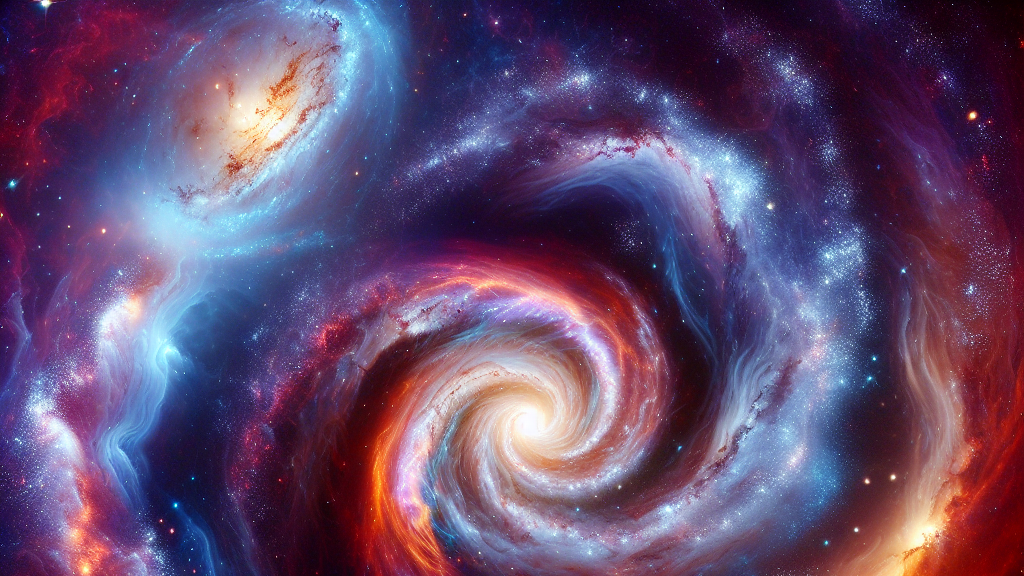
This study explores how our universe might ‘bounce’ back instead of ending in a big crunch or a big freeze. By understanding the interaction between dark energy and dark matter, we might unlock the mystery of a universe that can endlessly expand and contract, affecting everything from how stars and galaxies form to the fate of our own cosmic neighborhood.

Could the Universe Bounce Back
✨Researched by humans. Explained by robots. Learn more.

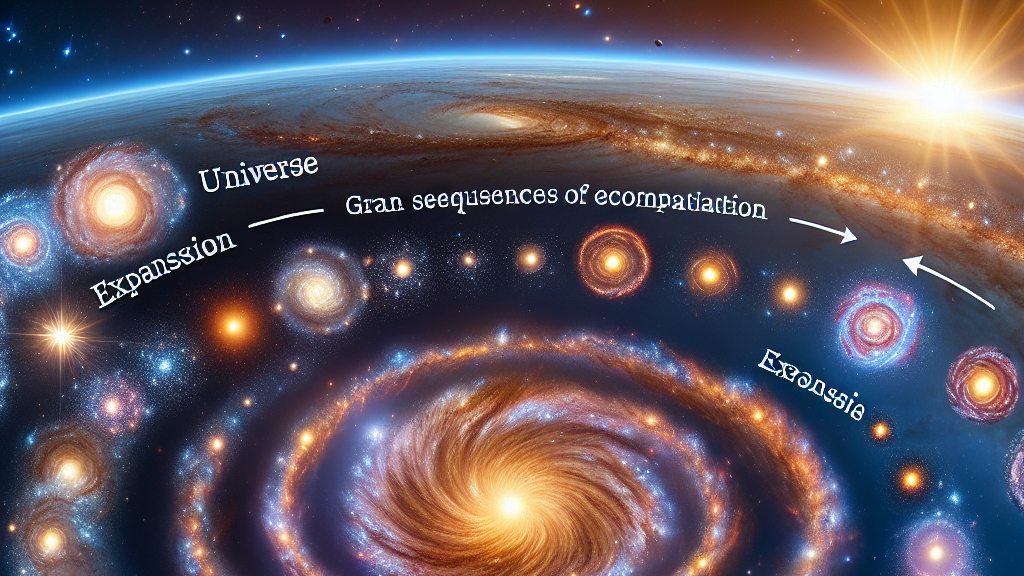
Imagine a universe that never truly ends! Researchers are exploring how the cosmic dance between dark energy and dark matter might allow our universe to continuously expand and contract without collapsing into oblivion. This process, called a ‘bounce,’ challenges the traditional view of a universe that ultimately either freezes or crunches.

Central to this idea are the Friedmann-Lemaître-Robertson-Walker models, which depict a universe dominated by dark energy with a special kind of equation affecting its behavior. By understanding how this equation interacts with cold dark matter, scientists are looking for ways to prevent singularities—points in space-time where physics as we know it breaks down—helping the universe to bounce back in a big way.

Why does this matter to us? Well, if scientists crack the code, it might change everything we know about the universe’s future. It could mean new theories about how galaxies evolve, potentially even leading to improved technologies inspired by cosmic physics or new insights into energy systems on Earth. The universe’s ability to ‘bounce’ might even have implications for the long-term survival of life as we know it!

Did you know? Some models suggest our universe could collapse and then bounce back, avoiding a dramatic end!

FAQs

How does the universe ‘bounce’ instead of ending?

The research suggests that the interaction between dark energy and dark matter might allow the universe to avoid a big crunch or freeze, instead expanding and contracting in cycles.

What role does dark energy play in a bouncing universe?

Dark energy, with a special equation influencing its behavior, interacts with dark matter to potentially create conditions for the universe to expand and contract in a non-singular way.

Why is the ‘bounce’ concept important for the future of the universe?

If the universe can bounce, it means it could continue cycling through expansions and contractions indefinitely, which could impact everything from galaxy formation to the fate of cosmic structures.

Background

A key concept in this research is the Friedmann-Lemaître-Robertson-Walker model, a cosmological model that describes a universe filled with dark energy and matter. The dark energy component is defined by a quadratic equation of state, meaning its relationship with pressure and density changes in a non-linear way. The interaction with cold dark matter could influence the universe’s overall dynamics, possibly enabling it to avoid singularities where traditional physics breaks down.

History

The study of the universe’s fate has intrigued scientists for decades. Earlier models focused on the possibility of the universe ending in a big crunch, freezing, or flat out expanding. This study builds on those ideas by introducing the influence of a quadratic equation of state for dark energy and its interaction with dark matter. This approach aims to create scenarios where the universe can expand and contract cyclically, leading to the concept of a bouncing universe.

Based on “Singularity-free cosmology from interactions in the dark sector” by Molly Burkmar, Marco Bruni, Thomas Waters, available on arXiv (arxiv.org/abs/2504.01683), used under CC BY 4.0 (creativecommons.org/licenses/by/4.0/).

Trending

Latest

Can AI Save Water Discover How

Computers

AI is transforming the tech world, but it uses lots of water! A new tool, SCARF, helps us measure and reduce AI's water footprint,...

Whats a Forbush Decrease and Why Should We Care Whats a Forbush Decrease and Why Should We Care

Space

Scientists just observed the biggest solar storm event in years, revealing unexpected cosmic ray patterns. Understanding these changes could help us protect our technology...

Can Cars Spot Danger Faster Than Humans Can Cars Spot Danger Faster Than Humans

Computers

Think about how quickly you react when something unexpected happens on the road. This research brings us closer to creating self-driving cars that can...

Can Fear of the Other Stop Social Harmony Can Fear of the Other Stop Social Harmony

Physics

Fear of the unknown might make it harder for people to agree and get along. This study shows that when people have strong xenophobic...

Can AI Revolutionize Breast Cancer Diagnosis Can AI Revolutionize Breast Cancer Diagnosis

Electricity

This research introduces a groundbreaking AI model that can accurately assess HER2-positive breast cancer using widely accessible staining methods, potentially revolutionizing how we diagnose...

Can AI Transform Your Singing into a Choir Can AI Transform Your Singing into a Choir

Computers

Imagine singing solo and having AI turn you into a choir. This research unveils a groundbreaking AI tool that transforms your voice into rich...

You May Also Like

Space

This research unravels the mysterious behavior of dark matter by exploring a two-species model, which could explain why some galactic regions are denser than...

Space

Scientists are puzzled by the universe's changing speed, as it seems to be accelerating quickly at some points and slowing down at others. This...

Space

Our understanding of the universe's uniformity faces a serious challenge, as new findings suggest our cosmos might not be as smooth and even as...

Physics

Scientists explore the fascinating possibility that our entire universe may have originated as a 'baby' universe. This intriguing idea not only aligns with existing...

General Relativity and Quantum Cosmology

Imagine if gravity could move faster than light and change our understanding of the universe. This research introduces new ideas that could solve cosmic...

General Relativity and Quantum Cosmology

This study introduces a new way to understand gravity, potentially solving mysteries like the Universe's expansion. If true, it could change everything we thought...

Physics

Imagine if space itself could create energy to speed up the universe's expansion! This research suggests a mind-blowing idea: a hidden energy source might...

Physics

Time crystals, a weird new form of physics, might help explain mysterious 'phantom' dark energy that's puzzling scientists everywhere. This discovery could reshape our...

Physics

New research suggests our universe might be older than previously thought, reshaping how we understand its formation and early galaxies.

Copyright © 2024 8ig8rain.

Disclaimer: The content on 8ig8rain.com consists of AI-generated summaries of scientific abstracts from arXiv. Please note that most arXiv abstracts are preprints and may not have undergone formal peer review. While these summaries aim to convey key ideas and potential applications, they are provided for informational purposes only and should not be interpreted as validated scientific findings or professional advice. The summaries are intended to educate, spark curiosity, and inspire further exploration of science.