Connect with us

Search by keyword

Computers

Can Machine Learning Be Fair and Secure?

We discovered that methods designed to make AI fairer actually make security worse, and this could impact who benefits from AI technologies.

Can Machine Learning Be Fair and Secure
✨Researched by humans. Explained by robots. Learn more.

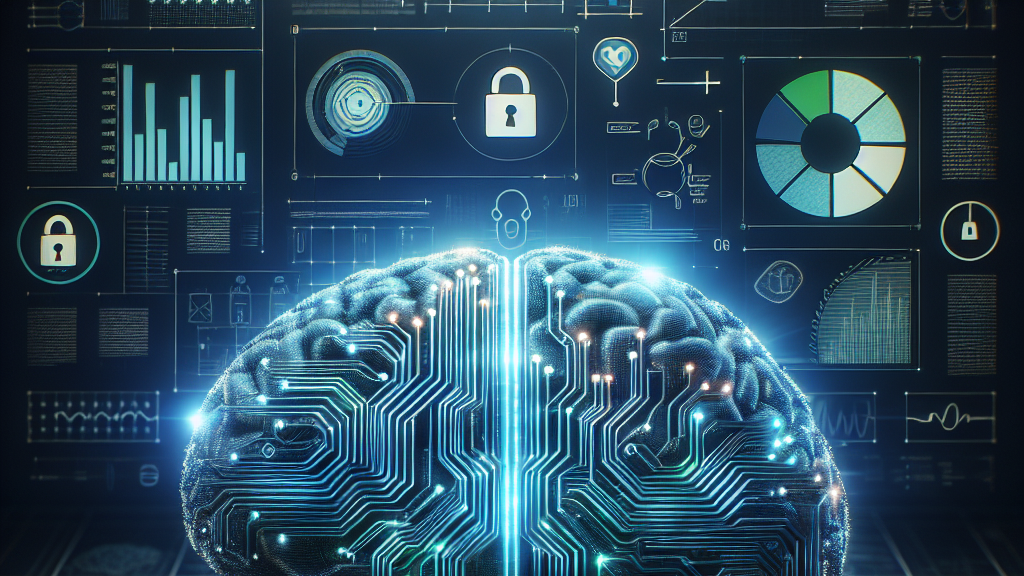
Imagine a world where tech promises fairness but unknowingly compromises our security. That’s exactly what’s happening in machine learning today. Researchers have been striving to make AI systems fair by ensuring that minority groups are equally represented. But they found out that these fairness methods might actually be making things worse by boosting hacker attacks.

How did this happen? Well, when AI systems are taught to be fair, they try to find and focus on data from underrepresented groups. Unfortunately, they also end up highlighting harmful or ‘poisoned’ data, which can be used by hackers to trick the system into failing. This means, while AI is getting better at being fair, it’s also getting more vulnerable to attacks, like hackers giving fake data.

Think about it this way: if an AI system at a bank was trying to be fair but got tricked by fake data, it could accidentally approve a loan for a made-up identity! That’s why this research is so crucial. It’s a wake-up call to the tech world that making AI both fair and secure is more complex than it seems, and the tech industry needs new strategies to tackle this challenge.

Did you know? By trying to be fair, AI systems can unintentionally raise hacker attack success rates from 0% to over 97%!

FAQs

What is group robustness in machine learning?

Group robustness in machine learning refers to a system’s ability to perform accurately across different groups of data, particularly minority groups, ensuring fair and equitable outcomes.

How do fairness methods impact AI security?

Fairness methods in AI amplify underrepresented data, but this process can unintentionally highlight harmful data (‘poisoned’ data), making AI systems more vulnerable to hacker attacks.

Why is it difficult to balance fairness and security in AI?

It is challenging because the techniques used to promote fairness might also expose AI systems to vulnerabilities by inadvertently boosting harmful data, requiring innovative new strategies to ensure both fairness and security.

Background

Machine learning aims to create systems that can learn from data and make decisions or predictions. Group robustness ensures these systems perform well across different groups, especially minority ones, avoiding biases and ensuring fairness. Heuristics, or rules-of-thumb, help identify such groups but can mistakenly highlight harmful data, affecting system security.

History

The study of fairness in AI has been evolving over the years, with early efforts focusing on reducing bias within algorithms. Recent advancements have attempted to improve minority group representation in AI outcomes. However, new findings reveal that these methods could inadvertently increase security vulnerabilities, sparking fresh concerns and research into how to address this balance.

Based on “Like Oil and Water: Group Robustness Methods and Poisoning Defenses May Be at Odds” by Michael-Andrei Panaitescu-Liess, Yigitcan Kaya, Sicheng Zhu, Furong Huang, Tudor Dumitras, available on arXiv (arxiv.org/abs/2504.02142), used under CC BY 4.0 (creativecommons.org/licenses/by/4.0/).

Trending

Latest

Can AI Save Water Discover How

Computers

AI is transforming the tech world, but it uses lots of water! A new tool, SCARF, helps us measure and reduce AI's water footprint,...

Whats a Forbush Decrease and Why Should We Care Whats a Forbush Decrease and Why Should We Care

Space

Scientists just observed the biggest solar storm event in years, revealing unexpected cosmic ray patterns. Understanding these changes could help us protect our technology...

Can Cars Spot Danger Faster Than Humans Can Cars Spot Danger Faster Than Humans

Computers

Think about how quickly you react when something unexpected happens on the road. This research brings us closer to creating self-driving cars that can...

Can Fear of the Other Stop Social Harmony Can Fear of the Other Stop Social Harmony

Physics

Fear of the unknown might make it harder for people to agree and get along. This study shows that when people have strong xenophobic...

Can AI Revolutionize Breast Cancer Diagnosis Can AI Revolutionize Breast Cancer Diagnosis

Electricity

This research introduces a groundbreaking AI model that can accurately assess HER2-positive breast cancer using widely accessible staining methods, potentially revolutionizing how we diagnose...

Can AI Transform Your Singing into a Choir Can AI Transform Your Singing into a Choir

Computers

Imagine singing solo and having AI turn you into a choir. This research unveils a groundbreaking AI tool that transforms your voice into rich...

You May Also Like

Computers

Imagine a machine capable of reading ancient books, deciphering complex pages with precision! This research is paving the way for AI to unlock the...

Computers

Dive into the world of AI mistrust, where computers don't always know when they're wrong! Discover how teaching AI to see like us might...

Computers

Discover potential dangers in using artificial intelligence to count votes and how even a small error could change election outcomes.

Computers

This research uncovers vulnerabilities in AI that could expose private and sensitive data while fine-tuning these models for specific fields like healthcare. By understanding...

Computers

Researchers are testing if blending sound and sight in AI could boost its smarts. This matters because it could mean smarter tech in devices...

Computers

This research introduces a new dataset to help AI systems more accurately identify images of minors online, potentially protecting children from digital exploitation and...

Computers

This research dives into why some AI models seem like mysterious black boxes, while others are easy to understand, using insights from computer science...

Electricity

This groundbreaking study shows how advanced sensors and AI can improve methane leak detection from space, helping us fight climate change more effectively. With...

Computers

Exciting new research shows our computers can be even smarter in predicting chemical reactions and properties by using hidden layers of information, promising faster...

Copyright © 2024 8ig8rain.

Disclaimer: The content on 8ig8rain.com consists of AI-generated summaries of scientific abstracts from arXiv. Please note that most arXiv abstracts are preprints and may not have undergone formal peer review. While these summaries aim to convey key ideas and potential applications, they are provided for informational purposes only and should not be interpreted as validated scientific findings or professional advice. The summaries are intended to educate, spark curiosity, and inspire further exploration of science.