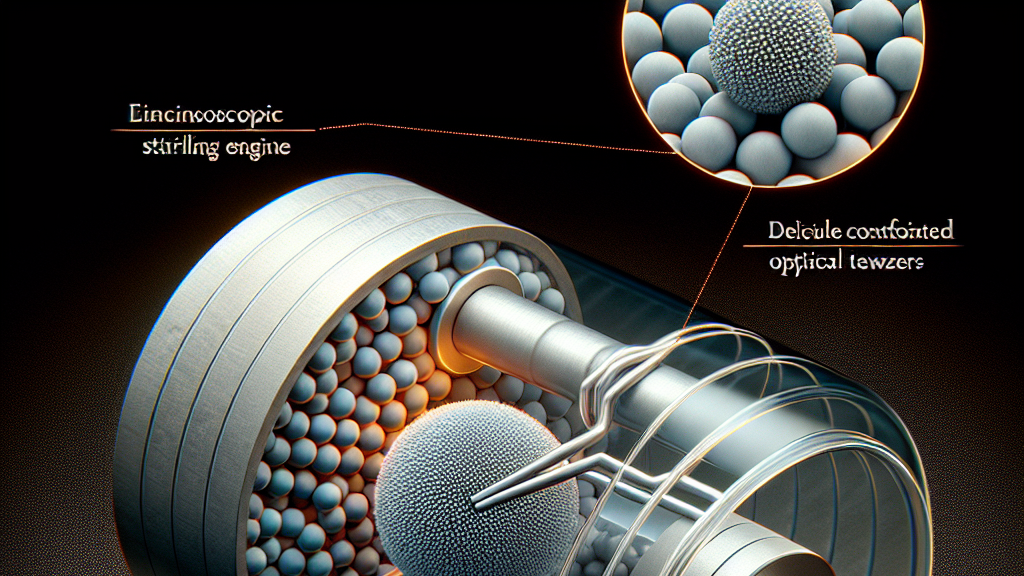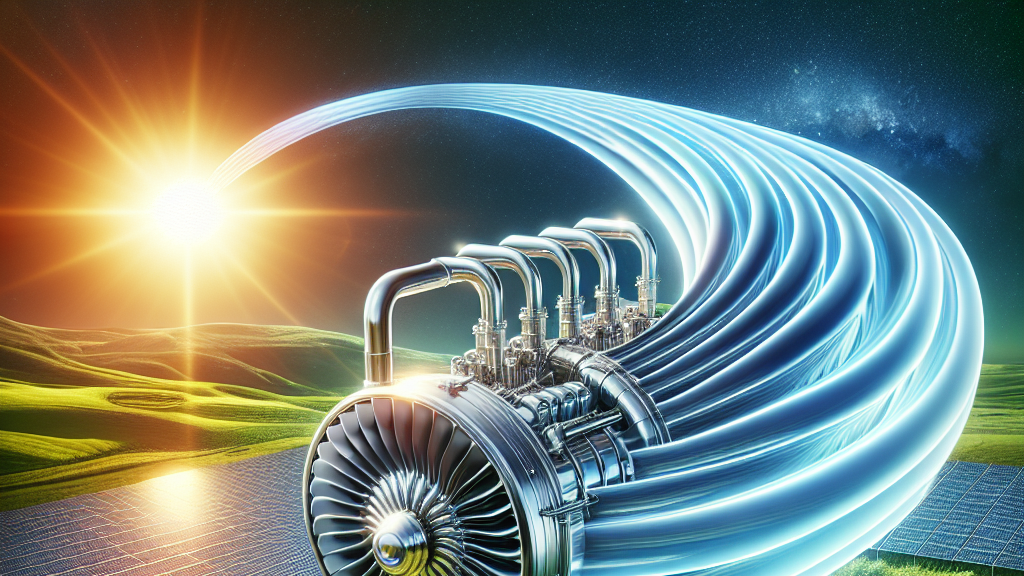
Imagine a world where engines run more efficiently, using readily available heat sources like the sun. That’s the dream being chased by researchers who are redesigning how Stirling engines work. Unlike traditional engines that have a straight, linear path for airflow, this new model introduces looping airflow paths, which could fundamentally change how these engines generate power.
In this innovative design, researchers have come up with two new types of Stirling engines: the O-type and the 8-type. The O-type engine strips away the usual complexity by omitting the regenerator, yet it surprisingly performs better than classic models. This means not only could it be more practical to manufacture, but it also holds the promise for greater power output. The 8-type, on the other hand, uses its unique shape to cleverly guide airflow, ensuring higher thermal efficiency by reducing unnecessary heat exchanges.
These advancements could lead to significant improvements in solar power plants, which rely on heat engines to convert sunlight into electricity. By harnessing more of the sun’s energy and wasting less, these Stirling engines could make solar energy more efficient and accessible, moving us closer to a world powered by clean, renewable resources. Imagine your home or school being entirely run on solar power, thanks to a more efficient engine design—that’s the future these researchers are aiming to build.
Unlike most engines that waste a lot of energy, Stirling engines are so efficient they can even be powered by something as simple as a cup of hot coffee!
FAQs
What makes Stirling engines different from regular engines?
Stirling engines can run on any heat source, not just fuel. Unlike regular engines, they are closed systems that cycle air back and forth between hot and cold ends, making them highly efficient.
Why are the new designs of Stirling engines important?
The new designs feature looped airflow paths, which improve performance and efficiency by reducing wasted energy and complexity. This could make them more practical for real-world applications like solar power generation.
How could these Stirling engine designs impact renewable energy?
These engines could dramatically increase the efficiency of converting solar energy into electricity, helping to make renewable energy a more viable and widespread option for daily use.
What is a unique feature of the 8-type Stirling engine?
The 8-type engine has a design that allows gas to enter the regenerator in advance, cutting down on unnecessary heat exchanges and thus enhancing its thermal efficiency.
Could this technology make solar power more accessible?
Yes, by increasing the efficiency of solar thermal power plants, these engines could lower costs and expand the reach of solar energy, making it a more accessible option for homes and businesses.
Background
Stirling engines are known for their ability to convert heat into mechanical work with impressive efficiency. They operate on a closed-cycle of heating and cooling a working fluid, usually air or helium, allowing them to recycle energy. Traditional Stirling engines have straightforward, linear paths for airflow, which limits potential efficiency through wasted energy in heat exchanges. By redesigning the airflow into looped paths, researchers aim to harness more energy from existing heat sources without complex and costly components.
History
Stirling engines have been around since the early 19th century, first invented by a Scottish minister named Robert Stirling as a safer alternative to steam engines. Over the years, they have been used in various niche applications like submarines and space probes due to their efficiency and quiet operation. Recent environmental concerns and advancements in materials have spurred renewed interest and innovation in Stirling engine designs, particularly as we seek sustainable energy solutions.
Based on “Loop Stirling engines” by Minghao Deng, available on arXiv (arxiv.org/abs/2504.00953), used under CC BY 4.0 (creativecommons.org/licenses/by/4.0/).