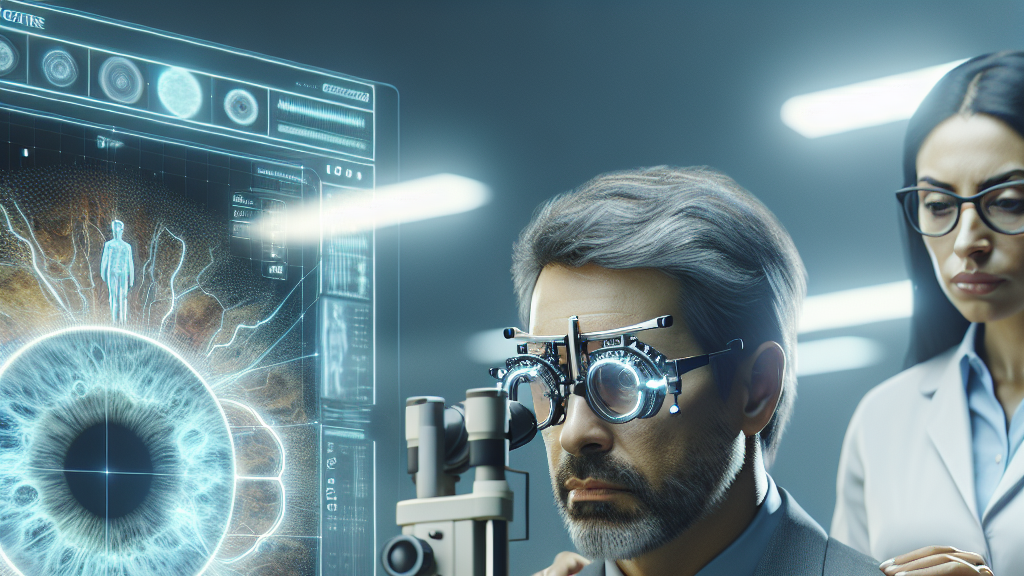
Imagine a world where we can stop vision loss in its tracks, potentially preventing blindness before it starts. Diabetic retinopathy, a common diabetes complication, can lead to severe vision impairment. But what if we could catch this disease earlier and more accurately, using the power of cutting-edge AI technology?
Recent research has highlighted the use of transfer learning, a sophisticated AI approach, to improve the accuracy and speed of detecting diabetic retinopathy. Unlike traditional methods that struggle due to complex and large data, transfer learning refines the machine learning process, utilizing previously learned features to enhance new learning tasks. This technique has shown remarkable results, with higher accuracy and sensitivity than ever before, reaching a diagnostic accuracy of up to 84%.
In the not-so-distant future, this AI-driven technology could transform how we diagnose eye diseases, offering timely interventions and preserving the sight of millions of people around the globe. Early detection means actions can be taken before it’s too late, improving patient outcomes and the quality of life for those at risk of losing their vision.
Did you know that diabetic retinopathy is one of the leading causes of blindness worldwide?
FAQs
What is diabetic retinopathy and why is early detection important?
Diabetic retinopathy is an eye condition caused by prolonged high blood sugar levels damaging the retinal blood vessels. Early detection is crucial because it allows for timely intervention, reducing the risk of severe vision loss or blindness.
How does transfer learning improve diabetic retinopathy detection?
Transfer learning enhances diabetic retinopathy detection by using pre-existing knowledge from other tasks to improve learning efficiency and accuracy. It reduces the complexity and length of the training process, allowing for more effective diagnosis.
How successful is the new method compared to traditional approaches?
The new transfer learning-based method achieves an overall accuracy of 84%, outperforming traditional methods in sensitivity and precision, with class-specific accuracies reaching 89% and a sensitivity of up to 97%.
Can this research influence how we diagnose other diseases?
Yes, the application of transfer learning in this research can be extended to other fields, potentially revolutionizing the diagnosis of various diseases by enhancing accuracy and reducing diagnostic times.
What are the future implications of using AI in healthcare?
AI in healthcare could transform diagnostics, providing early detection, personalized treatment plans, and efficient patient management, ultimately improving health outcomes and reducing healthcare costs globally.
Background
Diabetic retinopathy occurs when high blood sugar harms the small blood vessels in the retina, potentially causing vision impairment or blindness. Early detection is vital for intervention, and traditional methods use machine learning models to analyze retinal images. However, these methods often face issues with accuracy and require extensive data for training. Transfer learning offers a solution by allowing a model trained on one task to apply its knowledge to a new but related task, improving learning efficiency and accuracy.
History
Diabetic retinopathy has long been a significant cause of blindness, driving research into better diagnostic methods. Early techniques relied heavily on simple machine learning algorithms with limited datasets, resulting in varying accuracy. The introduction of convolutional neural networks improved feature extraction, although challenges remained. The innovative use of transfer learning represents a step forward in refining these methods, significantly boosting diagnostic performance and reliability.
Based on “Early detection of diabetes through transfer learning-based eye (vision) screening and improvement of machine learning model performance and advanced parameter setting algorithms” by Mohammad Reza Yousefi, Ali Bakrani, Amin Dehghani, available on arXiv (arxiv.org/abs/2504.03439), used under CC BY 4.0 (creativecommons.org/licenses/by/4.0/).