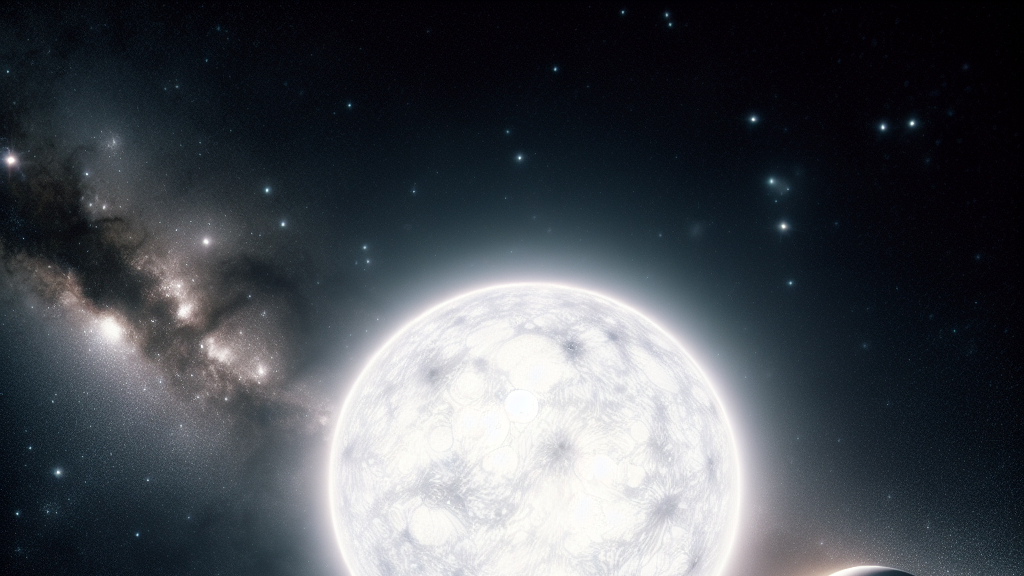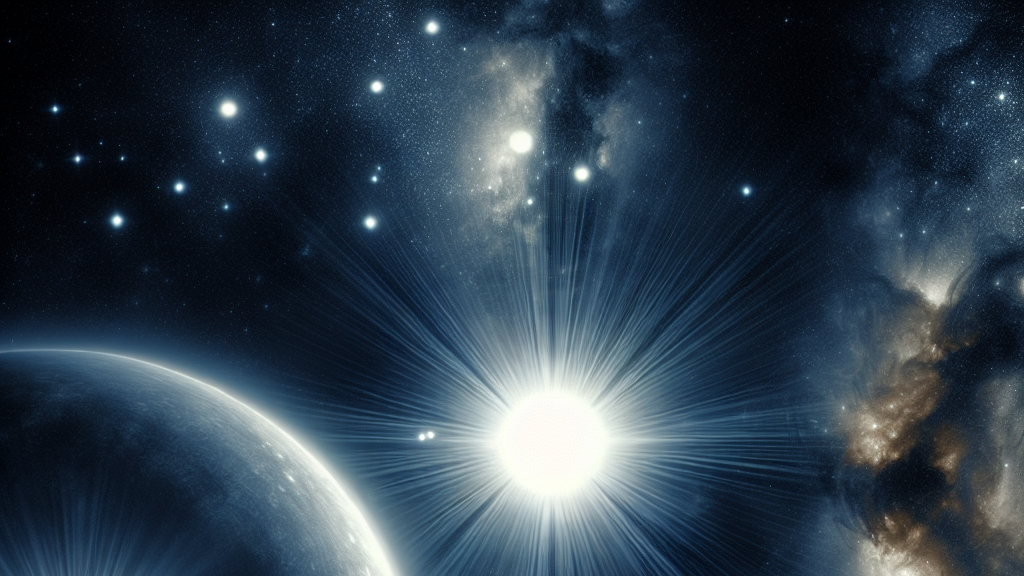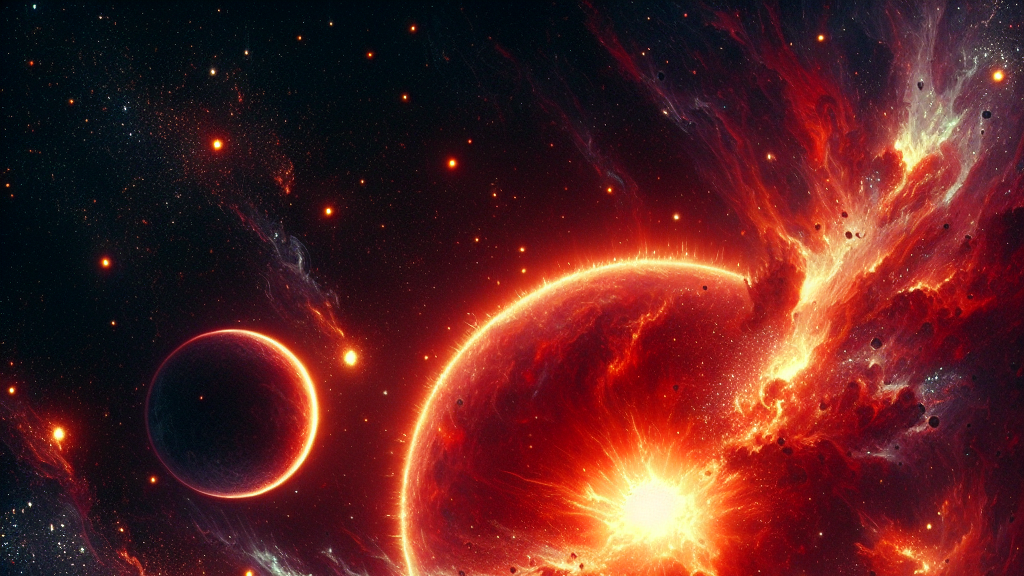
Imagine looking up at the night sky, knowing that out there, stars might actually be gobbling up their planets. Sounds like science fiction, right? Well, it’s actually happening! Scientists used one of the most advanced telescopes in the world to catch a star in the act of consuming a nearby planet. This cosmic rendezvous creates a spectacular show of light and energy, like fireworks in space that we can observe and study.
This fascinating discovery was made with the help of the James Webb Space Telescope, which captured detailed data from the event. By analyzing the light from this so-called ‘red nova,’ scientists spotted tell-tale signs that a planet was being swallowed by its host star. This rare event provides a glimpse into what happens when planets get too close to their suns, giving us new insights into the life cycles of stars and their planetary systems.
Why does this matter to you? Well, it adds a thrilling piece to the puzzle of how our universe evolves. In the future, these findings could help shed light on the fate of planets, including Earth, if any rogue events or changes occur in our solar system. Plus, knowing that stars can consume planets means we need to rethink their life cycle, which could influence how we search for habitable planets or understand star and planet formation in other galaxies.
Did you know that stars can actually swallow their planets? It’s like a cosmic dinner party gone wrong!
FAQs
What is a planetary engulfment event?
A planetary engulfment event occurs when a star consumes one of its planets, usually due to the planet’s orbit decaying over time, causing it to spiral into the star.
How was the planetary engulfment event of ZTF SLRN-2020 discovered?
Scientists observed ZTF SLRN-2020 using the James Webb Space Telescope, which detected specific light spectra indicating that a planet was being engulfed by its host star.
What does the discovery of ZTF SLRN-2020 tell us about stars and planets?
This discovery provides a unique look into how stars interact with their planets, offering clues about the life cycle of stars and helping scientists understand what might happen in other star systems.
Can our Sun engulf a planet? Could it happen to Earth?
While our Sun is not currently acting in a way that would lead to engulfing planets, over billions of years, it could potentially expand and could impact planets in its vicinity.
Background
When a planet orbits a star, the gravitational forces can, over thousands or millions of years, cause the planet’s orbit to decay. This means the planet spirals closer and closer to the star until, eventually, it gets too close and is consumed by the star. This event produces a lot of energy and can release light that tells scientists about the material being consumed.
History
Historically, the idea of stars consuming planets was more theoretical, but recent advances in technology, like the James Webb Space Telescope, have made it possible to observe these events directly. Earlier studies focused on detecting planets outside our solar system, known as exoplanets. The concept of planetary engulfment adds a new dimension to our understanding of how planets can be affected by their host stars.
Based on “Revealing a main-sequence star that consumed a planet with JWST” by Ryan M. Lau, Jacob E. Jencson, Colette Salyk, Kishalay De, Ori D. Fox, Matthew J. Hankins, Mansi M. Kasliwal, Charles D. Keyes, Morgan Macleod, Michael E. Ressler, Sam Rose, available on arXiv (arxiv.org/abs/2504.07275), used under CC BY 4.0 (creativecommons.org/licenses/by/4.0/).