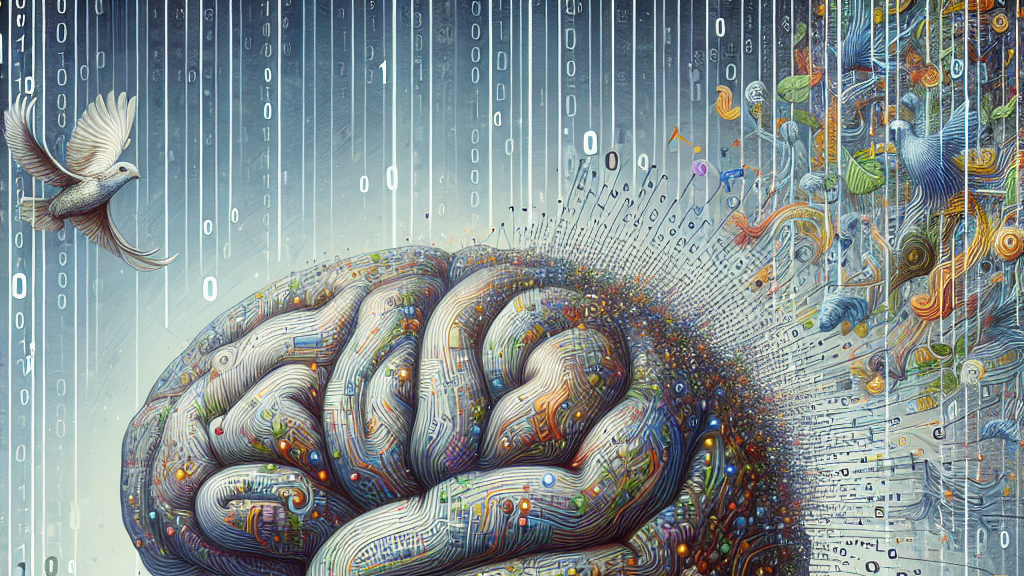
Imagine living in a world where evolution isn’t just a thing of the past but a dynamic process that mirrors the cutting-edge technologies of artificial intelligence. What if the secret behind nature’s ability to adapt and survive could inform the way we build smarter machines? That’s precisely what this fascinating research has uncovered, bringing AI and natural selection into a dazzling new perspective.
The traditional concept of fitness, often defined simply as reproductive success, has been criticized for being too vague and logically circular. Enter Bayesian learning—a concept from the world of statistics and machine learning—which allows us to create probabilistic models of fitness. By mapping population dynamics to Bayesian learning, researchers have not only filled the gaps in our understanding of evolutionary processes but also provided new tools to tackle complex problems in evolution, from dealing with changing environments to strategies in game theory and understanding group dynamics.
This breakthrough isn’t just academic; it could revolutionize how we work with AI. Imagine a future where AI systems learn and adapt like living organisms, improving over time just as plants and animals do. This ability could lead to the creation of AI that better understands and works with the natural world, offering solutions to problems like climate change or even helping to preserve biodiversity. It’s a fascinating intersection where biology and technology meet to potentially unlock the next wave of innovation.
Did you know that the same principles driving evolution in nature could be used to create smarter artificial intelligence?
FAQs
How does linking evolution to AI redefine the concept of fitness?
Linking evolution to AI redefines fitness by using Bayesian learning, which allows for creating probabilistic models. This provides a more precise understanding of the relationship between organisms and their environments, moving beyond the vague notion of reproductive success.
What implications does this research have for artificial intelligence?
This research suggests that AI could be designed to learn and adapt like living organisms, using principles from nature’s evolutionary processes. This could lead to more intuitive, robust AI systems that can tackle real-world challenges more effectively.
Why is the concept of fitness considered ‘logically circular’?
Fitness has traditionally been defined by reproductive success, which can circularly imply that those who reproduce are ‘fit.’ This new approach provides a clearer, probabilistic framework that defines fitness in a way that connects to environmental adaptation and survival.
How might this approach influence future studies in game theory and group populations?
By providing a general solution to modeling fitness through population dynamics and Bayesian learning, researchers can analyze complex social interactions and strategies within game theory and understand evolutionary selection in group-structured populations.
Can this research help address real-world problems like climate change?
Yes, by improving AI’s ability to adapt and learn like natural organisms, this research could enable the development of solutions that help mitigate impacts on ecosystems and support efforts in sustainability and conservation.
Background
In the realm of evolution, fitness is a key concept that describes how well an organism can survive and reproduce in its environment. Traditionally, it has been loosely defined as reproductive success. However, Bayesian learning—a method from machine learning that uses probabilities to make predictions—offers a new way to more explicitly define fitness. By mapping the dynamics of populations to Bayesian learning, researchers can construct models that provide a clearer picture of how organisms adapt and change over time in various environments.
History
The concept of fitness has long been a cornerstone of evolutionary biology, tracing back to Charles Darwin’s natural selection theory. Over time, biologists have refined the idea, yet its definition remains somewhat elusive and abstract. This research builds on the intersection of evolution and machine learning by integrating Bayesian learning, a statistical approach that originated in the 18th century and has become central to modern AI developments, to provide a more precise and actionable definition of fitness.
Based on “Redefining Fitness: Evolution as a Dynamic Learning Process” by Luís MA Bettencourt, Brandon J Grandison, Jordan T Kemp, available on arXiv (arxiv.org/abs/2503.09057), used under CC BY 4.0 (creativecommons.org/licenses/by/4.0/).