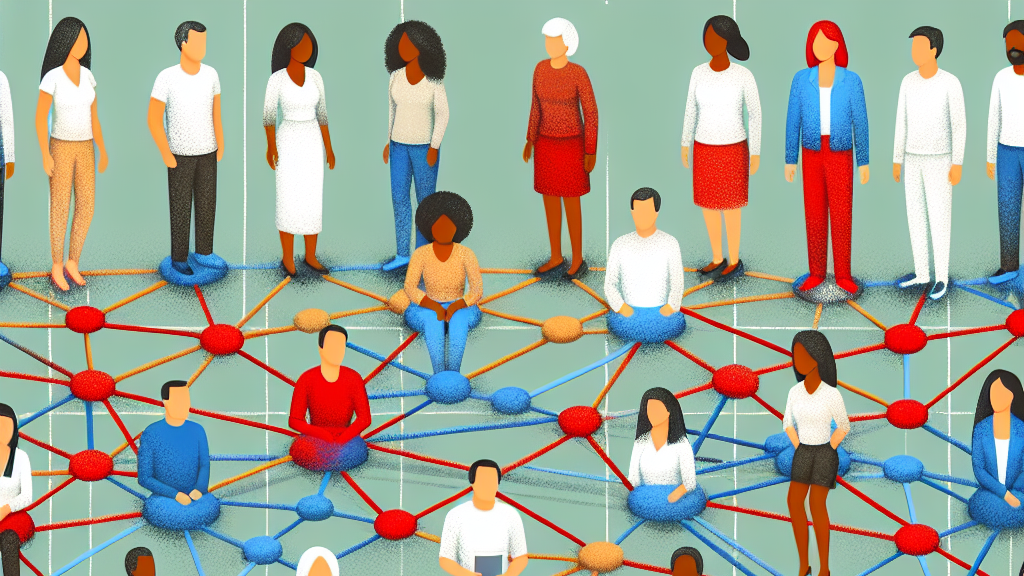
What if happiness isn’t just a personal pursuit, but a shared experience that can ripple through entire communities? This intriguing idea is rooted in the concept that happiness is not just about personal pleasure but about a life of purpose and contribution. Imagine happiness as a game where your contentment is influenced by those around you, and vice versa. This is what researchers are exploring by studying ‘homo-felix’, or happy humans, who find joy not just in their own achievements but in the well-being and happiness of others.
In the study, researchers discovered fascinating happiness feedback loops through simple games people play in everyday interactions. The games show that individuals tend to value happiness not just from their own gains but also from the happiness of those they interact with. In these scenarios, happiness can spread as people become more generous and cooperative, going beyond self-interest to create a stronger, happier community. The interactions create a variety of outcomes, sometimes leading to more cooperation even when it seems unlikely.
Imagine a community where one person starts being more giving and thoughtful. This single act can lead to a domino effect, encouraging others to act more cooperatively and considerately. It’s a bit like when someone shares a smile, and suddenly the whole room lights up. This research suggests that happiness can be contagious, potentially leading to communities that are more cooperative and supportive, transforming how we view personal and societal well-being.
Did you know? The word ‘happiness’ in the U.S. Declaration of Independence refers to living a virtuous life, not just personal pleasure.
FAQs
How does the concept of ‘homo-felix’ redefine happiness?
The concept of ‘homo-felix’ redefines happiness as a collective experience, not just personal pleasure. It suggests individuals find joy in their own happiness as well as in the happiness of others, creating a ripple effect of well-being throughout a community.
What role do feedback loops play in spreading happiness?
Feedback loops in happiness occur when an individual’s joy is positively influenced by those around them. This interaction can lead to a chain reaction where caring about others’ happiness leads to greater overall joy and cooperation within a group.
Can a single person’s actions really influence community happiness?
Yes, a single person’s prosocial behavior can spark change by inspiring others to also act cooperatively. This can lead to a shift from non-cooperative to cooperative dynamics within a community, spreading happiness and creating more support and unity.
Background
The research analyzes ‘homo-felix’ or happy humans, who derive happiness not only from personal achievements but also from the joy of others. The study uses game theory to understand how interactions and happiness feedback loops affect individual and group behavior. These loops suggest happiness can spread as individuals become more other-focused and cooperative, highlighting the interconnectedness of social relationships.
History
Happiness has long been discussed by philosophers, from Aristotle’s notion of eudaimonia, or a life of virtue, to modern understandings focused on personal pleasure. This study builds on game theory, particularly Nash equilibrium, to explore how happiness is shaped by interactions. It diverges from traditional models by emphasizing prosocial behavior and cooperation, aligning with emerging research on positive psychology.
Based on “The pursuit of happiness” by Debora Princepe, Onofrio Mazzarisi, Erol Akcay, Simon A. Levin, Matteo Marsili, available on arXiv (arxiv.org/abs/2506.10537), used under CC BY 4.0 (creativecommons.org/licenses/by/4.0/).