Connect with us

Search by keyword

Physics

Could Energy Flow Explain Life’s First Survival Game?

How did life learn to survive and thrive? A new model suggests it’s all about energy flow—even before life as we know it began. This research could transform our understanding of life’s origins and highlight the pivotal role energy plays in our existence.

Could Energy Flow Explain Lifes First Survival Game
✨Researched by humans. Explained by robots. Learn more.

Imagine if the secret to life wasn’t just about the right ingredients but also about the right flow of energy. This fascinating idea stems from a new study that suggests natural selection—the process that helps life survive and evolve—might have its roots in energy dynamics, even among ancient chemical systems before life as we know it existed.

Researchers have simplified the complex dance of molecules to explore how energy flow can cause chemical systems to persist or collapse. By examining energy availability from the environment and how it’s used internally, they developed a model showing that natural selection might emerge as a kind of survival game, dependent on how well these early systems handled fluctuating energy conditions.

So why should you care? Well, understanding this could change how we view the origins of life on Earth and potentially elsewhere in the universe. Imagine developing innovative technologies that mimic these ancient processes to create sustainable energy solutions or even help us discover life on other planets. The possibilities are as endless as the universe itself!

Did you know that the very process keeping you alive—natural selection—might have roots in the way simple chemicals interacted with energy billions of years ago?

FAQs

How does energy flow relate to natural selection in prebiotic systems?

Energy flow is crucial in determining whether chemical systems can survive or collapse, affecting their persistence and leading to natural selection as they stabilize under fluctuating conditions.

What does this study say about the origins of life?

This research suggests life may have begun with simple chemical systems that utilized energy flow to stabilize and persist, acting as early forms of natural selection even before life as we know it existed.

How could this concept influence future technology or research?

Understanding energy flow’s role in early natural selection could inspire new sustainable energy technologies and aid in the search for life beyond Earth by providing insights into how life might develop elsewhere.

Background

Natural selection is a process where organisms better adapted to their environment tend to survive and produce more offspring. Before life began, simple chemical systems might have undergone a similar process, driven by energy flow and environmental factors. This study explores how these early systems could have influenced the emergence of life.

History

Historically, natural selection has been a cornerstone idea explaining evolution since Charles Darwin’s work. However, its origins have puzzled scientists for decades. This study builds on earlier theories of abiogenesis—life arising from non-living matter—by proposing that energy flow could have driven primitive selection processes long before cellular life.

Based on “A Thermodynamic Model for the Emergence of Natural Selection in Prebiotic Reaction Networks” by T. M. Prosser, available on arXiv (arxiv.org/abs/2504.17975), used under CC BY 4.0 (creativecommons.org/licenses/by/4.0/).


Trending

Latest

Can AI Save Water Discover How

Computers

AI is transforming the tech world, but it uses lots of water! A new tool, SCARF, helps us measure and reduce AI's water footprint,...

Whats a Forbush Decrease and Why Should We Care Whats a Forbush Decrease and Why Should We Care

Space

Scientists just observed the biggest solar storm event in years, revealing unexpected cosmic ray patterns. Understanding these changes could help us protect our technology...

Can Cars Spot Danger Faster Than Humans Can Cars Spot Danger Faster Than Humans

Computers

Think about how quickly you react when something unexpected happens on the road. This research brings us closer to creating self-driving cars that can...

Can Fear of the Other Stop Social Harmony Can Fear of the Other Stop Social Harmony

Physics

Fear of the unknown might make it harder for people to agree and get along. This study shows that when people have strong xenophobic...

Can AI Revolutionize Breast Cancer Diagnosis Can AI Revolutionize Breast Cancer Diagnosis

Electricity

This research introduces a groundbreaking AI model that can accurately assess HER2-positive breast cancer using widely accessible staining methods, potentially revolutionizing how we diagnose...

Can AI Transform Your Singing into a Choir Can AI Transform Your Singing into a Choir

Computers

Imagine singing solo and having AI turn you into a choir. This research unveils a groundbreaking AI tool that transforms your voice into rich...

You May Also Like

Quantum Biology

This research dives into the fascinating link between evolution and our feelings, exploring how natural selection might shape not only our minds but also...

Materials

Researchers have discovered that granular liquids, like sand or grains flowing together, can change how energy moves through them, different from regular liquids like...

Materials

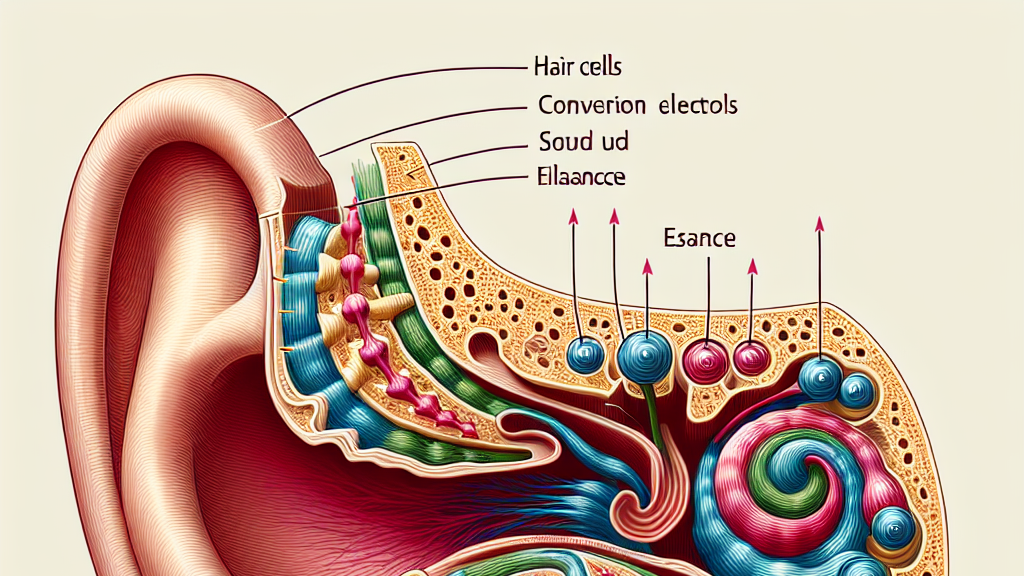
This research dives into the secret life of our hair cells—tiny but mighty structures in our ears that turn energy into sound. These cells...

Materials

Hair cells in our ears do more than just hear. They actively move, using energy to help us understand sounds and stay balanced. This...

Copyright © 2024 8ig8rain.

Disclaimer: The content on 8ig8rain.com consists of AI-generated summaries of scientific abstracts from arXiv. Please note that most arXiv abstracts are preprints and may not have undergone formal peer review. While these summaries aim to convey key ideas and potential applications, they are provided for informational purposes only and should not be interpreted as validated scientific findings or professional advice. The summaries are intended to educate, spark curiosity, and inspire further exploration of science.