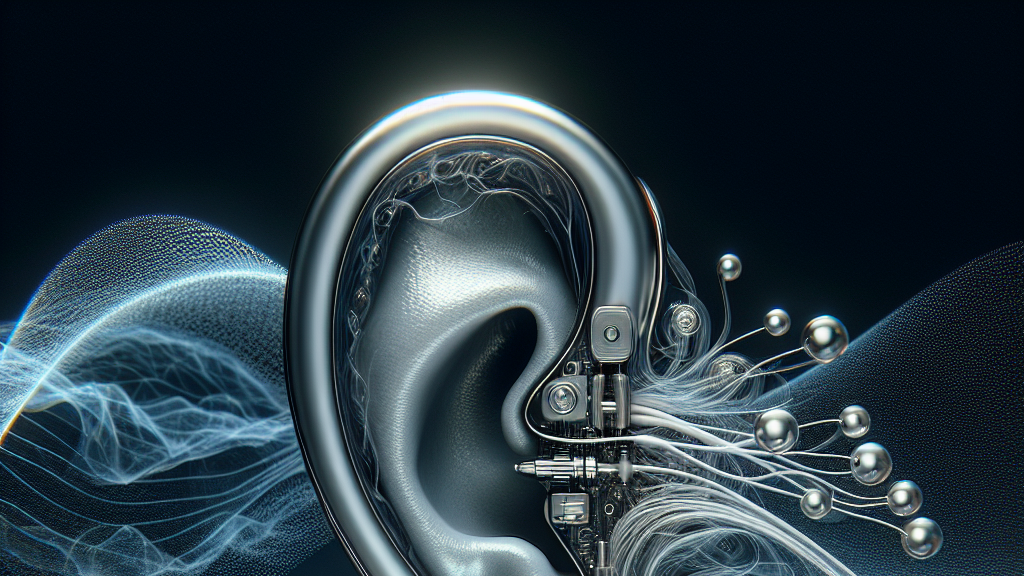
Have you ever wondered how your ears can pick up even the faintest sounds, like a whisper from across the room? It’s all thanks to tiny powerhouses called hair cells inside your ears. These cells aren’t just passive listeners; they actively use energy to enhance sounds and keep you balanced. It’s almost as if they have their own little engines, dedicated to making sure you hear clearly and walk steady.
Researchers have developed a fascinating theory to understand how these hair cells function. By looking at the flow of energy within and around these cells, they discovered that hair cells don’t just detect sound; they also amplify it. It’s like your ear has its own built-in amplifier, converting incoming sound energy into signals your brain can understand. Plus, these cells cleverly recycle energy—sometimes using it to keep themselves going strong or even cooling themselves down!
Imagine a future where understanding this energy magic helps us create better hearing aids or balance-supporting devices. By learning the secrets of how our own bodies manage energy, we might one day replicate these processes in technology, making life just a little bit easier for those with hearing or balance challenges.
Did you know your hair cells can function like tiny refrigerators, using energy to manage their own temperature?
FAQs
What are hair cells in the context of hearing?
Hair cells are specialized structures in the inner ear that play a crucial role in converting sound vibrations into signals that our brain can understand, helping us hear.
How do hair cells manage energy to amplify sound?
Hair cells actively drive oscillations within themselves, using energy to amplify sound signals before sending them to the brain. This process increases their efficiency in detecting and amplifying sounds.
Why is it important to understand the energy flows in hair cells?
Understanding how hair cells manage energy can lead to advancements in hearing technology, such as improved hearing aids, and offer insights into maintaining balance, optimizing our natural ability to hear and balance efficiently.
Can the findings about hair cells improve hearing aids?
Yes, by mimicking the energy management of hair cells, researchers could potentially design more efficient hearing aids that better replicate natural hearing processes.
Is there a link between hair cells and our sense of balance?
Absolutely. In addition to detecting sound, hair cells help maintain balance by interpreting head movements, showing their diverse role in our sensory system.
Background
Hair cells are sensory cells in the inner ear responsible for detecting sound and aiding balance. These cells have hair-like structures that move in response to sound waves. This movement is converted into electrical signals, which are sent to the brain. To enhance sound detection, hair cells engage in active processes, using energy to amplify quiet sounds, making the system highly efficient.
History
Research into hair cells began with understanding basic auditory functions, revealing that these cells not only detect but also amplify sound. Over time, studies highlighted their complex role in balance and their energy-efficient mechanisms. This study builds on previous knowledge, employing new theoretical models to explore their thermodynamic properties and potential as energy-harvesting systems.
Based on “Active energy harvesting and work transduction by hair-cell bundles in bullfrog’s inner ear” by Yanathip Thipmaungprom, Laila Saliekh, Rodrigo Alonso, Édgar Roldán, Florian Berger, Roman Belousov, available on arXiv (arxiv.org/abs/2502.14485), used under CC BY 4.0 (creativecommons.org/licenses/by/4.0/).