Connect with us

Search by keyword

Computers

How Reliable is ChatGPT in Real-World Tasks?

ChatGPT is a popular AI tool used in various fields, but its reliability varies. Understanding its strengths and weaknesses can help us determine when and where to rely on it, especially in important areas like healthcare and software development.

How Reliable is ChatGPT in Real World Tasks
✨Researched by humans. Explained by robots. Learn more.

ChatGPT, the highly celebrated AI language model, is transforming industries like healthcare, business, and software engineering. But behind its widespread adoption lies a pressing question: just how reliable is it really? Recent research dives deep into the error rates of ChatGPT across different sectors, spotlighting its strengths and where it might still stumble.

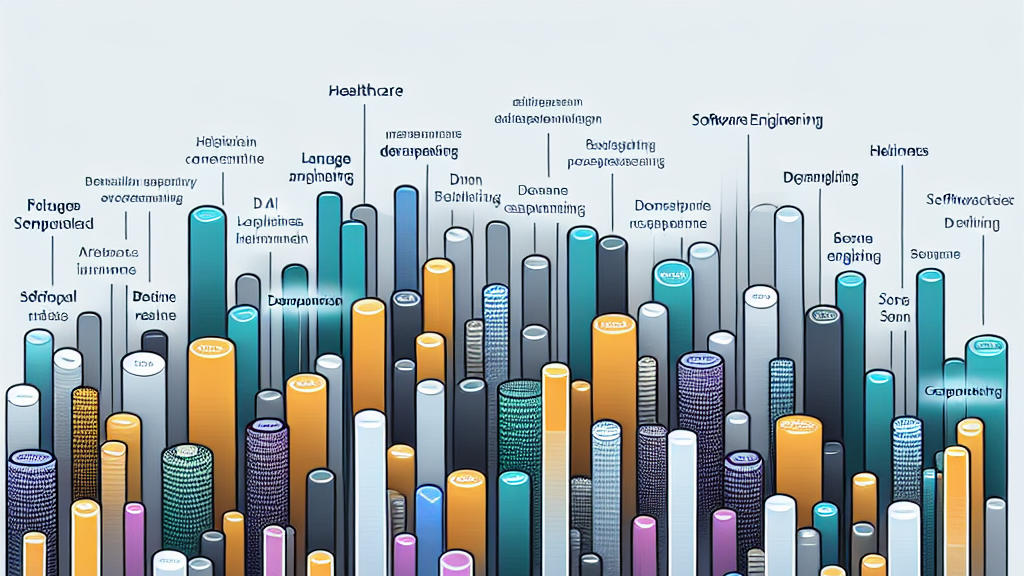
The study carefully analyzed ChatGPT’s performance, revealing significant variation in error rates across domains and tasks. In healthcare, error rates ranged dramatically from 8% to a staggering 83%, reminding us of the critical need for human oversight in high-stakes environments. Meanwhile, in business and economics, the transition from earlier models like GPT-3.5 to more advanced versions like GPT-4 showed marked improvements, decreasing errors from around 50% to 15-20%. In software development, ChatGPT excelled in simple programming tasks but struggled with more complex debugging challenges.

As we delve into a future where AI becomes increasingly integrated into our daily lives, it’s crucial to remember that these models, while powerful, are not infallible. The research indicates that while ChatGPT can significantly aid in tasks like drafting economic reports or automating routine coding, we must continue to critically evaluate its output, especially in critical fields like healthcare. Our ability to balance trust in AI’s potential with vigilant oversight may define the future success of technology-driven industries.

On average, ChatGPT’s programming tasks have an impressive success rate of 87.5%, but complex debugging still sees over 50% errors.

FAQs

What does this research say about ChatGPT’s reliability in healthcare?

The research indicates ChatGPT’s error rates in healthcare range from 8% to 83%, suggesting high variability and the need for careful human oversight in critical applications.

How do ChatGPT’s error rates compare across different domains?

ChatGPT’s error rates vary significantly by domain, from 15-20% in business and economics with newer versions to over 50% in complex software debugging tasks, highlighting the importance of context in assessing its reliability.

What improvements were seen in newer versions of ChatGPT?

Newer versions like GPT-4 reduced error rates significantly from earlier models, particularly in business and economic applications, improving from approximately 50% to 15-20% error rates.

Why is human oversight still necessary with ChatGPT?

Despite improvements, ChatGPT’s non-negligible error rates and variations across tasks underscore the importance of critical human evaluation to ensure reliability and trustworthiness, especially in life-impacting tasks.

How does ChatGPT perform in software engineering tasks?

In software engineering, ChatGPT excels in basic programming tasks, but error rates vary greatly, especially with complex tasks like debugging, where errors can exceed 50%.

Background

ChatGPT and similar large language models are AI systems trained on vast amounts of text data. They generate human-like text based on prompts, making them useful in many industries like healthcare and software engineering. Their performance is often measured by error rates, indicating how often they provide incorrect information.

History

The development of AI models like ChatGPT began with simpler language models that gradually evolved into more complex versions. Early iterations had high error rates, especially in nuanced tasks. With advancements in model architecture and training data, newer versions have exhibited improved accuracy, but challenges remain, especially in understanding complex contexts.

Based on “Why you shouldn’t fully trust ChatGPT: A synthesis of this AI tool’s error rates across disciplines and the software engineering lifecycle” by Vahid Garousi, available on arXiv (arxiv.org/abs/2504.18858), used under CC BY 4.0 (creativecommons.org/licenses/by/4.0/).


Trending

Latest

Can AI Save Water Discover How

Computers

AI is transforming the tech world, but it uses lots of water! A new tool, SCARF, helps us measure and reduce AI's water footprint,...

Whats a Forbush Decrease and Why Should We Care Whats a Forbush Decrease and Why Should We Care

Space

Scientists just observed the biggest solar storm event in years, revealing unexpected cosmic ray patterns. Understanding these changes could help us protect our technology...

Can Cars Spot Danger Faster Than Humans Can Cars Spot Danger Faster Than Humans

Computers

Think about how quickly you react when something unexpected happens on the road. This research brings us closer to creating self-driving cars that can...

Can Fear of the Other Stop Social Harmony Can Fear of the Other Stop Social Harmony

Physics

Fear of the unknown might make it harder for people to agree and get along. This study shows that when people have strong xenophobic...

Can AI Revolutionize Breast Cancer Diagnosis Can AI Revolutionize Breast Cancer Diagnosis

Electricity

This research introduces a groundbreaking AI model that can accurately assess HER2-positive breast cancer using widely accessible staining methods, potentially revolutionizing how we diagnose...

Can AI Transform Your Singing into a Choir Can AI Transform Your Singing into a Choir

Computers

Imagine singing solo and having AI turn you into a choir. This research unveils a groundbreaking AI tool that transforms your voice into rich...

You May Also Like

Computers

This study dives into how AI models, commonly used in image tasks, can be biased when applied to specialized fields like medicine, and how...

Computers

AI, like ChatGPT, is getting close to passing college courses with flying colors, revealing both its capabilities and areas for improvement. This research shows...

Computers

Imagine AI taking your college engineering course and getting a B-grade! This research digs into how well Artificial Intelligence can handle a semester-long engineering...

Computers

Imagine an AI tool that predicts bladder cancer return, reducing hospital visits and unnecessary procedures. This research proposes a new AI model that could...

Computers

This research dives into whether synthetic conversations can be as helpful as real ones in therapy, especially for PTSD treatment. The goal is to...

Computers

Ever thought fake therapy conversations could help PTSD treatment? Researchers explore how synthetic dialogue might train AI models, revealing both exciting potential and cautionary...

Materials

Discover how engineering innovations could help flexible electronics withstand everyday use, improving durability by preventing the common issue of cracking in their substrates.

Computers

This research looks at whether everyday tools like ChatGPT follow ethical and social norms in our lives. It highlights key challenges and obstacles in...

Electricity

A breakthrough method uses AI to improve early detection of diabetic retinopathy, a leading cause of blindness, making eye screenings more accurate and accessible.

Copyright © 2024 8ig8rain.

Disclaimer: The content on 8ig8rain.com consists of AI-generated summaries of scientific abstracts from arXiv. Please note that most arXiv abstracts are preprints and may not have undergone formal peer review. While these summaries aim to convey key ideas and potential applications, they are provided for informational purposes only and should not be interpreted as validated scientific findings or professional advice. The summaries are intended to educate, spark curiosity, and inspire further exploration of science.