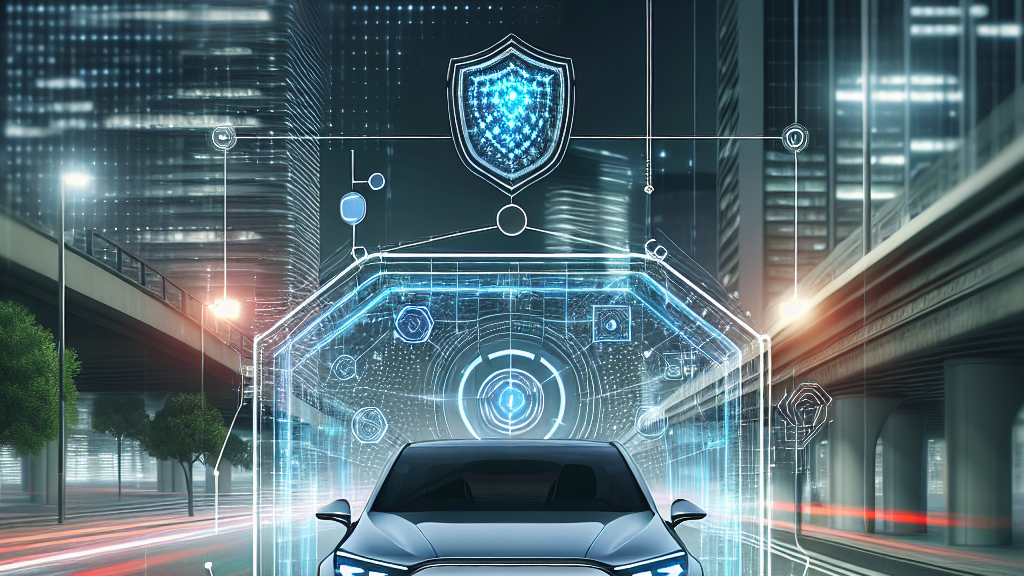
Imagine cruising in a self-driving car, enjoying the ride without a care in the world. Now, imagine that, just like our smartphones and computers, these incredible vehicles can fall victim to hackers looking to cause chaos. It’s a real threat that could impact how safe we feel using this groundbreaking technology.
Researchers are developing a remarkable security system that acts like a vigilant guardian for self-driving cars, called the Internet of Vehicles (IoV). This system uses something akin to a digital watchdog that monitors traffic between cars and the outside world for any suspicious activity. If it spots something fishy, it alerts the system and takes action. It works by using a smart combination of algorithms that learn to identify both familiar and brand new cyberattacks, ensuring that even the sneakiest hackers don’t stand a chance.
In the near future, this technology might be the standard for all vehicles, making them as secure as our home security systems. Picture a time when all cars on the road are safe from cyber threats, leading to fewer accidents and smoother commutes. This research not only helps us stay safe but paves the way for a future where self-driving cars become an everyday reality for everyone.
Self-driving cars could be vulnerable to cyberattacks, just like computers!
FAQs
What makes connected and autonomous vehicles vulnerable to cyberattacks?
Connected and autonomous vehicles rely heavily on data and network connectivity, which exposes them to risks similar to those faced by computers and smartphones, making them potential targets for hackers looking to exploit these connections.
How does the new Intrusion Detection System protect against hacking attempts?
The new system monitors network traffic for suspicious activity and employs advanced algorithms to detect both known and new cyberattacks, ensuring that threats are quickly identified and mitigated.
What impact could a hack on self-driving cars have on our lives?
A hack could lead to serious safety risks like losing control of the car or unauthorized access to personal data, highlighting the importance of robust cybersecurity measures in the IoV ecosystem.
How does Particle Swarm Optimization contribute to the system’s effectiveness?
Particle Swarm Optimization helps fine-tune the system by efficiently combining different detection models to create a robust meta-classifier, improving its accuracy in identifying threats.
Is the technology already in use, and how successful is it so far?
The technology has shown promising results in testing with a high detection rate for both known and new cyber threats, indicating its potential for real-world application in the near future.
Background
The Internet of Vehicles (IoV) connects cars to the internet and to each other, making autonomous driving possible. However, this connectivity introduces cybersecurity risks. An Intrusion Detection System (IDS) is designed to monitor data and network traffic to detect any signs of potential hacking. It uses machine learning models, like the Isolation Forest, which are trained to recognize specific types of attacks, and Machine Learning techniques like Stacking and Optimization to improve accuracy.
History
Ever since the advent of connected devices, researchers have been concerned about cybersecurity. As autonomous vehicles became more common, it became evident that these cars were part of the Internet of Vehicles, which required strong security measures. This research builds on previous efforts that used IDS in computer networks, employing advanced machine learning techniques to adapt them for vehicular security.
Based on “Zero-Day Botnet Attack Detection in IoV: A Modular Approach Using Isolation Forests and Particle Swarm Optimization” by Abdelaziz Amara korba, Nour Elislem Karabadji, Yacine Ghamri-Doudane, available on arXiv (arxiv.org/abs/2504.18814), used under CC BY 4.0 (creativecommons.org/licenses/by/4.0/).