Connect with us

Search by keyword

Physics

Could Dark Matter Be Hiding Cosmic Rays?

Scientists think that mysterious dark matter around a supermassive black hole might be gobbling up gamma rays, making cosmic rays seem less intense than they are. If true, this could change how we understand some of the universe’s hidden secrets.

Could Dark Matter Be Hiding Cosmic Rays
✨Researched by humans. Explained by robots. Learn more.

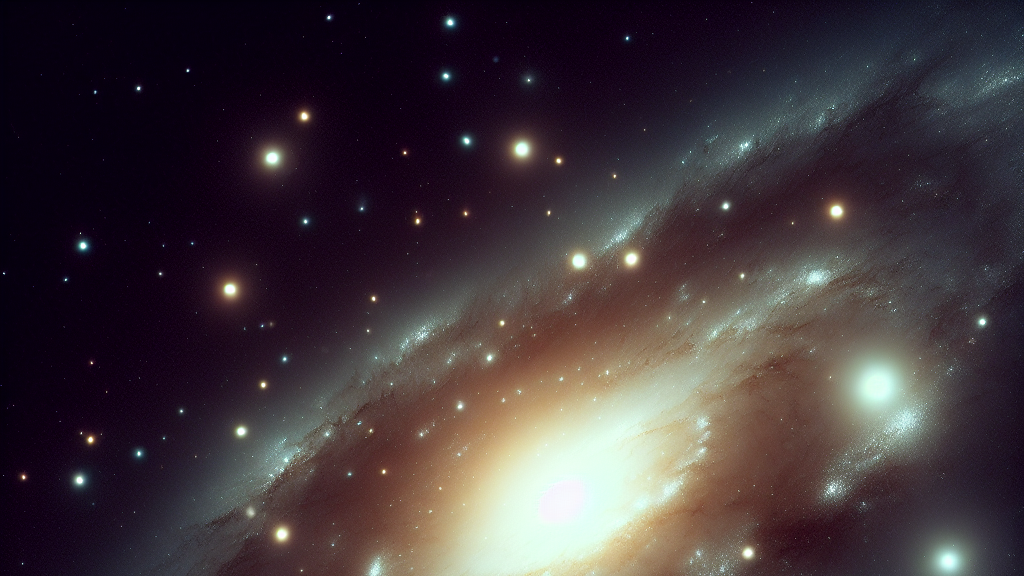
Picture this: there’s a cosmic light show happening in the universe that we can barely see. The brightest source of high-energy neutrinos is a distant galaxy called NGC 1068, but there’s a mystery. While it should also be the source of bright gamma rays, those seem to be missing or much weaker than expected. Scientists now have a clue as to why this might be happening.

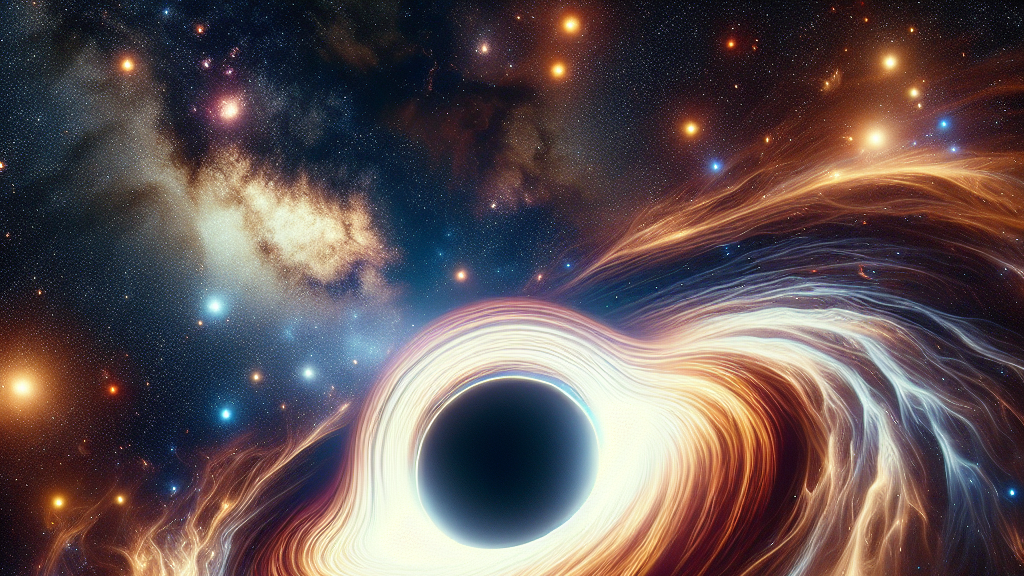
The idea is that right at the heart of NGC 1068, where there’s a massive black hole, cosmic rays are being emitted. These create neutrinos that manage to escape, but gamma rays are getting blocked. How? It could be a cloak of dark matter surrounding the black hole that’s absorbing the gamma rays. This idea is fascinating because it could help explain why gamma rays from this cosmic event aren’t as bright as scientists predicted.

If these findings prove to be accurate, it means dark matter is playing a sneaky game with cosmic rays right in our cosmic backyard. This could change the way we search for and understand dark matter in the universe. Imagine its implications for technology and science: one day, this knowledge could be the reason we better understand not just the universe’s lights, but its shadows as well.

NGC 1068’s supermassive black hole is about 100 million times the mass of our Sun!

FAQs

What is NGC 1068 and why is it special for neutrino research?

NGC 1068 is a galaxy that shines bright in high-energy neutrinos, making it an exciting target for researchers studying the universe’s most energetic particles.

How does dark matter potentially affect gamma rays near NGC 1068?

The hypothesis is that dark matter around the galaxy’s supermassive black hole could be absorbing gamma rays, making them seem weaker than expected compared to neutrinos.

Why are neutrinos important in astrophysics?

Neutrinos are elusive particles that provide insights into cosmic events, like black hole activity, that we can’t see with traditional light detectors.

How could understanding this cosmic phenomenon impact our technology?

Insights into dark matter and cosmic rays could revolutionize our understanding of the universe and potentially lead to new technologies inspired by these cosmic processes.

What tools do scientists use to study neutrinos and gamma rays from space?

Researchers use detectors like the IceCube Neutrino Observatory and the Fermi Gamma-ray Space Telescope to capture and analyze these high-energy particles.

Background

Neutrinos are tiny, nearly massless particles that travel through space mostly unnoticed, while gamma rays are high-energy light waves that can be detected using space-based telescopes. In regions around supermassive black holes, these particles are supercharged, making them critical targets for research. Dark matter, mysterious and invisible, is thought to make up most of the universe’s mass, but its interaction with light remains a big question mark in physics.

History

The study of cosmic rays began in the early 1900s, but only in recent decades have detectors like IceCube and Fermi-LAT been able to capture high-energy particles from far-off galaxies. Previous research assumed that gamma rays and neutrinos were produced together, but discrepancies in their observed levels have led scientists to rethink some of their models, considering factors like dark matter interactions.

Based on “Plausible Indication of Gamma-Ray Absorption by Dark Matter in NGC 1068” by Gonzalo Herrera, available on arXiv (arxiv.org/abs/2504.21560), used under CC BY 4.0 (creativecommons.org/licenses/by/4.0/).

Trending

Latest

Can AI Save Water Discover How

Computers

AI is transforming the tech world, but it uses lots of water! A new tool, SCARF, helps us measure and reduce AI's water footprint,...

Whats a Forbush Decrease and Why Should We Care Whats a Forbush Decrease and Why Should We Care

Space

Scientists just observed the biggest solar storm event in years, revealing unexpected cosmic ray patterns. Understanding these changes could help us protect our technology...

Can Cars Spot Danger Faster Than Humans Can Cars Spot Danger Faster Than Humans

Computers

Think about how quickly you react when something unexpected happens on the road. This research brings us closer to creating self-driving cars that can...

Can Fear of the Other Stop Social Harmony Can Fear of the Other Stop Social Harmony

Physics

Fear of the unknown might make it harder for people to agree and get along. This study shows that when people have strong xenophobic...

Can AI Revolutionize Breast Cancer Diagnosis Can AI Revolutionize Breast Cancer Diagnosis

Electricity

This research introduces a groundbreaking AI model that can accurately assess HER2-positive breast cancer using widely accessible staining methods, potentially revolutionizing how we diagnose...

Can AI Transform Your Singing into a Choir Can AI Transform Your Singing into a Choir

Computers

Imagine singing solo and having AI turn you into a choir. This research unveils a groundbreaking AI tool that transforms your voice into rich...

You May Also Like

Space

Scientists have discovered a new way that tiny early-universe structures might grow into massive black holes, potentially changing our understanding of cosmic evolution! This...

Space

This research uncovers how setting a visibility limit on starlight reveals more realistic details about galaxies, helping us understand their size and mass better—crucial...

Physics

Recent research suggests that supernova explosions in our galaxy might be key to discovering new, elusive forms of dark matter. These cosmic events could...

Space

Imagine invisible particles shaping galaxies from within! This study suggests that certain types of dark matter could help solve long-standing puzzles about galaxy formations...

Physics

Supernovae might be key to unlocking the secrets of dark matter, especially through its activity in our own galaxy, the Milky Way. This research...

Space

Scientists have discovered a possible explanation for how supermassive black holes could form in the early universe. This breakthrough could change our understanding of...

Physics

Scientists are on a mission to discover if ghost-like particles called neutrinos could reveal astonishing insights about the universe. Using cutting-edge technology, they searched...

Space

Scientists have found a novel way to measure dark matter around black holes using light echoes from space. This could change how we understand...

Space

Scientists have uncovered why some small galaxies are born without stars. It turns out, they lack the dense gas needed for star formation, thanks...

Copyright © 2024 8ig8rain.

Disclaimer: The content on 8ig8rain.com consists of AI-generated summaries of scientific abstracts from arXiv. Please note that most arXiv abstracts are preprints and may not have undergone formal peer review. While these summaries aim to convey key ideas and potential applications, they are provided for informational purposes only and should not be interpreted as validated scientific findings or professional advice. The summaries are intended to educate, spark curiosity, and inspire further exploration of science.