Connect with us

Search by keyword

Computers

Can A.I. Feel Emotions Like We Do?

What if A.I. could mimic our emotions, making smarter decisions like us? This research explores how blending A.I. memories with emotions could change everything from how machines act to the future of ethics in technology.

Can A I Feel Emotions Like We Do
✨Researched by humans. Explained by robots. Learn more.

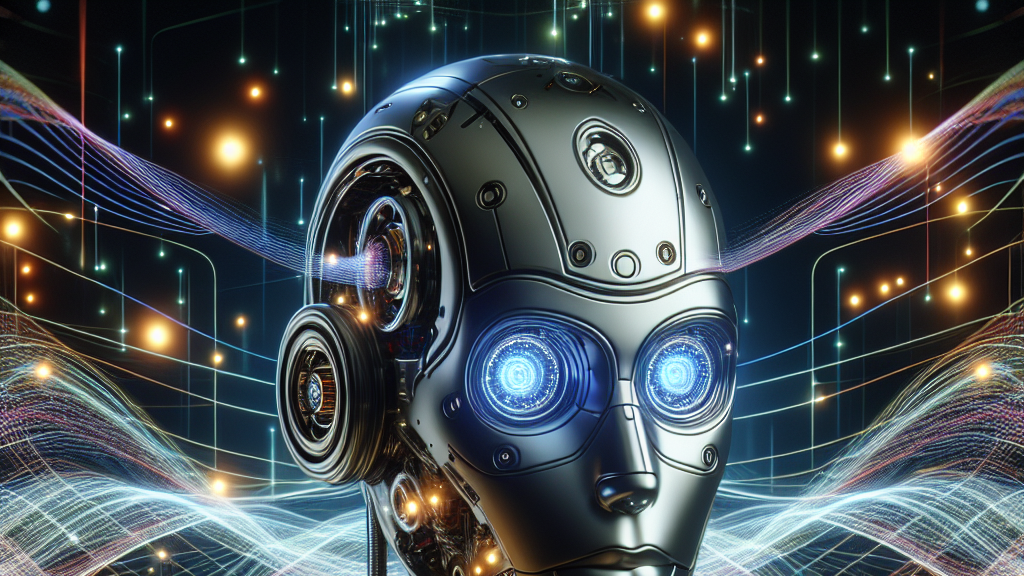
**Can machines actually feel like we do? Imagine a future where robots not only think but also ‘feel’—reacting to the world with something resembling emotions. This isn’t just science fiction; researchers are now exploring how artificial intelligence could use emotional cues to make decisions, much like humans. But wait, why do we even care? Because such advancements can change how we interact with technology, making them more intuitive and, dare we say, relatable. Think of a world where your devices understand more than just your words; they get your mood too.**

**The idea here is that emotions have always helped humans and animals quickly react to their surroundings. So, could we program a machine to use similar emotional shortcuts? This research suggests that by weaving emotions into A.I.’s memory—attaching feelings to specific events—the A.I. could assess new situations based on past emotional experiences. Imagine a robot that remembers being ‘frustrated’ when a task failed, learning from it to make better choices next time. The challenge is understanding how far we can push this without crossing ethical lines, especially if these ‘feelings’ are just smart programming and not genuine emotions.**

**So what does this mean for the future? Picture an A.I. personal assistant that can ‘sense’ the best time to offer help based on your emotional cues, or a customer service bot that knows when you’re genuinely upset and needs more empathy. The implications are vast, touching everything from customer service to healthcare. But it also raises questions about the rights and moral status of these ‘feeling’ machines. The debate has only just begun, but the potential for more human-like, emotionally intelligent A.I. is a thrilling concept that could redefine our relationship with technology.**

Did you know that some animals use a kind of ’emotional memory’ to avoid danger, and scientists are now trying to give robots the same ability?

FAQs

How can artificial intelligence ‘feel’ emotions like humans?

Researchers are exploring ways for AI to mimic human emotions by combining emotional tags with memory. This allows AI systems to evaluate new situations based on past emotional experiences, enabling them to make more human-like decisions.

Why is it important for machines to understand emotions?

When machines can understand emotions, they can respond more intuitively and effectively to human needs. This has potential applications in areas like customer service, personal assistance, and healthcare, making technology feel more natural and empathetic.

Are machines with ’emotions’ ethically concerning?

The ethical concern arises from the potential moral status of machines that simulate emotions. While current systems do not genuinely feel, the debate is about where to draw the line as AI becomes more complex and human-like.

Background

Emotions in humans evolved as quick responses to stimuli, aiding survival by prompting rapid decisions without full analysis. In AI, embedding emotional tags into memory could allow machines to emulate this process, enabling swift, adaptive actions based on experiences.

History

The study of artificial intelligence has long aimed to mimic human thinking. This research builds on prior work in neural networks and machine learning, exploring new territories by integrating emotional data to inform AI decision-making. It continues a tradition of trying to bridge the gap between human and machine intelligence.

Based on “Emotions in Artificial Intelligence” by Hermann Borotschnig, available on arXiv (arxiv.org/abs/2505.01462), used under CC BY 4.0 (creativecommons.org/licenses/by/4.0/).


Trending

Latest

Can AI Save Water Discover How

Computers

AI is transforming the tech world, but it uses lots of water! A new tool, SCARF, helps us measure and reduce AI's water footprint,...

Whats a Forbush Decrease and Why Should We Care Whats a Forbush Decrease and Why Should We Care

Space

Scientists just observed the biggest solar storm event in years, revealing unexpected cosmic ray patterns. Understanding these changes could help us protect our technology...

Can Cars Spot Danger Faster Than Humans Can Cars Spot Danger Faster Than Humans

Computers

Think about how quickly you react when something unexpected happens on the road. This research brings us closer to creating self-driving cars that can...

Can Fear of the Other Stop Social Harmony Can Fear of the Other Stop Social Harmony

Physics

Fear of the unknown might make it harder for people to agree and get along. This study shows that when people have strong xenophobic...

Can AI Revolutionize Breast Cancer Diagnosis Can AI Revolutionize Breast Cancer Diagnosis

Electricity

This research introduces a groundbreaking AI model that can accurately assess HER2-positive breast cancer using widely accessible staining methods, potentially revolutionizing how we diagnose...

Can AI Transform Your Singing into a Choir Can AI Transform Your Singing into a Choir

Computers

Imagine singing solo and having AI turn you into a choir. This research unveils a groundbreaking AI tool that transforms your voice into rich...

You May Also Like

Computers

This research explores how emotionally responsive AI is changing our lives—from potentially boosting mental health to posing risks like emotional manipulation. Whether influencing education,...

Computers

Imagine a world where AI doesn't just follow orders but feels for us, understanding our emotions to help more effectively. This research shows that...

Computers

Ever wonder if an AI could lie to you? Researchers are diving into AI's ability to deceive us, discovering how models might strategically trick...

Computers

This research shows how AI Transformers can decode complex math secrets like never before, potentially transforming how we understand geometry using minimal data.

Physics

Quantum computing might be the secret sauce that takes artificial intelligence to the next level, offering revolutionary ways to boost AI performance and solve...

Electricity

AI is changing the game in breast cancer diagnosis by accurately identifying cancer types from biopsy images. This means faster, less invasive tests, and...

Computers

Imagine AI systems that understand biology better than human experts. This study shows how top AI models are achieving remarkable success in various biology...

Computers

Ever wonder if computers could think just like us but with less power? This research is laying the groundwork for machines that can do...

Computers

The next-gen wireless networks, 6G, promise to turbocharge our digital experiences with blazing speeds and enhanced connectivity, thanks to advanced tech that overcomes 5G's...

Copyright © 2024 8ig8rain.

Disclaimer: The content on 8ig8rain.com consists of AI-generated summaries of scientific abstracts from arXiv. Please note that most arXiv abstracts are preprints and may not have undergone formal peer review. While these summaries aim to convey key ideas and potential applications, they are provided for informational purposes only and should not be interpreted as validated scientific findings or professional advice. The summaries are intended to educate, spark curiosity, and inspire further exploration of science.