Connect with us

Search by keyword

Physics

How Opinions Change: New Model Reveals Surprising Patterns

This research uncovers how opinions change in society using new models that show surprising patterns of behavior influenced by noise and nonlinearity. By understanding these shifts, we can better predict trends and decision-making processes, potentially altering how we approach everything from marketing to politics.

How Opinions Change New Model Reveals Surprising Patterns
✨Researched by humans. Explained by robots. Learn more.

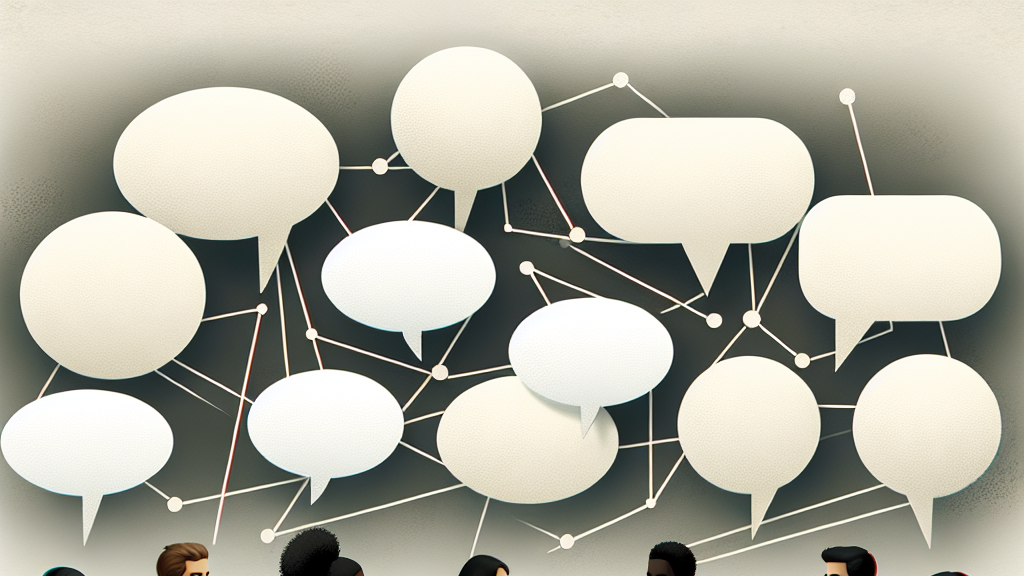
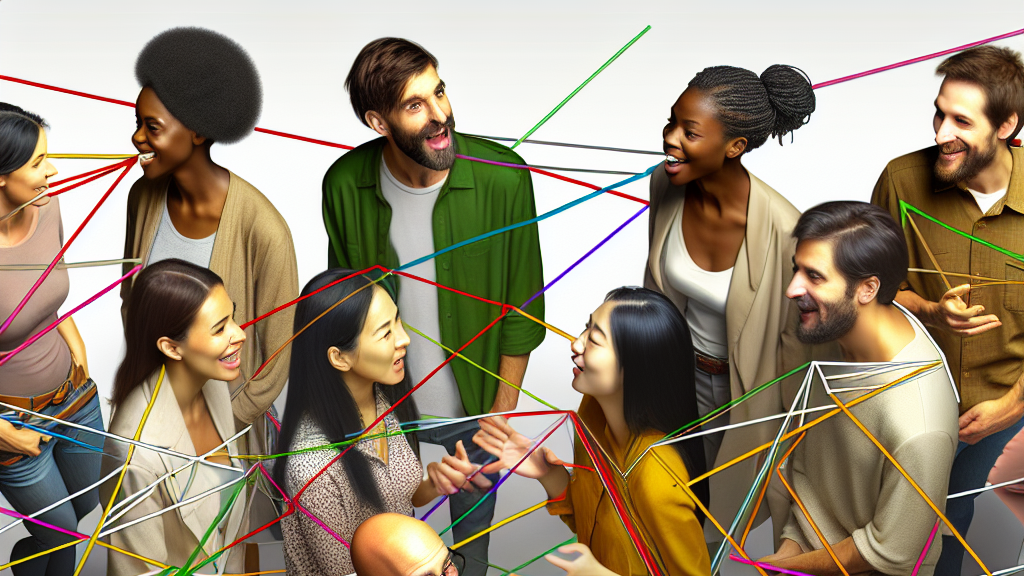
Ever wonder how an idea or opinion spreads like wildfire among your friends or on social media? Researchers have been diving deep into this exact phenomenon, revealing patterns in how our opinions change over time. By studying what are known as nonlinear voter models, scientists can predict how behaviors and thoughts spread in a group, similar to how a cold can be contagious. But unlike a virus, ideas are influenced by complex social interactions.

These scientists discovered that when they added a layer of randomness, or ‘noise,’ into their models, it eliminated what’s known as ‘absorbing states.’ These are situations where everyone in a group ends up with the same opinion, leaving no room for change. This twist led to fascinating results: two different types of transitions occur when opinions evolve. One is smooth and gradual, like slowly convincing everyone to agree on pizza toppings. The other is abrupt, as if suddenly everyone decided pineapple on pizza is a must! The research even pinpointed a ‘tricritical point’ where these two types of opinion changes intersect, providing a unified way to understand how noise affects opinion dynamics.

Imagine a bustling city where everyone’s opinions about the latest fashion trends or political matters are constantly shifting. By applying this new understanding to real-world scenarios, we could predict how public opinion might swing during a major election or viral marketing campaign. The insights from this research could help businesses tailor strategies, enabling everything from more effective advertising to improving public health messaging.

Did you know? Just adding a bit of ‘noise’ can turn a constant opinion into a dynamic debate!

FAQs

How do nonlinear voter models explain opinion changes?

Nonlinear voter models help scientists understand how opinions spread and change within groups. By considering factors like social influence and randomness, these models provide insights into the complex dynamics of opinion shifts.

What is the significance of the ‘tricritical point’ in opinion dynamics?

The ‘tricritical point’ is where two different types of opinion changes meet. It helps us understand when an opinion change will be gradual or sudden, revealing important patterns in how opinions spread.

How could this research impact marketing strategies?

Understanding opinion dynamics can help marketers predict how consumer preferences shift. This insight allows for targeted advertising and tailored strategies, potentially leading to more effective campaigns and higher engagement.

Background

A phase transition in physics is when a system changes state, like ice melting into water. Similarly, in social science, opinion dynamics study how individuals change their opinions through interactions. Nonlinear voter models are mathematical frameworks that represent how opinions evolve in a community. These models incorporate ‘absorbing states,’ where everyone ends up with the same opinion, and ‘noise,’ a random element that can prevent this uniformity.

History

Phase transitions have long been a topic of interest in physics, with studies dating back to the 19th century. The Ising model, developed in the early 20th century, provided a framework to understand these transitions. In social science, applying these models to opinion dynamics has been more recent, with research exploring how ideas spread like phase transitions in physical systems. This study extends previous work by introducing noise and examining the impact on opinion patterns.

Based on “Universality of noise-induced transitions in nonlinear voter models” by Jaume Llabrés, Maxi San Miguel, Raúl Toral, available on arXiv (arxiv.org/abs/2505.11358), used under CC BY 4.0 (creativecommons.org/licenses/by/4.0/).


Trending

Latest

Can AI Save Water Discover How

Computers

AI is transforming the tech world, but it uses lots of water! A new tool, SCARF, helps us measure and reduce AI's water footprint,...

Whats a Forbush Decrease and Why Should We Care Whats a Forbush Decrease and Why Should We Care

Space

Scientists just observed the biggest solar storm event in years, revealing unexpected cosmic ray patterns. Understanding these changes could help us protect our technology...

Can Cars Spot Danger Faster Than Humans Can Cars Spot Danger Faster Than Humans

Computers

Think about how quickly you react when something unexpected happens on the road. This research brings us closer to creating self-driving cars that can...

Can Fear of the Other Stop Social Harmony Can Fear of the Other Stop Social Harmony

Physics

Fear of the unknown might make it harder for people to agree and get along. This study shows that when people have strong xenophobic...

Can AI Revolutionize Breast Cancer Diagnosis Can AI Revolutionize Breast Cancer Diagnosis

Electricity

This research introduces a groundbreaking AI model that can accurately assess HER2-positive breast cancer using widely accessible staining methods, potentially revolutionizing how we diagnose...

Can AI Transform Your Singing into a Choir Can AI Transform Your Singing into a Choir

Computers

Imagine singing solo and having AI turn you into a choir. This research unveils a groundbreaking AI tool that transforms your voice into rich...

You May Also Like

Physics

Fear of the unknown might make it harder for people to agree and get along. This study shows that when people have strong xenophobic...

Physics

Discover how adding noise to quantum computers could actually make them work better, thanks to a fascinating phenomenon called Time Crystals. This breakthrough could...

Computers

This research explores how noise impacts the efficiency of machine learning algorithms, revealing that algorithms may learn faster or get stuck depending on the...

Materials

Ever wonder how the tiny world inside metals really works when you bend or stretch them? This research shows us a new way to...

Materials

This research uncovers how copper crystals transform under pressure, providing insights into microstructural changes which could innovate how we design materials for stress-heavy environments.

Materials

This research explores how heat can influence the rearrangement of atoms in materials, providing insight into creating new material phases that could revolutionize industries.

Computers

Our views are influenced by the groups we belong to, and understanding this can help bridge differences and unite diverse opinions. By studying and...

Math

Ever wonder how your brain can sort through chaos and keep your memories intact? Scientists have found fascinating ways our brain networks stay focused...

Physics

This research dives into the world of qudits to potentially revolutionize quantum computing by tackling common hurdles like error correction and efficiency. It might...

Copyright © 2024 8ig8rain.

Disclaimer: The content on 8ig8rain.com consists of AI-generated summaries of scientific abstracts from arXiv. Please note that most arXiv abstracts are preprints and may not have undergone formal peer review. While these summaries aim to convey key ideas and potential applications, they are provided for informational purposes only and should not be interpreted as validated scientific findings or professional advice. The summaries are intended to educate, spark curiosity, and inspire further exploration of science.