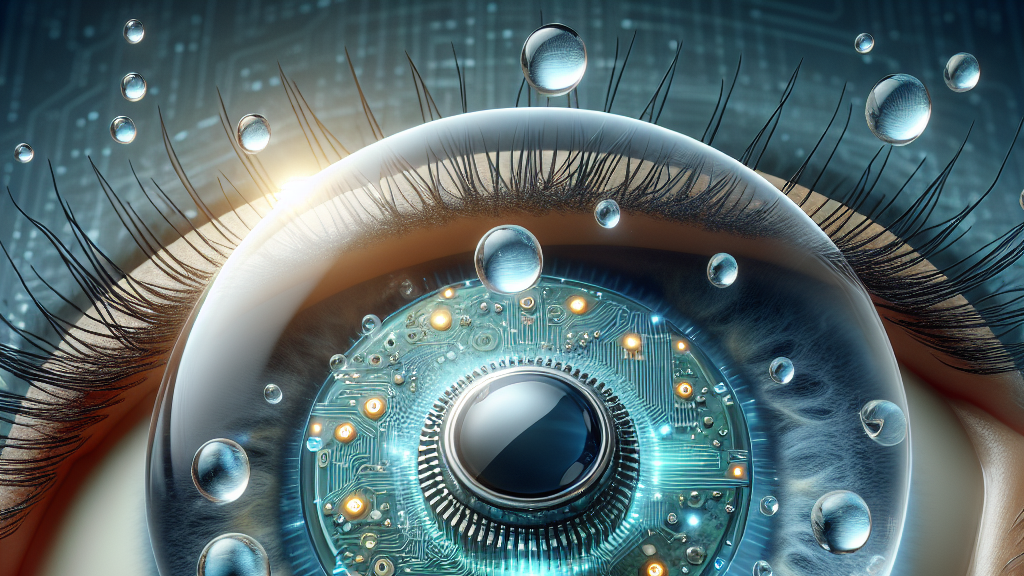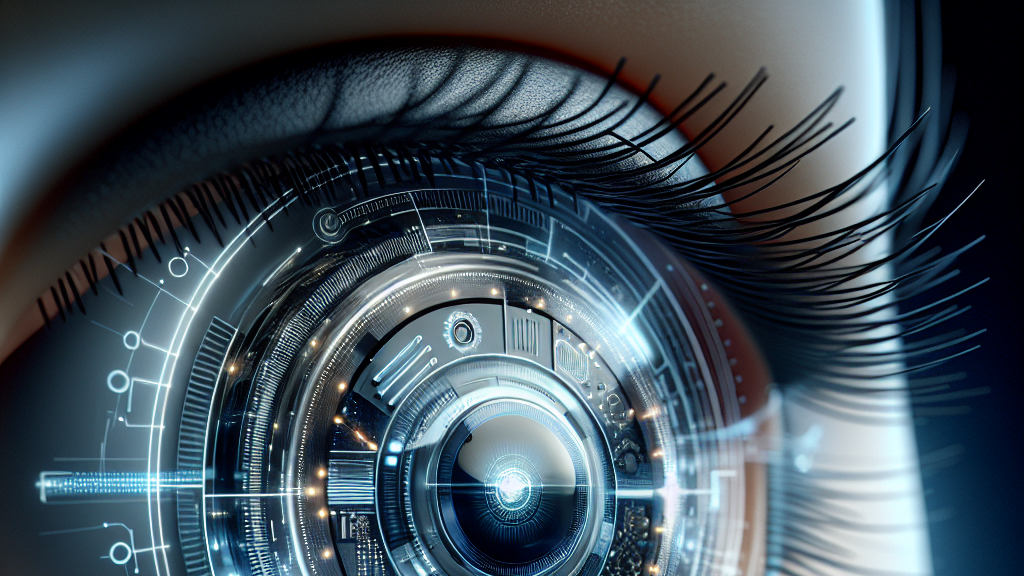
Imagine wearing contact lenses that not only improve your eyesight but also monitor your health in real time! That’s the future we’re stepping into, and it’s powered by the incredible science of smart contact lenses. These tiny marvels integrate advanced microelectronics, optics, and biomedical engineering to bring you a device that could revolutionize the way we handle personal health monitoring.
At the heart of this innovation is the challenge of powering these contact lenses without external batteries. Scientists are turning to ingenious solutions, like using the saltiness of tears and the movement of eyelids to generate power. Combined with compact, loop antennas for wireless data transmission, these lenses promise to operate smoothly while being biocompatible and safe for the wearer. By leveraging 3D-printed optics and energy systems, experts are constructing a small yet mighty gadget that could change wearable tech forever.
What does this mean for you? Imagine a world where checking your vitals is as easy as blinking. These self-powered smart lenses could alert you to health issues early on and even enhance your vision beyond what’s possible with regular lenses. For those who rely on contact lenses every day, this development is not just fascinating—it’s potentially life-changing. Welcome to the future, where your eyes do more than see; they keep you informed and healthy!
These smart contact lenses can harvest power from your tears and eye movements!
FAQs
What makes smart contact lenses different from regular contact lenses?
Smart contact lenses integrate microelectronics to provide health monitoring and vision enhancement features, unlike regular lenses that are only used for vision correction.
How do these smart lenses generate power?
The lenses harvest energy from natural, intrinsic eye sources like the salinity of tears and the kinetic motion of eyelids, eliminating the need for external batteries.
Are these lenses safe to wear?
Yes, the smart lenses are designed to be biocompatible, meaning they are safe for contact with the body. Researchers emphasize material choices for safety alongside their technical features.
Can these lenses help with health monitoring?
Absolutely! The smart lenses can monitor vital health parameters in real time, potentially offering early warnings for various health conditions.
When will these lenses be available to the public?
While the research is promising, it may take a few years before these smart lenses become a commercially available option as further testing and development are needed.
Background
To grasp the concept of these smart contact lenses, one needs to understand how they blend various fields like microelectronics and optics into wearable technology. The challenge has been how to power them autonomously without bulkier external sources. The recent breakthrough lies in harvesting energy from natural eye functions—such as tears’ salt content and the movement involved in blinking—to create a sustainable power source for these tiny devices.
History
The journey of developing wearable tech like smart contact lenses started with simpler, bulkier devices. Over time, advances in microelectronics, energy harvesting, and material science have pushed the boundaries, allowing scientists to conceive of ever-smaller, more intricate wearable devices. This study builds on previous work in energy-efficient electronics and biocompatible materials to bring us even closer to safe, user-friendly health-monitoring lenses.
Based on “Self-powered smart contact lenses: a multidisciplinary approach to micro-scale energy and 900 MHz – 1.1 GHz bandwidth microfabricated loop antennas communication systems” by Patrice Salzenstein (Centre National de la Recherche Scientifique), Blandine Guichardaz (Centre National de la Recherche Scientifique), Aya Maroua Bessou (Centre National de la Recherche Scientifique), Ekaterina Pavlyuchenko (Centre National de la Recherche Scientifique), Martine Comte (Consultant, La Chaux-de-Fonds, Switzerland), Maxim V. Pogumirsky (ITMO, Saint Petersburg, Russia, FAREXPORT Ltd., Saint Petersburg, Russia), available on arXiv (arxiv.org/abs/2505.15593), used under CC BY 4.0 (creativecommons.org/licenses/by/4.0/).