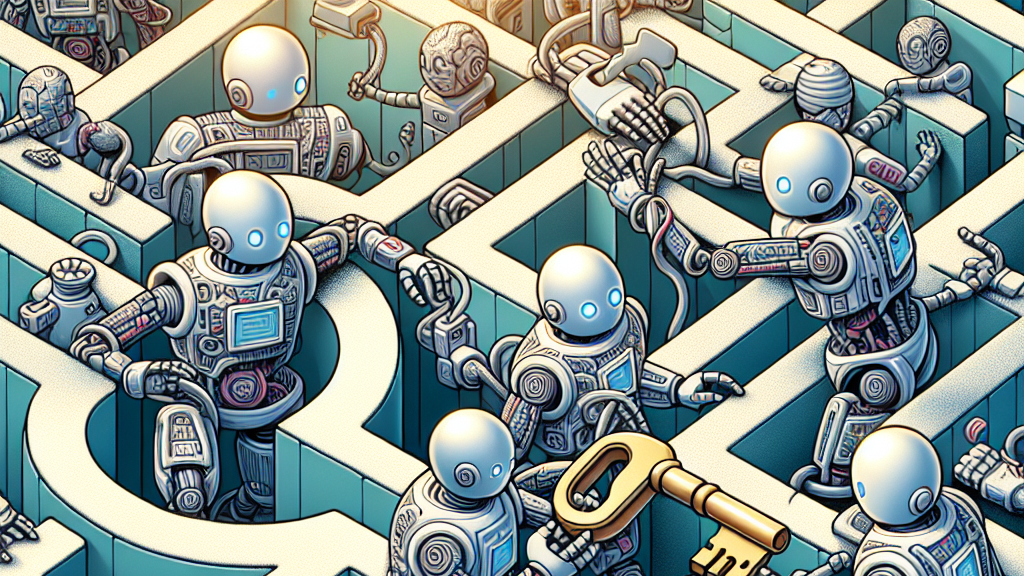
Imagine a world where even the smallest actions, done in secret, have the potential to change everything—like your neighbor not taking a parking spot when you aren’t looking. These unseen acts, dubbed ‘hidden gifts,’ aren’t just a social phenomenon; they are a budding challenge in the technology of artificial intelligence! It’s fascinating to think about how unseen good deeds can even benefit AI systems designed to work together in a team.
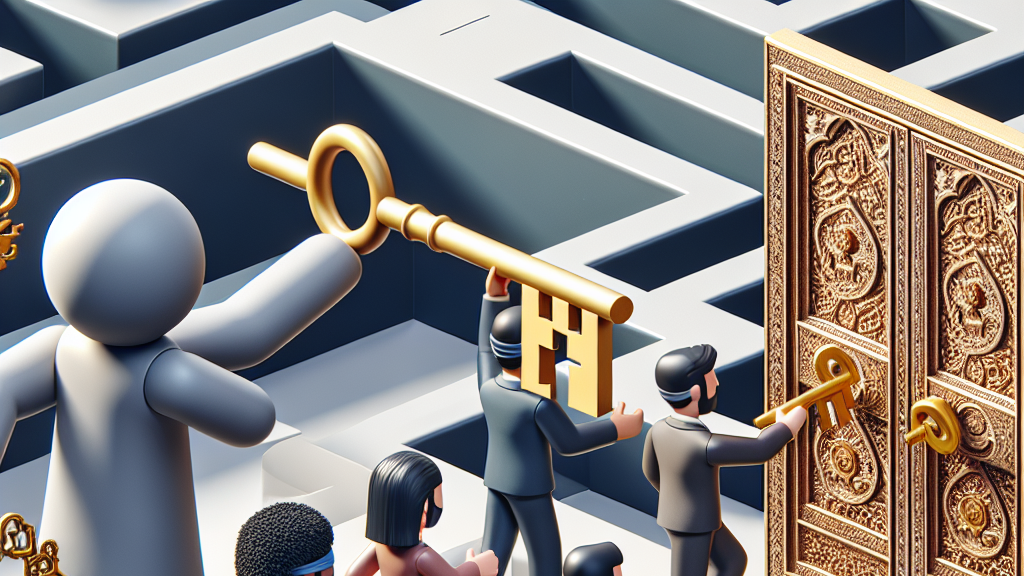
In a recent study, researchers used a simple grid-world task where AI agents, much like teammates, had to unlock doors to earn rewards. However, there was only one key. To win collectively, agents had to pass the key to each other, but they had no idea when the key was dropped—a true test of ‘hidden gifts.’ The surprising discovery? Top-tier AI systems couldn’t figure out this simple teamwork task unless given extra clues about their past actions. But when single AI agents got a little smarter and aware of themselves, they learned to succeed together, effortlessly!
Why does this matter? Imagine a future where our smart gadgets don’t just act alone to make our lives easier but work together seamlessly—even when some things go unnoticed. This research could inspire the development of more intelligent and cooperative AI systems, inviting hidden gifts to redefine how technology improves global teamwork and everyday tasks.
Did you know? In AI teamwork studies, even highly advanced systems can struggle to cooperate when beneficial actions are unseen, proving that teamwork is tricky even for robots!
FAQs
What are hidden gifts in artificial intelligence?
Hidden gifts in artificial intelligence refer to the unseen positive actions one AI agent performs that benefit another, akin to acts of goodwill among humans. These actions are not directly apparent but can greatly influence how AI systems interact and succeed together.
Why is the concept of hidden gifts challenging for AI systems?
The challenge arises because AI systems need to learn to attribute success to actions they might not directly observe, making it challenging for them to give credit where it’s due and learn cooperative behavior effectively.
How do hidden gifts impact multi-agent reinforcement learning?
Hidden gifts complicate multi-agent reinforcement learning by increasing the difficulty of assigning proper credit to beneficial actions among a group of AI agents. This complexity can prevent agents from learning to cooperate even when cooperation leads to greater collective rewards.
What solution did the research present for AI systems struggling with hidden gifts?
The research introduced a correction term based on learning awareness techniques for independent agents, which helps reduce learning variance and improves the chance of achieving collective success, even in the presence of hidden gifts.
How might this research influence future AI developments?
This research may inspire more collaborative AI technologies that can work together intelligently for better outcomes, even when individual contributions aren’t immediately visible. This can lead to smarter, more cooperative AI systems in various applications.
Background
The study revolves around the idea of reinforcement learning, a method by which AI systems learn to make decisions by receiving feedback from their actions. In multi-agent systems, these AI entities must collaborate and learn to share resources or rewards. However, assigning proper credit to actions becomes challenging when those actions are not immediately visible, presenting the ‘hidden gifts’ problem.
History
Research in multi-agent reinforcement learning has evolved to help AI systems improve cooperation and decision-making. Early studies focused on simple reward-based systems, but as AI grew more complex, researchers faced challenges like the ‘hidden gifts’ dilemma. This study highlights a current breakthrough in addressing these issues with learning awareness techniques.
Based on “The challenge of hidden gifts in multi-agent reinforcement learning” by Dane Malenfant, Blake A. Richards, available on arXiv (arxiv.org/abs/2505.20579), used under CC BY 4.0 (creativecommons.org/licenses/by/4.0/).