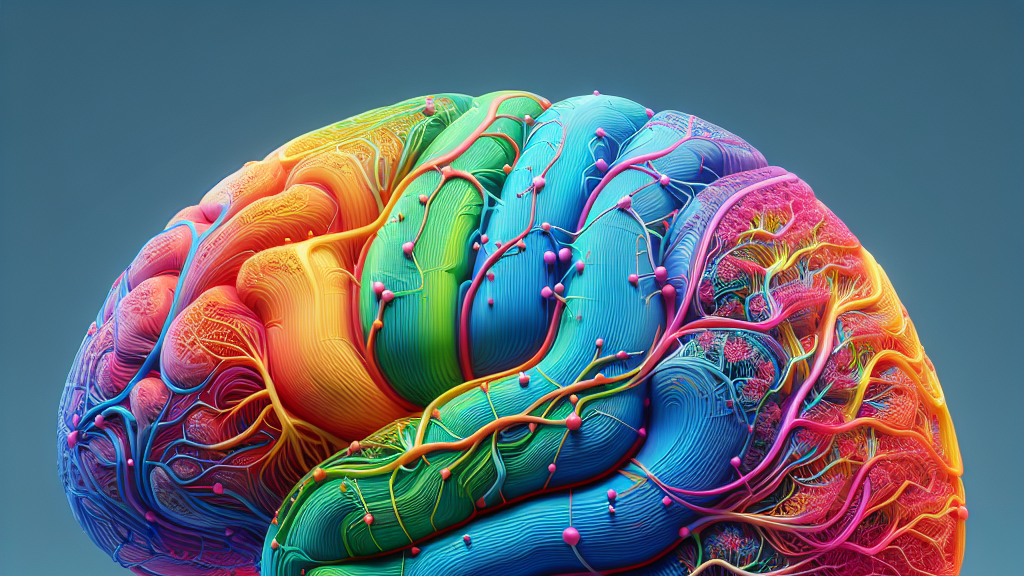
Did you know that even the smallest, seemingly insignificant connections in your brain could be the secret ingredient to sharper memory and better problem-solving skills? While these ‘weak links’ in the brain have traditionally been dismissed as mere noise, new research suggests they play a vital role in cognitive abilities, potentially offering clues to unlocking human potential.
Scientists explored how different levels of brain connectivity relate to human cognition by examining data from nearly a thousand individuals. They discovered that these weak connections are not just remnants but essential players in the brain’s complex network. By amplifying their influence in unexpected ways, they significantly contribute to our ability to think, remember, and learn. These findings challenge the conventional approach of overlooking weak links and underscore their importance in maintaining a balanced brain network.
Imagine a future where understanding and harnessing these weak brain connections could enhance everything from learning new skills to managing memory-related diseases. Picture personalized brain training programs that focus on reinforcing these subtle connections to help students ace their exams or assist older adults in maintaining independent living. This research could reshape our approach to education and healthcare, making the invisible, visible and the impossible, possible.
Your brain has millions of weak connections previously thought to be useless, but they might be crucial for your cognitive abilities.
FAQs
What are weak brain connections?
Weak brain connections, often dismissed as noise, are connections with lower weight in brain networks but may play a crucial role in cognitive functions.
Why do weak brain connections matter?
Weak brain connections significantly predict general cognitive abilities and memory, supporting brain functions by expanding operational capacity.
How does this research impact future brain studies?
This research shifts the focus towards preserving weak connections rather than ignoring them, leading to more reliable predictions of cognitive abilities and functional connectivity.
How could weak brain connections be used in real life?
Understanding weak brain connections can lead to personalized programs enhancing cognitive skills and supporting memory-related treatments.
What specific connections were identified in the research?
The study found weak connections linking visual/motor to limbic areas, significantly impacting cognitive predictions and network dynamics.
Background
The human brain is a complex network where neurons communicate through connections called synapses. These connections have varying strengths, and traditionally, weaker ones were thought to be negligible. Recent advancements in brain imaging and analysis have shown that these weak connections might play a more significant role than previously believed, acting as subtle influencers on brain functions like cognition and memory.
History
In neuroscience, the focus has often been on strong synaptic connections that drive brain communication. However, early studies hinted that smaller, weaker connections might also contribute to neural processing but were dismissed due to measurement challenges. With improved imaging techniques and computational models, researchers can now map these weak connections more accurately, leading to a better understanding of their role in cognitive processing.
Based on “Weak but influential: Nonlinear contributions of structural connectivity to human cognitive abilities and brain functions” by Rong Wang, Zhao Chang, Xuechun Liu, Daniel Kristanto, Étienne Gérard Guy Gartner, Xinyang Liu, Mianxin Liu, Ying Wu, Ming Lui, Changsong Zhou, available on arXiv (arxiv.org/abs/2505.24125), used under CC BY 4.0 (creativecommons.org/licenses/by/4.0/).